Canadian AI hiring is shifting from generalist credentials to specialized technical execution. In Ontario alone, more than 71,000 professionals required AI skills this year, representing a massive 61 per cent increase year-over-year.* Data science and machine learning careers are evolving rapidly, shifting from generic roles to hyper-specialized positions. While the opportunities are vast, the market is undeniably complex and highly competitive.
So, how do candidates actually stand out to hiring managers when applying for AI jobs in Canada?
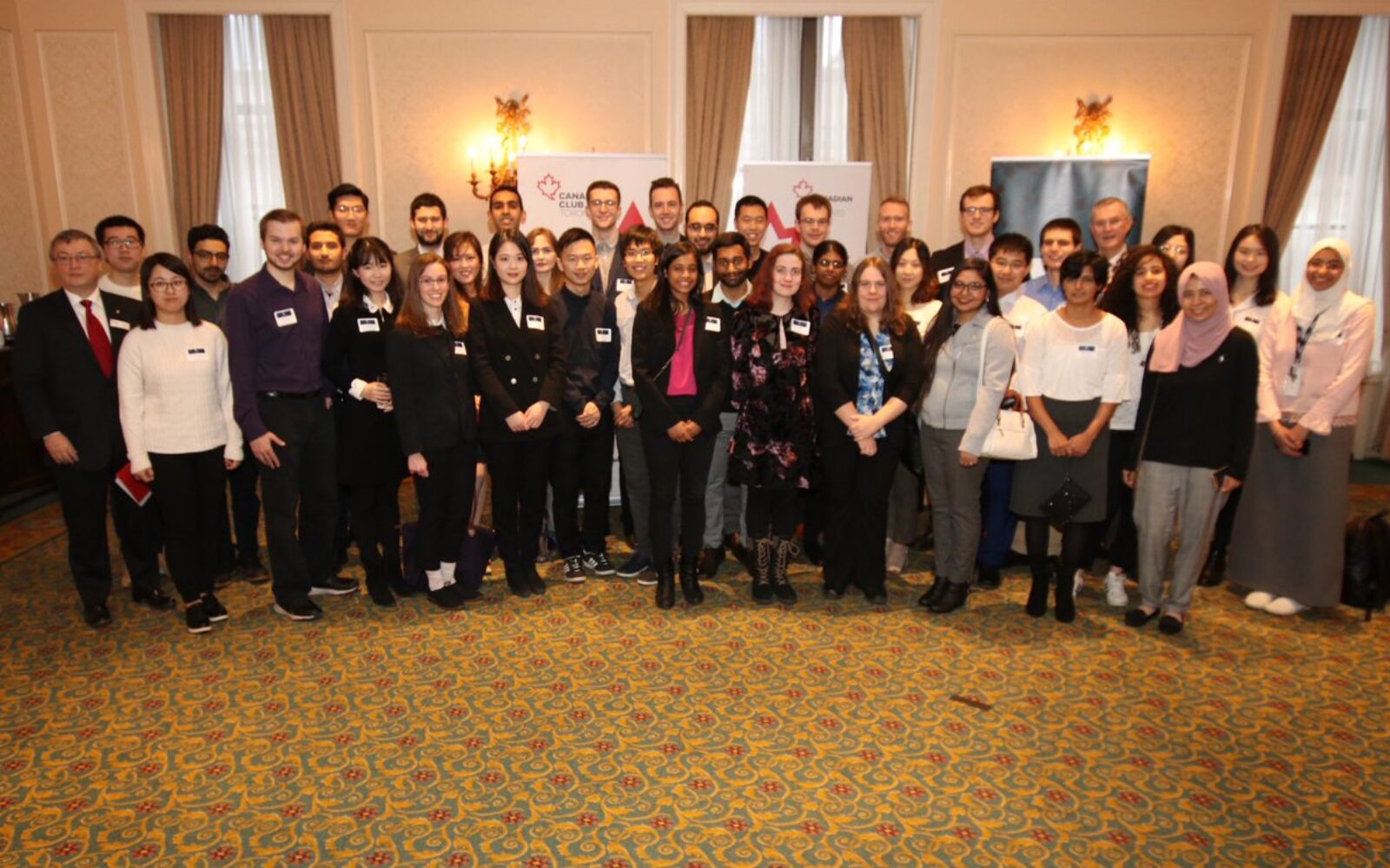
At the 2026 Vector AI Summit & Career Fair, open to members of our student community, Adam Renkosinski, Director, AI Talent Initiatives and Analytics at Vector, sat down with talent leaders from across the ecosystem to answer exactly that. The panel featured Sakshi Srivastava (Talent Acquisition Consultant, Bell Canada), Paria Mehrani (AI/ML Computational Science Specialist, Accenture), Heather Xu (Senior Talent Acquisition Partner, Layer 6 AI at TD) and Dwayne Alves (IT Director, Emterra Group). You can listen to the full panel discussion below:
From navigating AI-generated resumes to mastering the career fair floor, we cover their top strategies for landing your next role and building a resilient AI career path:
- The reality of machine learning careers
- Accelerate your workflow, but do not fabricate your story
- Show end-to-end curiosity and business acumen
- Tell the story behind the resume
- Network with intent to build your AI career path
- Lean into your foundational research skills
The reality of machine learning careers
Before diving into interview tactics, it helps to understand the market you are entering. This year’s Ontario AI snapshot figures show that venture capital investment in Ontario AI companies reached $3.9 billion this year, a 50 per cent increase, with a record 121 new AI companies establishing themselves in the province. Furthermore, 75 per cent of Ontario companies are now actively executing on their AI vision.
This means employers aren’t just looking for theoretical knowledge; they need practitioners who can deploy models into production. Search trends for “getting hired in AI” show a massive shift toward specialized skills like MLOps, generative AI development and large language model (LLM) orchestration.
The good news? The talent is staying local. 91 per cent of Vector-trained AI graduates choose to build their careers right here in Ontario and 92 per cent of graduates from Vector-recognized programs are employed or pursuing further education. The ecosystem is thriving, but you need the right approach to break through the noise.
Accelerate your workflow, but do not fabricate your story
With generative AI tools readily available, candidates are increasingly using them to draft resumes, write cover letters, and prep for AI engineer interview questions. The panel agreed that using AI to accelerate your job search is smart, but there is a hard line candidates should not cross.
Use AI to improve your story, but not to invent one.
When hiring managers read a resume, they are looking for three specific things: the problem you solved, how you contributed, and the measurable impact of your work. If an AI agent manufactures your experience, it becomes glaringly obvious during the interview stage.
Mehrani echoed this from a technical perspective. “Use it to accelerate your workflow, but own the outcome. Whatever you put in your resume, whatever answer is in your code, you should own it and show that you can drive outcomes from the tools you are using.”
Renkosinski shared a telling anecdote about receiving a post-interview thank-you note that was clearly entirely AI-generated. It lacked any human warmth or specific context from their conversation. You do yourself a massive disservice if you strip the human element out of your professional communications just to save a few minutes of typing.
Show end-to-end curiosity and business acumen
Whether you are applying to a massive financial institution or a mid-market enterprise, hiring managers are looking for candidates who understand the bigger picture.
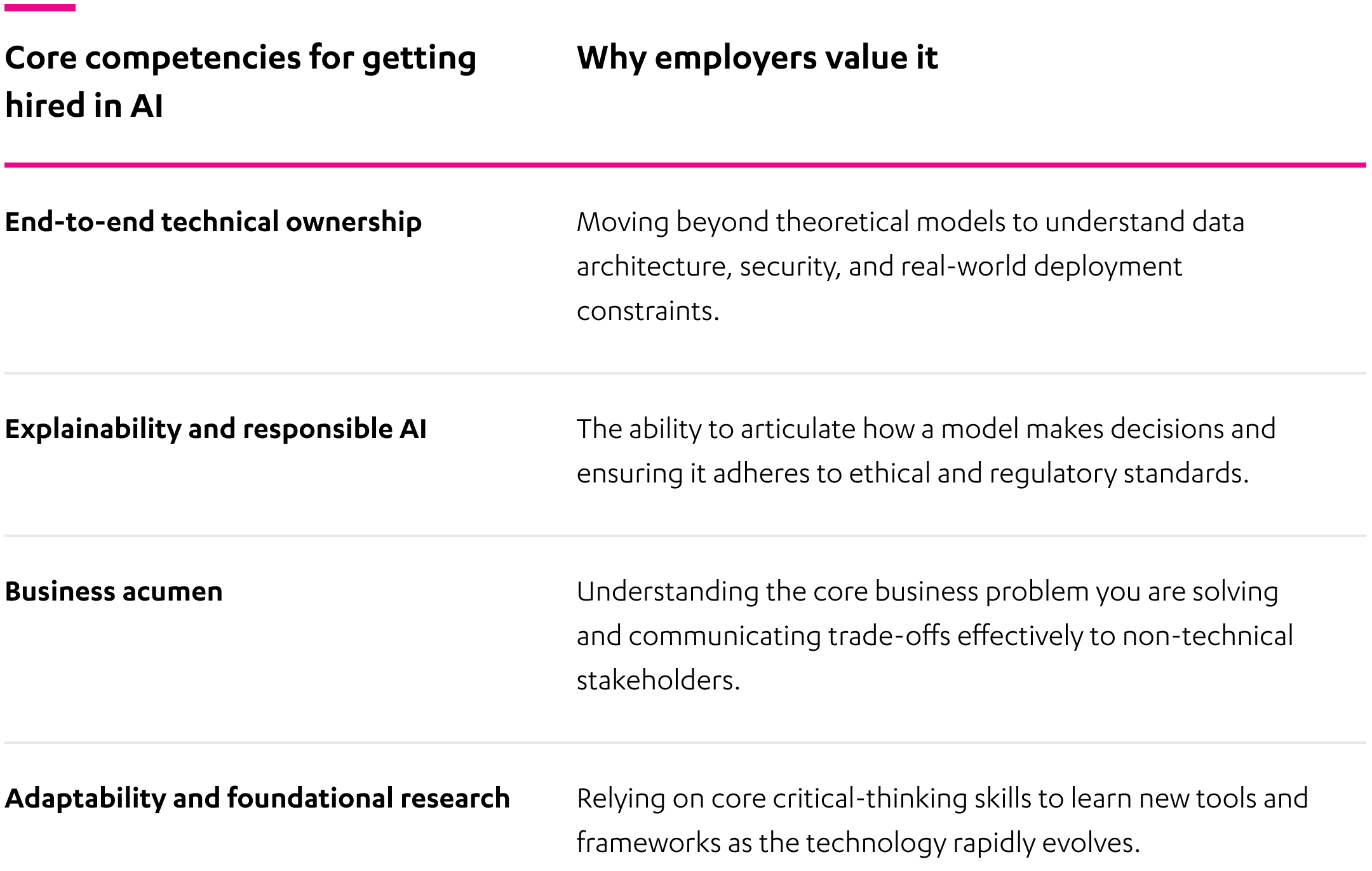
Alves noted that at Emterra Group, curiosity is the defining trait of a successful hire. “I look for people that are curious. They like to go end-to-end on projects. I don’t want someone who just wants to build a dashboard. I want someone who wants to understand the data around it, how you structured your data lake, the security and the end result.”
For early-career professionals trying to bridge the gap between graduation and their first experienced role, Mehrani suggested leaning into open-source collaboration. By joining open-source teams and building a public GitHub repository, you demonstrate that you can work within real-world constraints and deliver production-ready code. Employers actively look for portfolio projects that demonstrate real-world LLM orchestration or machine learning system design, rather than just academic exercises.
Tell the story behind the resume
A common mistake candidates make during interviews is simply repeating what is already written on their resume. Xu emphasized that recruiters use the interview to discover the person behind the paper.
“I want to hear the story,” Xu explained. “How did you land on that achievement? What trade-offs did you consider? What kind of business stakeholders did you encounter? Have you considered the responsible use of AI and explainability?”
Technical skills are the baseline, but your ability to communicate your problem-solving process, navigate business constraints, and articulate the “why” behind your models is what ultimately secures the job offer. If you built a model that improved efficiency, you need to be able to explain the hurdles you overcame to get it deployed and adopted by the business.
Network with intent to build your AI career path
The Toronto tech scene is highly connected and authentic human relationships remain one of the strongest drivers of career growth. However, networking requires strategy.
When reaching out on LinkedIn, Srivastava advised against generic connection requests. “Try to make a personalized note. Say what exactly you are seeking, what you are going to bring to the table and why the other person should add you to their network.” She also stressed the importance of being targeted. Rather than applying to 100 jobs blindly, apply to 10 specific roles where your skills directly align with the business need.
This targeted approach applies to in-person career fairs, too. Instead of walking up to a booth and reciting your degree and years of experience, ask informed questions. Xu recommended asking recruiters about the daily life of the team, the tools they use, and the actual business problems they are trying to solve. This opens the door for a genuine conversation about how your specific skills can help them achieve their goals.
Tell us what you’re passionate about. Tell us why you’re interesting. Say something that sticks because those are the ones we remember, especially when there’s a thousand faces and a thousand resumes.
Lean into your foundational research skills
The AI landscape shifts rapidly and the tools you use today will likely change tomorrow. But the foundational skills you develop during your academic training, critical thinking, problem-solving, and independence compound over time.
“When you started your journey, you were not an expert in the field, but you covered the breadth and depth of it and became an expert,” said Mehrani, reflecting on the transition from academia to industry. “You have done that once before. You can do it over and over again. When you transition into industry, it is just a different problem with a different set of constraints.”
With AI projected to add $122 billion to Ontario’s cumulative real GDP by 2035 and create an average of 17,600 new jobs annually, the demand for adaptable, highly skilled talent will only continue to grow.
* All financial figures and performance figures cited in this article, unless otherwise stated, are sourced within our 2025-26 Annual Report.
Join Canada’s leading AI student community
Vector Institute supports artificial intelligence students through comprehensive programming that combines academic excellence with practical experience and industry connections. Our ecosystem provides everything you need to launch a successful AI career, from funding and education to networking and job opportunities.
Get updates on new scholarships, internship openings, networking events, and career opportunities for AI students.