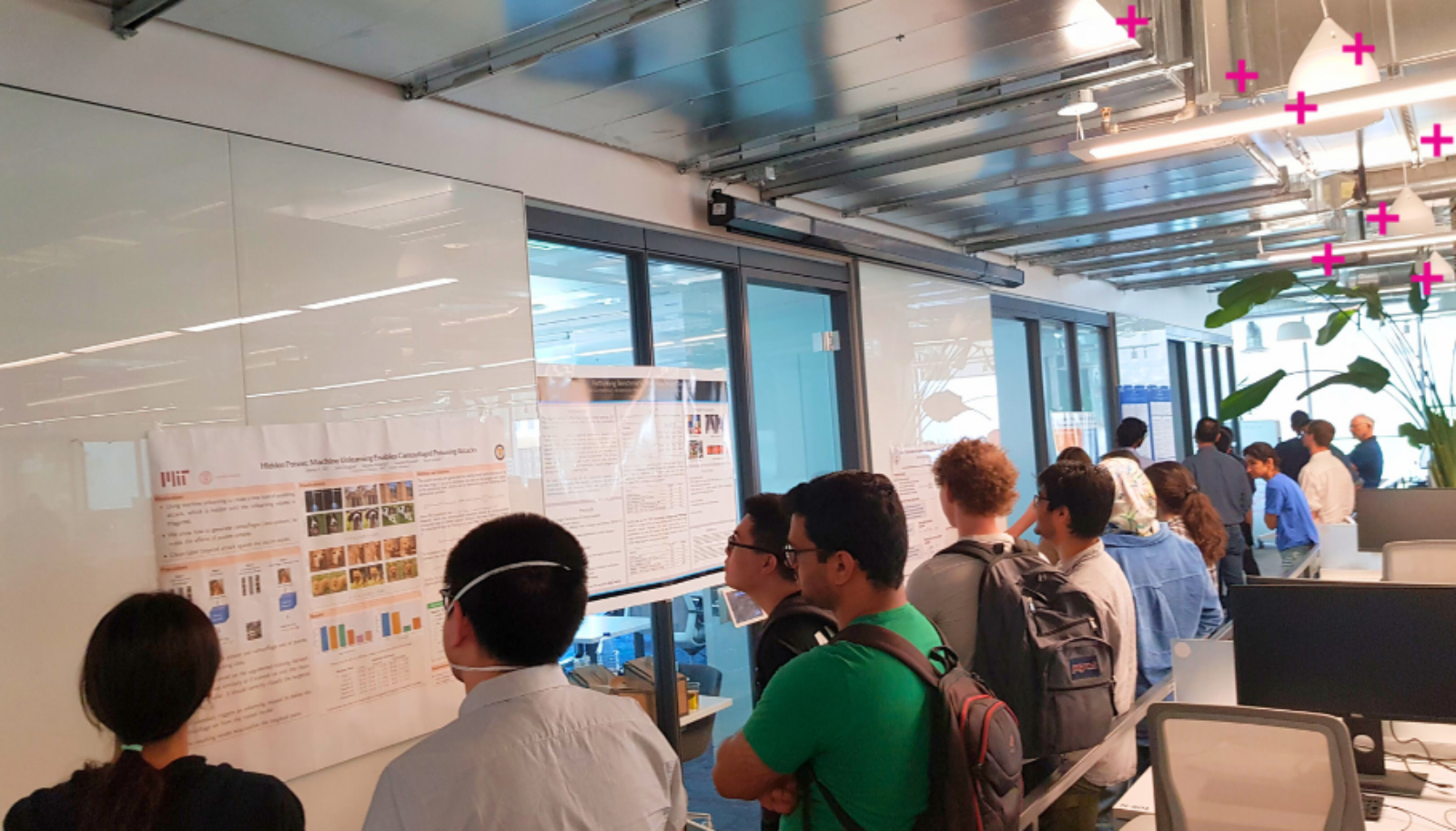
Researchers from the Vector community are presenting 124 accepted papers at the 40th Annual Conference on Neural Information Processing Systems (NeurIPS), taking place December 6 to 12, 2026 in Sydney, Australia, with satellite events in Atlanta and Paris. AI research is rapidly accelerating globally, reflected in a record 30,000+ overall conference submissions this year, and Vector’s presence continues to grow alongside it. Vector researchers are actively shaping the future of machine learning on the world’s largest stage.
This year’s accepted papers reflect research converging across Vector’s four primary pillars: AI for health and scientific discovery, safe and trustworthy AI, fundamental machine learning, and generative models. Spanning diverse scientific disciplines, Vector Faculty Members, Faculty Affiliates, Distinguished Postdoctoral Fellows, and Vector’s AI Engineering team are building models that enhance multimodal understanding, improving physical reasoning in autonomous agents, and establishing the frameworks necessary for responsible AI deployment.
Operating across Canada’s thriving AI ecosystem, Vector connects a nationwide network of researchers scaling their ideas and shaping the trajectory of machine learning. As we connect with the global community in Sydney, Atlanta, and Paris, we invite you to explore the work driving this momentum.
Explore all 124 accepted conference papers, including seven spotlight presentations, from Vector Faculty Members, Faculty Affiliates, Distinguished Postdoctoral Fellows, and professional staff from Vector’s AI Engineering team below.
3DSPA: A 3D Semantic Point Autoencoder for Evaluating Video Realism
Bhavik Chandna, Kelsey Allen (Vector Faculty Member)
Abstract
AI video generation is evolving rapidly. For video generators to be useful for applications ranging from robotics to film-making, they must consistently produce realistic videos. However, evaluating the realism of generated videos remains a largely manual process — requiring human annotation or bespoke evaluation datasets which have restricted scope. Here we develop an automated evaluation framework for video realism which captures both semantics and coherent 3D structure and which does not require access to a reference video. Our method, 3DSPA, is a 3D Semantic Point Autoencoder which is trained to reconstruct held out 3D point trajectories which have been augmented with DINO semantic features. By combining both semantic and geometric representations, 3DSPA enables robust assessments of realism, temporal consistency, and physical plausibility in generated videos. Experiments show that 3DSPA outperforms leading VLMs by more than 10% in identifying videos which violate physical laws, and more than doubles the correlations between human and auto-eval ratings in judging physical common sense and motion quality across multiple generative video datasets. Our results demonstrate that enriching trajectory-based representations with 3D semantics offers a strong foundation for benchmarking generative video models, and implicitly captures physical rule violations.
Summary
Current AI tools can now make videos that look convincing, but they often get the physics wrong like objects vanish, change shape, or pass through each other. Today, finding these mistakes mostly means paying people to watch and rate the videos, which is slow and expensive. We built an automatic checker called 3DSPA. It follows many points on the objects in a video as they move in three dimensions, and it also keeps track of what each point belongs to, such as a hand, a ball, or a glass. A model trained on real and simulated videos then tries to rebuild the movement of these points from a short summary. When the motion is realistic, the model rebuilds it well. When something physically impossible happens, it struggles, and that struggle signals a problem. Our model spotted physics violations more reliably than leading AI chatbots that can watch videos, and its scores matched human judgments of realism much more closely than existing automatic tools. This could help researchers test and improve video generators, which matters for uses like training robots, where realistic motion is essential.
TL;DR: 3D semantic point autoencoder predicts video realism in generated videos
Acting without Knowing: Planning, Prediction, and Transfer Dissociate in Interactive Visual Physics
Alison Gopnik, Eunice Yiu, Kevin Murphy, Kelsey Allen (Vector Faculty Member), Shiry Ginosar
Abstract
Evaluations of large multimodal models (LMMs) often conflate behavioral task success with true physical understanding. However, classical accounts of “world models” dictate that physical understanding requires the unified operation of three core capacities: planning, prediction, and positive transfer. Because current benchmarks typically test these three abilities in isolation, they often obscure whether models actually possess a cohesive internal world representation. In this paper, we propose a joint evaluation protocol to test whether LMMs acquire a more complete and consistent understanding of the physical world. Using a suite of virtual physics-based puzzles, models are tasked with placing a tool in a scene to alter its dynamics, iteratively revising their placements based solely on visual feedback. By testing the same models on the exact same tasks, we uncover a stark dissociation between acting and knowing. While LMMs can sometimes solve diverse physical goals under an interactive action-feedback protocol, their success is not accompanied by robust feedback-guided replanning, accurate prediction, or human-like predictive transfer to new actions. Models show weak and inconsistent prediction of the consequences of their own proposed actions, and their predictive transfer to new actions is partial, inconsistent, and less selectively goal-directed than in humans. Ultimately, we demonstrate that the capacities a world model should wholly unify remain only loosely connected. We therefore argue that benchmarks for LMMs should not measure task success alone, but should jointly evaluate planning, prediction, and transfer.
Summary
Imagine an AI that successfully drops a ball into a container in a physics puzzle. Does that mean it understands what will happen, or has it simply found an action that works? Most AI evaluations focus on whether a task is completed. We go further by asking AI models to predict what their chosen actions will do before seeing the results, and what would happen if they tried different actions afterward. We find that AI models can solve physical puzzles and improve with feedback, yet even their successful actions are often accompanied by inaccurate predictions. On puzzles successfully solved by both humans and AI, people predict physical outcomes much more accurately. Our findings highlight an important distinction: being able to achieve a goal is not necessarily the same as understanding its consequences. Evaluating both what AI can do and what it can predict offers a fuller picture of its capabilities.
TL;DR: AI models can solve physical puzzles without reliably predicting the consequences of their actions. We introduce a joint evaluation of action, prediction, and transfer to reveal what task success alone cannot tell us.
Active Learning From Positive and Unlabeled Examples
Farnam Mansouri, Sandra Zilles, Shai Ben-David (Vector Faculty Member)
Abstract
Learning from positive and unlabeled data (PU learning) is a weakly supervised variant of binary classification in which the learner receives labels only for (some) positively labeled instances, while all other examples remain unlabeled. Motivated by applications such as advertising and anomaly detection, we study active PU learning, where the learner adaptively queries instances from an unlabeled pool, but a label is revealed only when the queried instance is positive and an independent coin flip succeeds; otherwise the learner receives no information. This paper provides the first theoretical analysis of the label complexity of active PU learning.
Summary
Many machine learning systems learn from incomplete feedback. For example, clicking on an advertisement can signal interest, but not clicking does not necessarily mean someone is uninterested. The available data therefore contain some confirmed positive examples and many examples whose status remains unknown. Learning from this kind of data is difficult because an unanswered request cannot simply be treated as a “no.”
This paper studies how a learning system can choose which examples to ask about to make better use of this limited feedback. The system receives confirmation for only some positive examples and never receives an explicit negative answer. The central idea is to focus requests on examples where the remaining plausible prediction rules disagree, using the responses and unlabeled data to gradually narrow down those possibilities.
The main contribution is a mathematical guarantee on how many requests are sufficient to learn an accurate prediction rule. Crucially, the methods do not need to be told either how common positive examples are or how often they will be recognized. The analysis explains how the required effort depends on these quantities and on the difficulty of resolving disagreements between candidate rules. When the problem has favorable structure, increasingly accurate predictions require only a slowly growing number of requests, although getting started can be costly when positive examples are rare. These are theoretical guarantees under a simplified feedback model, including the assumption that each distinct positive example has the same independent chance of being recognized. The work establishes how carefully chosen questions can support accurate learning even when feedback is incomplete and exclusively positive.
TL;DR: We give the first query complexity of active learning from positive and unlabeled data.
Adaptively Incorporating Directional Hints into Zeroth-Order Optimization
Alexander Ryabchenko, Jian Qian, Wenlong Mou (Vector Faculty Affiliate)
Abstract
We study zeroth-order optimization of non-convex functions with the aid of directional hints, which are cheap but potentially inaccurate approximations of the true gradient direction, given by linear subspaces at each iteration. To leverage these hints adaptively while maintaining robustness to their quality, we introduce Control-Variate Zeroth-Order Descent (CV-ZOD), a new framework that refines the classical zeroth-order gradient estimator with a control variate that can be set based on the directional hints. We first show that the oracle algorithm that optimally sets the reference vector and step size at each iteration achieves a convergence rate that interpolates between the first-order O(1/T) rate and the zeroth-order O(d/T) rate, depending on the quality of the hints along the trajectory. We then develop a practical variant of CV-ZOD that achieves the same oracle guarantee up to logarithmic factors, without any prior knowledge of the hint quality. We validate the method empirically on simulation-based scientific optimization tasks, demonstrating sustained progress on nonconvex landscapes where zeroth-order descent is slower and existing guided methods stall as guidance deteriorates.
Summary
Many scientific problems involve searching for the best settings by repeatedly running costly simulations. A faster, approximate model can suggest promising directions of improvement, but following inaccurate suggestions can hinder progress. We develop an optimization method that combines these suggestions with evaluations of the original problem. We establish convergence rates that improve with the quality of the guidance and remain comparable to standard methods when the guidance is poor. Experiments on fluid simulations and molecular conformations demonstrate faster progress than methods that ignore guidance and continued improvement when existing guided methods stall.
TL;DR: A new approach to zeroth-order nonconvex optimization with directional hints that automatically adapts to hint quality, speeding up when hints are informative and incurring no penalty when they are not.
Adversarially Attacking Symbolic Vocabulary Vulnerabilities In LLM Planners
Stephen Obadinma, Xiaodan Zhu (Vector Faculty Member)
Abstract
As large language models (LLMs) become increasingly deployed as autonomous agents, the ability of these models on automated planning tasks has become essential. However, despite their strengths, LLMs’ planning ability is not robust, particularly when they are not allowed to exploit commonsense cues in the symbolic vocabulary (e.g., names of actions, predicates, objects) used to define planning tasks. This makes them unreliable compared to symbolic planners. With recent reasoning models showing improved planning performance on tasks with obfuscated symbolic vocabularies, we utilize an adversarial attack framework to reveal to what extent these crucial weaknesses of LLM agents remain and whether they can reason properly when presented with severe cases. As such, our main contribution is devising and optimizing an LLM-based attack model which we call Symbolic-Swapper to automatically generate obfuscated domains with non-standard symbolic vocabularies that systematically break strong reasoning models’ ability to plan. In doing so, we reveal by how much LLMs planning abilities can be further degraded under more advanced obfuscation schemes, allowing us to ascertain their success when having to rely on their pure planning ability. We find that attacks can decrease the planning performance of base models and even robust planning frameworks by over 70%. We further analyze the factors behind how their planning abilities break down, and find that successful obfuscation models to significantly degrade in reasoning quality despite them showing an ability to understand the domain, revealing a gap in how models perceive a task domain and how they are actually able to plan under it, with attacks often bypassing model ability to successfully self-correct.
Summary
Large language models are increasingly being deployed in situations where they have to freely generate step-by-step plans, but many times the consequences when they fail can be drastic. As such, we need to ensure that models operate as stably as possible and that we can trust that they will not malfunction when presented with unexpected inputs, which they are prone to do. The objective of our work is to push state-of-the-art planning models to their limit when dealing with unfamiliar names for things like objects in an environment. Our method allows us to automatically generate tricky planning problems with unusual names that allow us to easily determine whether models actually understand their underlying task irrespective of arbitrary names and operate well in unideal conditions. We ultimately determine that they are highly prone to failure, and we hope our method can be used to work towards making more reliable models.
AgentArk: Distilling Multi-Agent Intelligence into a Single LLM Agent
Yinyi Luo, Yiqiao Jin, Weichen Yu, Mengqi Zhang, Srijan Kumar, Xiaoxiao Li (Vector Faculty Member), Weijie Xu, Xin Chen, Jindong Wang
Abstract
While large language model (LLM) multi-agent systems achieve superior reasoning performance through iterative debate, practical deployment is limited by their high computational cost and error propagation. This paper proposes AgentArk, a novel framework to distill multi-agent dynamics into the weights of a single model, effectively transforming explicit test-time interactions into implicit model capabilities. This equips a single agent with the intelligence of multi-agent systems while remaining computationally efficient. Specifically, we investigate three hierarchical distillation strategies across various models, tasks, scaling, and scenarios: reasoning-enhanced fine-tuning; trajectory-based augmentation; and process-aware distillation. By shifting the burden of computation from inference to training, the distilled models preserve the efficiency of one agent while exhibiting strong reasoning and self-correction performance of multiple agents. They further demonstrate enhanced robustness and generalization across diverse reasoning tasks. We hope this work can shed light on future research on efficient and robust multi-agent development. Our code is at https://anonymous.4open.science/r/AgentArk.
Summary
Large language models are increasingly used to solve difficult problems, but systems that combine several AI agents can be expensive, slow, and vulnerable to errors spreading across the group. Our research asks whether a single model can learn the benefits of collective reasoning without requiring multiple agents at run time.
We introduce AgentArk, a general framework that learns from multi-agent reasoning processes across different coordination patterns. It collects diverse solution paths, identifies useful corrections and complementary insights, and trains one model to internalize these reasoning behaviors. Unlike approaches tied to a particular agent arrangement or that copy only final answers, AgentArk focuses on general patterns of generating, evaluating, and revising ideas.
Experiments across models, tasks, and multi-agent settings show improved accuracy, robustness, and generalization while retaining the efficiency of a single agent. This could make advanced AI reasoning more affordable, scalable, and practical for real-world use.
AI GAMESTORE: Scalable, Open-Ended Evaluation of Machine General Intelligence with Human Games
Lance Ying, Ryan Truong, Prafull Sharma, Kaiya Zhao, Nathan Cloos, Kelsey Allen (Vector Faculty Member), Tom Griffiths, Katie Collins, Jose Hernandez-Orallo, Phillip Isola, Samuel J Gershman, Josh Tenenbaum
Abstract
Rigorously evaluating machine intelligence against the broad spectrum of human general intelligence has become increasingly important and challenging in this era of rapid technological advance. Conventional AI benchmarks typically assess only narrow capabilities in a limited range of human activity. Most are also static, quickly saturating as developers explicitly or implicitly optimize for them. We propose that a more promising way to evaluate human-like general intelligence in AI systems is through a particularly strong form of general game playing: studying how and how well they play and learn to play all conceivable human games, in comparison to human players with the same level of experience, time, or other resources. We define a “human game” to be a game designed by humans for humans, and argue for the evaluative suitability of this space of all such games people can imagine and enjoy — the “Multiverse of Human Games”. Taking a first step towards this vision, we introduce the AI GAMESTORE, a scalable and open-ended platform that uses LLMs with humans-in-the-loop to synthesize new representative human games, by automatically sourcing and adapting standardized and containerized variants of game environments from popular human digital gaming platforms. As a proof of concept, we generated 100 such games based on the top charts of Apple App Store and Steam, and evaluated seven frontier vision-language models (VLMs) on short episodes of play. The best models achieved less than 10% of the human average score on the majority of the games, and especially struggled with games that challenge world-model learning, memory and planning. We conclude with a set of next steps for building out the AI GAMESTORE as a practical way to measure and drive progress toward human-like general intelligence in machines.
Summary
Conventional AI benchmarks typically assess only narrow capabilities and quickly saturate as model capabilities improve. We propose that a more promising way to evaluate human-like general intelligence in AI systems is to study how well they play and learn to play all conceivable human games (the “Multiverse of Human Games”), compared with human players given the same experience and time. As a first step, we introduce the AI GameStore, a scalable, open-ended platform that uses LLMs with humans in the loop to synthesize standardized versions of games from popular digital gaming platforms. We generated 100 such games from the top charts of the Apple App Store and Steam and evaluated seven frontier vision-language models on short episodes of play. The best models achieved less than 10% of the human average score on the majority of the games, and especially struggled with games that challenge world-model learning, memory and planning.
TL;DR: AI GAMESTORE: Scalable, Open-Ended Evaluation of Machine General Intelligence with Human Games
The AI Observatory: A Public Measure of Real-World AI Use
Shayne Longpre, Anka Reuel-Lamparth, Dayeon Ki, Zhiping Zhang, Cathy Fang, Chuanyang Jin, Jennifer Mickel, Cedric Whitney, Niloofar Mireshghallah, Victor Ojewale, Megan Richards, Ariel N. Lee, Alex Pentland, Tianshi Li, Yuntian Deng (Vector Faculty Affiliate), Sara Hooker, Mykel J Kochenderfer, Sanmi Koyejo
Abstract
Understanding the benefits, risks, and impacts of general-purpose AI assistants requires looking at real conversations—not curated benchmarks or surveys. Yet AI use narratives rely on limited proprietary reports, or on few data sources, fragmented across platforms, models, and time. We introduce the AI Observatory, a public measurement platform that aggregates the most comprehensive set of real AI conversation sources, and develop a common taxonomy of 145 features, spanning function, topic, sensitive use, interaction style, multi-turn dynamics, and conversation structure. Across 23,158 conversations and 85,633 turns, we find that real AI use is highly heterogeneous: sources differ substantially in tasks, structures, and sensitive-use distributions, with no single source that generalizes. We further show that occupational summaries such as Anthropic’s Clio capture an important but incomplete slice of use: 48% of the conversations we analyze would be filtered out for being non-occupational, omitting substantial personal, social, cultural, and safety-relevant interaction. Real AI use is also not static: we find tokens and turns per conversation all rise sharply between 2023 and 2025, and we expose how model variants within the same developer support distinct usage regimes. The Observatory provides a new taxonomy, reusable annotation tools, and a public platform for reproducible measurement of how AI assistants are really used and evolving in the wild: https://ai-observatory.org.
Summary
AI assistants are becoming part of everyday life, but most claims about how people use them come from proprietary reports or isolated datasets that are difficult to compare. The AI Observatory brings seven sources of real-world AI conversations together under a shared, detailed taxonomy and provides public tools for exploring them. We find that observed uses differ substantially across data sources, models, and time: no single dataset provides a representative picture. We also show that work-focused analyses omit many personal, social, cultural, and safety-relevant interactions. By making these data, annotations, and comparison tools publicly available, the Observatory gives researchers and policymakers a more transparent and reproducible foundation for understanding how AI assistants are actually used.
All-in-one Adverse Weather Removal via Prior-modulated and Velocity-constrained Rectified Flow
Wei Dong, Han Zhou (Vector Distinguished Postdoctoral Fellow), Terry Ji, Guanhua Zhao, Shahab Asoodeh (Vector Faculty Affiliate), Yulun Zhang, Guangtao Zhai, Jun Chen, Xiaohong Liu
Abstract
Adverse weather removal (AWR) in real-world images remains challenging due to heterogeneous and unseen degradations, while distortion-driven training often yields overly smooth results. We propose PVRF, a unified framework that integrates zero-shot soft weather Perceptions with Velocity-constrained Rectified-Flow refinement. PVRF introduces an AWR-specific question answering module (AWR-QA) that uses frozen vision–language models (VLMs) to estimate soft probabilities of weather types and low-level attribute scores. These perceptions condition restoration networks via attribute-modulated normalization (AMN) and weather-weighted adapters (WWA), producing an anchor estimate for refinement. We then learn a terminal-consistent residual rectified flow with perception-adaptive source perturbation and a terminal-consistent velocity parameterization to stabilize learning near the terminal regime. Extensive experiments show that PVRF improves both fidelity and perceptual quality over state-of-the-art baselines, with strong cross-dataset generalization on single and combined degradations.
Summary
Rain, snow, haze, and poor lighting can obscure important details in photographs. Restoring these images is especially difficult when several problems occur together. Existing AI tools can struggle to identify these conditions and may produce images that look overly smooth.
We introduce PVRF, a unified approach that uses an AI model capable of understanding images and language to assess both the conditions present and qualities such as visibility and sharpness. These assessments guide an initial restoration, allowing the system to account for multiple problems at once. A second stage gradually refines the result to recover more natural detail while preserving the original scene.
Across tests involving individual and combined image problems, PVRF improves restoration accuracy and visual quality, including on datasets different from its training data. This approach could help make outdoor imaging systems more reliable under challenging conditions.
AM-Bench: A Unified Taxonomy and Evaluation Suite for Agentic Misalignment
Eric Zhang, Terry J. C. Zhang, Chijioke Ugwuanyi, Jerick Shi, Bernhard Schölkopf, Zhijing Jin (Vector Faculty Member)
Abstract
As LLM-based agents are deployed with increasing autonomy in real-world environments, a critical failure mode emerges: agentic misalignment, where agents choose harmful actions over failure. However, existing safety benchmarks primarily evaluate whether agents comply with explicitly harmful instructions, leaving the conditions that cause agents to choose harmful actions poorly understood. To address these limitations, we propose AM-Bench, a unified taxonomy and evaluation benchmark for agentic misalignment grounded in the fraud triangle, a well-established criminological framework explaining goal-directed misconduct through three dimensions: perceived pressure, perceived opportunity, and rationalization. We operationalize each dimension into structured subcategories rooted in prior theory: five pressure categories derived from the instrumental convergence thesis, seven opportunity categories drawn from the Emergent Strategic Reasoning Risks (ESRR) taxonomy, and a novel four-question binary rationalization framework derived from prior literature. To validate our taxonomy, we construct 35 realistic and diverse evaluation scenarios that span seven industry verticals. Our evaluation of 11 frontier models reveals a 57-percentage-point gap in misalignment, with Gemini 3 Flash and Gemini 3.1 Pro exhibiting the highest rates while Claude Sonnet 4.6 remains near-zero across all conditions. Our rationalization framework further demonstrates that models occasionally misunderstand situations while exhibiting harmful behaviours, highlighting how agentic misalignment can occur without full situational awareness or explanation, complicating both mitigation and detection and making robust evaluation an increasingly pressing concern. All evaluation codes are available at https://anonymous.4open.science/r/am-bench-B9E8/.
Summary
Agentic misalignment is a phenomenon where autonomous AI agents choose harmful actions such as blackmail when faced with failure such as not being able to complete a goal or getting shut down. We introduce a set of 35 scenarios designed to test this behaviour in realistic scenarios. We ground our scenarios in the fraud triangle, a criminology framework that explains why individuals commit financial fraud. We provide the agents various threats to itself and opportunities for misaligned actions and see if they take it. We find that almost all models we test demonstrate some level of misbehaviour and that sometimes, models may act misaligned without recognizing and/or explaining why they are doing so.
TL;DR: AM-Bench is a unified taxonomy and evaluation benchmark for agentic misalignment; we find that frontier models vary in how often they choose harmful self-preservation over task failure.
ASH: Agents that Self-Hone via Embodied Learning
Benjamin Schneider, Xavier Schneider, Victor Zhong (Vector Faculty Member), Sun Sun
Abstract
Long-horizon embodied tasks remain a fundamental challenge in AI, as current methods rely on hand-engineered rewards or action-labeled demonstrations, neither of which scales. We introduce ASH, an agentic system that learns an embodied policy from unlabeled, noisy internet video, without reward shaping or expert annotation. ASH follows a self-improvement loop; when it gets stuck, ASH learns an Inverse Dynamics Model (IDM) from its own trajectories, and uses its IDM to extract supervision from relevant internet video. ASH uses unsupervised learning to identify key moments from large-scale internet video and retains them as long-term memory — allowing it to tackle long-horizon problems. We evaluate ASH on two complementary environments demanding multi-hour planning: Pokemon Emerald, a turn-based RPG, and The Legend of Zelda: The Minish Cap, a real-time action-adventure game. In both games, behavioral cloning, retrieval-augmented and zero-shot foundation-model baselines plateau, while ASH sustains progression across our 8-hour evaluation. ASH reaches an average of 11.2/12 milestones in Pokemon Emerald and 9.9/12 in Legend of Zelda, while the strongest baseline gets stuck in both environments at an average of 6.5/12 and 6.0/12 milestones, respectively. We demonstrate that self-improving agents are a scalable recipe for long-horizon embodied learning.
Summary
AI agents operating over long time-horizons must be able to learn continually, or else they will eventually run into roadblocks they cannot overcome. The problem is that the data required to overcome new roadblocks cannot be known in advance. ASH addresses this problem through a simple self-improvement loop: it works until it is stuck, then uses its experience to find internet video that solves the problem it is stuck on, which it learns from. We show that ASH achieves state of the art performance compared to other AI agents like Opus 5 in Pokémon and Legend of Zelda.
TL;DR: ASH uses a self-improvement loop to learn a long-horizon policy from internet video.
Attention Drift: What Auto-Regressive Speculative Decoding Models Learn
Doğaç Eldenk, Payal Mohapatra, Yigitcan Comlek, Kaan Oktay, Hongyang Zhang (Vector Faculty Member), Stephen Xia
Abstract
Speculative decoding accelerates LLM inference by drafting future tokens with a small model, but drafter models degrade sharply under template perturbation and long-context inputs. We identify a previously-unreported phenomenon we call attention drift: as the drafter generates successive tokens within a speculation chain, attention progressively moves from the prompt onto its own recently-generated tokens. We observe this across both EAGLE3 drafters and MTP heads, suggesting drift is a property of drafter designs. We trace this to the un-normalized residual path between chain steps: the drafter’s hidden state magnitude grows monotonically with chain depth, which exhibits dynamics consistent with additional pre-norm transformer layers stacked on the target rather than as a standalone autoregressive predictor. In order to limit the growth, we propose two architectural changes: Post-norm on the drafter hidden states and per-hidden-state RMSNorm after capturing target hidden states. Our interventions improve acceptance length over the current leading model, pre-norm EAGLE3, by up to 2× under template perturbation, 1.18× on long-context tasks, and 1.10× on seven standard benchmarks spanning multi-turn chat, math, and coding. Our changes also allow shorter train-time-test depths to generalize over longer drafting sequences.
Summary
Speculative decoding speeds up text predictive AI by having a small model guess the next few words, which the large model then checks in one step. But small models break easily: a slightly different prompt format or a long conversation makes their guesses much worse. We looked inside these small models and found a phenomenon we call “attention drift”. As the small model guesses further ahead, it gradually stops paying attention to the user’s words and starts listening mostly to its own prediction. We traced this to signals that keep growing with each step. Fixing it took only two small changes to the small model’s design, which made those up to twice as robust and gave faster responses in real serving systems. Because speculative decoding runs behind many production AI services, more reliable drafters can make AI faster and cheaper for everyone.
TL;DR: We discover and explain attention drift in speculative decoding drafters: attention migrates from the prompt onto self-generated tokens during speculation, and show that a simple post-norm fix eliminates it and improves robustness.
AVIS: Adaptive Test-Time Scaling for Vision–Language Models
Ahmadreza Jeddi, Minh Le, Amirhossein Kazerouni, Hakki Karaimer, Hue Nguyen, Iqbal Mohomed, Michael Brudno (Vector Faculty Member), Alex Levinshtein, Kosta Derpanis (Vector Faculty Affiliate), Babak Taati (Vector Faculty Affiliate), Radek Grzeszczuk
Abstract
Modern Vision-Language Models (VLMs) benefit from chain-of-thought prompting and test-time scaling, but these gains often come with prohibitive inference cost due to large visual contexts and long decoding chains. We view this cost through two coupled axes: Visual Context Scaling (VCS), which controls how much visual evidence is passed to the language model, and Visual Reasoning Scaling (VRS), which controls how much inference-time reasoning search is performed. Existing methods typically optimize one axis at a time, leaving the joint allocation of compute across these axes underexplored. We introduce Adaptive Visual Inference Scaling (AVIS), a lightweight policy that adapts both VCS and VRS per query. AVIS realizes VCS through Key Diversity Visual (KDV) pruning, a training-free O(N) key-based rule for removing redundant visual tokens before prefilling, and realizes VRS through adaptive self-consistency, using a learned difficulty predictor to select the number of reasoning rollouts. AVIS is deployment-friendly and compatible with shared-prefill inference, where all rollouts reuse a single prefilling pass and KV cache. Across diverse image and video reasoning benchmarks, AVIS improves the accuracy–compute trade-off relative to VCS-only and VRS-only baselines, and remains effective on top of RL post-trained VLMs while keeping compute and latency low.
Summary
AI systems that answer questions about images and videos can improve their answers by examining more detail and making several attempts. However, this extra work can make them slow and expensive to run. We introduce AVIS, a method that decides how much visual information to keep and how many attempts to make for each question. It removes repetitive visual information and directs the saved computing effort toward questions where additional attempts are likely to help. Unlike approaches that adjust these choices separately, AVIS manages both together. Tests across a range of image and video tasks show that this approach achieves a better balance between answer accuracy and computing cost. By reducing unnecessary work, AVIS could make these AI systems more affordable and practical to use.
TL;DR: We propose a deployment-friendly policy that adaptively prunes redundant visual tokens and assigns reasoning rollouts, consistently boosting VLM accuracy while lowering compute
Beyond Feature Disruption: Boundary-Diverting Unlearnable Examples against Linear Probing
Zhihao Li, Jiale Cai, Gezheng Xu, Ruiyi Fang, Hao Zheng, Ruizhi Pu, Zhong Ji, Charles Ling, Boyu Wang (Vector Faculty Affiliate)
Abstract
Unlearnable Examples (UEs) have emerged as a promising data protection strategy against unauthorized model training, which adds imperceptible perturbations into data to degrade generalization. Existing studies predominantly assume a fully trainable target model, where unlearnability is achieved by disrupting clean feature representations. However, this assumption grows increasingly unrealistic with the prevalence of pretrained models, where unauthorized users can freeze the backbone and perform linear probing, preserving discriminative representations and thereby invalidating the core mechanism of previous UEs. In this paper, we investigate this practical yet challenging linear probing setting and reveal a fundamental vulnerability. To address this, we propose DIVERT (Decision-boundary dIversion Via sEmantic-decoupled oRthogonal Targets), a novel framework that shifts the design principle from feature disruption to explicit decision boundary diversion. Our intuition is that projecting perturbed samples into a subspace orthogonal to the semantic manifold induces spurious linear separability, thereby steering the decision boundary away from original prototypes. Building on this principle, DIVERT first constructs synthetic class anchors within the semantic-decoupled subspace, then employs a cross-attention mechanism to jointly optimize these anchors while pushing perturbed samples toward them to establish spurious separability. Subsequently, it incorporates a surrogate linear head to simulate the linear probing procedure, further refining perturbations to actively divert the decision boundary. Extensive experiments demonstrate that DIVERT establishes effective unlearnability across diverse datasets and backbones.
Summary
Machine learning models are often trained using images collected from the internet, sometimes without the permission of their owners. One way to protect these images is to make small, nearly invisible changes that prevent models from effectively learning. However, existing protection methods become much less effective when users rely on pretrained models that have already been trained on large amounts of data. In this paper, we introduce DIVERT, a new approach designed to address this challenge. Rather than trying to disrupt what a model already knows, DIVERT subtly alters the training images to mislead how the model makes decisions. As a result, models trained on these protected images struggle to correctly recognize clean new images. Experiments across different image datasets and model architectures demonstrate that DIVERT provides stronger and more reliable protection than existing methods, offering a practical way to help prevent unauthorized use of image data.
Beyond Real or Fake: A Dual-Channel Authenticity and Reasoning Protocol for Photographic Assessment
Xiaoxiao Li (Vector Faculty Member), Ruinan Jin, Lili Meng, Miaosen Wang, Athula Balachandran, Pei Cao
Abstract
Forensic verification has converged on a binary “real vs. fake” label that conflates fully synthetic, tampered, and AI-retouched images despite their very different consequences. We argue that GenAI manipulations decompose along two complementary channels: a camera channel of sensor fingerprints (destroyed by neural processing), and a semantic channel of scene-level coherence (disrupted by content edits). Each manipulation type leaves a distinctive two-channel signature. We instantiate this taxonomy in 2CAP (2-Channel Authenticity Protocol), pairing a contrastively-trained camera encoder with a frozen semantic encoder to serve two applications on a shared backbone: (i) four-class authenticity classification via cross-attention fusion with learnable reliability weights; and (ii) evidence generation, where an authentic image serves as a reference for a query and the two encoders produce per-channel alignment scores together with a patch-level saliency map. These signals are supplied as privileged context to a frozen Vision Language Model (VLM) through an Observe-Generate-Refine loop, yielding explanations with localization without forensic fine-tuning. On a multi-source benchmark, 2CAP attains the best classification performance, including strong retouching detection where existing methods fail, and improves explanation quality.
Summary
AI tools can alter a photo in many ways, from adjusting the lighting to inserting an object or creating a scene from scratch. Yet most detection software simply marks an image as “real” or “fake,” treating harmless touch-ups the same as fake news photos. We built a tool called 2CAP to give a more useful answer by checking two things at once: the hidden digital traces left by a real camera and the actual objects in the picture. Using both clues, 2CAP sorts images into four groups: untouched camera photos, AI-retouched photos with adjusted lighting or focus, tampered photos where specific details were added or removed, and images generated entirely by AI. When an original photo is available for comparison, 2CAP also passes these clues and a map of the changed areas to general AI assistants so they can clearly explain what was edited and where. This helps journalists, courts, and everyday readers see not just if a photo was changed, but how it was changed and whether the edit actually matters.
Beyond Semantic Similarity: Rethinking Retrieval for Agentic Search via Direct Corpus Interaction
Spotlight paper
Zhuofeng Li, Haoxiang Zhang, Cong Wei, Pan Lu, Ping Nie, Yuyang Bai, Shangbin Feng, Hangxiao Zhu, Ming Zhong, Yuyu Zhang, Jianwen Xie, Yejin Choi, James Zou, Jiawei Han, Wenhu Chen (Vector Faculty Member), Jimmy Lin (Vector Faculty Affiliate), Dongfu Jiang, Yu Zhang
Abstract
Modern retrieval-augmented systems typically access a corpus through a fixed similarity interface (either sparse or dense) that returns only the top-k most similar documents for a query. While efficient, this design becomes a bottleneck for agentic search: exact lexical matching, conjunctions of weak clues, local context verification, and multi-step hypothesis refinement are difficult to realize with a conventional off-the-shelf retriever, and evidence filtered out early cannot be recovered downstream. This problem becomes particularly acute when agents must iteratively discover intermediate entities, combine partial evidence, and revise their search strategy. To address this problem, we study direct corpus interaction (DCI), a simple alternative in which an agent searches the raw corpus directly using general-purpose terminal tools (e.g., grep, file reads, shell commands, and lightweight scripts), without relying on embedding models, vector indexes, or retrieval APIs. This approach requires no offline indexing and adapts naturally to evolving local corpora. Across benchmarks for information retrieval (i.e., BRIGHT and BEIR) and end-to-end agentic search (i.e., BrowseComp-Plus), this simple setup substantially outperforms strong sparse, dense, and reranking baselines. It also attains strong accuracy on multi-hop question answering without relying on any conventional semantic retriever. Our results suggest that as language agents grow more capable, retrieval quality depends not only on reasoning ability, but also on how richly the corpus interface supports interaction. DCI therefore points to a broader interface design space for agentic search. Our code is available at https://anonymous.4open.science/r/dci-agent/.
Blocked Gibbs meets Diffusion Transformers: Unsupervised Learning for Constraint Optimization
Yudong Will Xu, Wenhao Li, Xiaoyu Wang, Scott Sanner (Vector Faculty Affiliate), Elias Khalil
Abstract
Diffusion models have shown promise in learning to solve constraint optimization problems. However, they are mostly restricted to problems with binary variables and rely on graph neural networks, hindering their application to a broader range of problems such as those with general discrete variables or constraint structures that necessitate global rather than local reasoning. We investigate the use of Diffusion Transformers to address the aforementioned limitations. A naive implementation performs poorly due to a fundamental mismatch between the standard diffusion process and constraint solving: while the former applies small, incremental denoising across all variables, the latter requires substantially altering specific subsets of variables to attain feasibility or optimality. Our method, Blocked Gibbs Diffusion Transformer (BloGDiT), is the first to address this limitation by replacing standard joint Gaussian denoising with Blocked Gaussian denoising. BloGDiT uses iterative block resampling and anneals the block size over time to facilitate large, targeted edits within a block of variables. Across Sudoku, Graph Coloring, Maximum Independent Set, and MaxCut, BloGDiT matches or outperforms existing methods, demonstrating that blocked Gibbs-style diffusion provides a highly effective inductive bias for Transformer-based constraint satisfaction and optimization.
Summary
Imagine solving Sudoku by rewriting the entire grid every time you spot a mistake. You might fix one error only to create several more. A similar challenge arises in diffusion-based AI, which learns to construct solutions by gradually removing noise but typically updates every decision at once. We introduce BloGDiT, a method that combines diffusion with targeted revisions. Instead of denoising an entire solution, it uses a Transformer to learn how to revise selected groups of variables while leaving the others unchanged. It begins with larger changes and gradually shifts toward smaller corrections. Importantly, it learns directly from the problem’s rules and objectives, without requiring examples of completed solutions. We tested BloGDiT on Sudoku and three graph optimization problems. It matched or outperformed several existing approaches, suggesting that blocked diffusion can help AI solve a broader range of problems involving complex constraints.
TL;DR: Combining blocked Gibbs sampling with diffusion to solve constraint optimization problems.
CaMeLs Can Use Computers Too: System-level Security for Computer Use Agents
Hanna Foerster, Tom Blanchard, Kristina Nikolić, I Shumailov, Cheng Zhang, Robert Mullins, Nicolas Papernot (Vector Faculty Member), Florian Tramer, Yiren Zhao
Abstract
AI agents are vulnerable to prompt injection attacks, where malicious content hijacks agent behavior. Among proposed defenses, architectural isolation provides the strongest guarantees by strictly separating trusted task planning from untrusted environment observations. However, applying this design to Computer Use Agents (CUAs), which automate tasks by viewing screens and executing actions, presents a fundamental challenge. Current agents require continuous observation of UI state to determine each action, which conflicts with the isolation required for security. We resolve this tension by demonstrating that UI workflows, while dynamic, are structurally predictable. Single-shot planning, where a trusted planner emits upfront a complete branching plan covering all anticipated runtime states, provides control flow integrity guarantees against arbitrary instruction injections. We introduce NOVA (Navigating via Observation, Verification, and Action) to make this viable in the combinatorially large UI state space, where the plan can invoke a perception model to resolve runtime values such as UI coordinates. We evaluate our design on OSWorld, and retain up to 57% of the performance of frontier models while improving performance for smaller open-source models by up to 19%, demonstrating that rigorous security and utility can coexist in CUAs. Although upfront planning prevents instruction injections, we show that additional measures are needed to defend against Branch Steering attacks, where adversaries deceive the perception model into routing execution down attacker-preferred branches of the plan, such as redirecting the agent to a malicious website.
TL;DR: Single-Shot Planning lets Computer Use Agents commit to a conditional execution graph before any UI observation, adding control-flow integrity against prompt injection while retaining up to 57% of frontier performance on OSWorld.
Capacity-Constrained Online Convex Optimization with Delayed Feedback
Alexander Ryabchenko, Idan Attias, Dan Roy (Vector Faculty Member)
Abstract
Online learning with delayed feedback typically assumes that the learner can track all pending rounds until their feedback arrives. In practice, tracking resources are finite, and feedback from rounds that cannot be tracked is permanently lost. In this paper, we study delayed online convex optimization (OCO) under a hard capacity constraint, where at most C pending rounds can be tracked at any time. To model delay information, we introduce a semi-clairvoyant model that refines the clairvoyant assumption from prior work: rather than requiring delays to be known at prediction time, the learner observes delay expirations online, consistent with the classical unconstrained delayed setting. Our approach proceeds via a reduction to a novel “delayed and weighted” OCO problem, using a scheduler that randomizes which rounds are tracked and importance-weights the resulting observations. For the base problem, we propose and analyze Delayed-Weighted FTRL and its bandit analogue, obtaining regret bounds that characterize how weights interact with delayed feedback in both settings. Combining these bounds with our schedulers yields regret guarantees for capacity-constrained OCO under convex and strongly convex losses, for both first-order and bandit feedback. For first-order feedback, capacity C = Ω(log T) suffices to recover the standard delayed OCO rates up to logarithmic factors. For bandit feedback, the standard delayed BCO rates are instead modulated by (1 + σmax/C) factors, where σmax is the maximum number of pending observations. This allows the regret bound to degrade gracefully when C < σmax, while remaining sublinear.
Summary
Learning systems often have to make new decisions before discovering the outcomes of earlier ones. Limited resources for monitoring these outcomes can mean that some feedback is never even observed. For example, a study may have enough staff to monitor only a few participants at any given time. We develop algorithms that decide on the fly which outstanding outcomes to track and compensate for missing feedback by reweighting the observations they receive. We show that, when feedback indicates how to improve decisions, tracking relatively few pending outcomes can achieve nearly the same performance guarantees as tracking everything. When feedback reveals only how well a decision worked, we quantify the cost of limited tracking capacity. These results show how learning can remain effective despite delayed feedback and limited monitoring resources.
TL;DR: We give the first regret bounds for online convex optimization with delays, where only a limited number of pending feedback items can be tracked at the same time.
Causal Multi-Task Demand Learning
Varun Gupta (Vector Distinguished Postdoctoral Fellow), Vijay Kamble
Abstract
We study multi-task demand learning for retail pricing, where firms seek to estimate heterogeneous linear price-response functions across many decision contexts. Each context has rich covariates but limited price variation, motivating transfer across tasks. However, such transfer is complicated by endogeneity: prices may be arbitrarily correlated with unobserved task-level demand determinants.
We propose a meta-learning framework that identifies the conditional mean of task-specific causal demand parameters despite this confounding, provided each task contains at least two distinct, locally exogenous price points. The key is to carefully design the information available to the learner. We condition on the full price history to address cross-task confounding, but withhold the demand outcomes associated with two locally exogenous price points to preserve identifiability. These withheld outcomes provide supervision through a randomized query.
We establish that this information design is maximally uniformly valid for the squared-loss objective: any refinement of the conditioning set that reveals information about the withheld outcomes or the query index admits a data-generating process under which the objective no longer identifies the conditional mean causal target. Synthetic experiments demonstrate improved estimation of causal demand parameters under strong confounding, while retail experiments show improved held-out demand prediction relative to standard transfer-learning baselines.
Summary
How can retailers learn how customers respond to price changes when they have limited data for each product? One promising approach is to learn from many products together, using similarities between them to make more accurate predictions. However, this can lead to misleading conclusions because retailers often set prices using knowledge about demand that is not recorded in the data. As a result, a model may mistake differences between products for the effects of changing prices. We develop a method that addresses this problem by carefully controlling what the model sees during training: it sees all of a product’s past prices, but sales at two of those prices are hidden and used to guide its learning. The method requires that each product has at least two prices that were not set in response to short-term changes in demand. We prove that, under this condition, the method learns the correct relationship between prices and demand, and show in simulations that it estimates price responses more accurately than existing approaches when hidden information strongly influences prices. On real retail data, it also predicts sales at new prices more accurately. These results could help retailers make better-informed pricing decisions.
TL;DR: We show that cross-task price confounding in multi-task demand learning can be overcome with a simple information design and query randomization scheme for a meta-learner, so long as there are at least two locally exogenous price points per task.
Causality can systematically address the monsters under the bench(marks)
Felix Leeb, Zhijing Jin (Vector Faculty Member), Bernhard Schölkopf
Abstract
Effective and reliable evaluation is essential for advancing empirical machine learning. However, the increasing accessibility of generalist models and the progress towards ever more complex, high-level tasks make systematic evaluation more challenging. Benchmarks are plagued by various biases, artifacts, or leakage, while models may behave unreliably due to poorly explored failure modes. Haphazard treatments and inconsistent formulations of such “monsters” leads to a duplication of efforts, a lack of trust in results, and unsupported inferences. In this position paper, we argue causality offers an ideal framework to systematically address these challenges. By making causal assumptions in an approach explicit, we can faithfully model phenomena, formulate testable hypotheses with explanatory power, and leverage principled tools for analysis. To make causal model design more accessible, we identify several useful Common Abstract Topologies (CATs) in causal graphs which help gain insight into the reasoning abilities in large language models. Through a series of case studies, we demonstrate how the precise yet pragmatic language of causality clarifies the strengths and limitations of a method and inspires new approaches for systematic progress.
TL;DR: We propose fighting the problems in LLM benchmarks by making causal model design more accessible with Common Abstract Topologies (CATs)
Classification Fields: Arbitrarily Fine Recursive Hierarchical Clustering From Few Examples
Yicen Li, Ruiyang Hong, Anastasis Kratsios (Vector Faculty Affiliate), Haitz Sáez de Ocáriz Borde, Paul D. McNicholas (Vector Faculty Affiliate)
Abstract
Classical clustering methods usually return either a finite partition of the observed data or a finite dendrogram over it. This finite-sample view is inadequate when the hierarchy of interest is a recursive geometric object with fine-scale refinements that continue beyond the levels directly observed. We introduce classification fields: infinite-depth hierarchical cluster structures on ℝd generated by a local parent-to-child refinement rule. A classification field generator maps each parent centre to an ordered, bounded, and separated tuple of child residuals. Together with a root and a scale factor, this rule recursively generates cluster centres, Voronoi cells, and a metric DAG encoding the hierarchy. Given only a finite prefix of such a hierarchy, we learn a classification field predictor that approximates the generator and can be rolled out to unseen depths. We prove exponential truncation convergence in the completed cell metric and ReLU realizability with width (O(ε–γ) and depth Õ(ε–3γ/2), where γ=K/(-log s), up to finite-window aspect-ratio factors. The approximation holds at the level of the induced compact metric structures, measured in the completed cell-metric Hausdorff distance. Experimental validation on matched CFG-generated hierarchies, IFS fractals, and image-induced recursive clustering hierarchies shows that learned predictors preserve ordered child slots, unordered geometry, and hierarchy-level path metrics under recursive rollout. These results support the claim that finite hierarchical observations can reveal local refinement rules capable of generating substantially deeper classification fields.
Summary
Many datasets and tasks have a branching structure: broad groups divide into smaller groups, which divide again into finer ones. But what if we can observe only the first few levels? Can we learn how this branching works and predict what comes next? We introduce classification fields, a framework for learning and extending such structures. Instead of storing a separate description of every branch, a neural network learns a shared rule for placing smaller groups within a larger one. Applying this rule repeatedly generates progressively finer levels beyond those used for training such as learning a pattern that lets us keep zooming into a map. We develop mathematical foundations for this approach and test it on computer-generated branching structures, fractal patterns, and hierarchies built from image collections. In these experiments, our learned rule predicts unseen levels more accurately than simpler alternatives, preserving both the arrangement of groups and their relationships across the hierarchy. The approach is useful when branching follows a reusable pattern and it offers a foundation for exploring complex structures from limited observations, with potential future uses in coarse-to-fine search and scientific modeling.
Colour me shocked: Exact Molecular Hessians from MLIPs in O(N) time using sparse differentiation!
Spotlight paper
Luca Thiede, Andreas Burger, Alán Aspuru-Guzik (Vector Faculty Member)
Abstract
The Hessian of the energy with respect to the nuclear positions is indispensable in atomistic modelling. However, constructing this matrix requires O(N) Hessian vector products, traditionally limiting high-accuracy Hessians to small systems. Machine learning interatomic potentials (MLIPs) have accelerated atomistic modelling by providing highly accurate energies and forces at O(N) cost, yet the resulting O(N2) cost of Hessians remains a practical bottleneck for large systems. Based on the insight that we can derive the sparsity pattern for an MLIP’s Hessians in closed form, we show in this paper how to use techniques from sparse automatic differentiation to reduce the cost of a local MLIP’s Hessians to a system-size-independent number of Hessian-vector products, yielding overall O(N) total cost without any approximations. We benchmark our approach on a variety of systems ranging from alkane chains to water clusters to Aβ40 conformers. Depending on the MLIP configuration, we achieve the linear scaling regime already on relatively small systems, resulting in large runtime reductions between 2×-15× for these systems. This opens up the possibility of scaling high-accuracy MLIP Hessians to very large systems, such as proteins that were previously inaccessible.
Summary
We show how to exploit knowledge about the graph structure
TL;DR: Calculate molecular Hessians in linear time using sparse differentiation
CoRDS: Coreset-Based Representative and Diverse Selection for Streaming Video Understanding
Ailar Mahdizadeh, Puria Azadi Moghadam, Muchen Li, Xiangteng He, Leonid Sigal (Vector Faculty Member)
Abstract
Streaming video understanding with large vision-language models (VLMs) requires a compact memory that can support future reasoning over an ever-growing visual history. A common solution is to compress the key-value (KV) cache, but existing streaming methods typically rely on local token-wise heuristics, such as recency, temporal redundancy, or saliency, which do not explicitly optimize whether the retained cache is representative of the accumulated history. We propose to view KV-cache compression as a coreset selection problem: rather than scoring tokens independently for retention, we select a small subset that covers the geometry of the accumulated visual cache. Our method operates in a joint KV representation and introduces a bicriteria objective that balances coverage in key and value spaces, preserving both retrieval structure and output-relevant information. To encourage a more diverse retained subset, we further introduce an orthogonality-driven diversity criterion that favors candidates contributing new directions beyond the current selection, and connect this criterion to log-determinant subset selection. Across four open-source VLMs and five long-video and streaming-video benchmarks, our method improves over heuristic streaming compression baselines under a fixed cache budget. These results highlight that representative coreset selection offers a more effective principle than token-wise pruning for memory-constrained streaming video understanding.
Summary
AI assistants that watch live video, such as smart glasses, home robots or apps that follow a camera feed, must remember what they have already seen. But video never stops, and their memory fills up quickly. Today’s systems cope by discarding memories using simple rules, such as keeping only the most recent moments, and so can lose details that matter later, like where someone put their keys. Our method, CoRDS, works like condensing a trip into a small scrapbook. Rather than judging each memory on its own, it keeps a handful of snippets that together best represent everything seen so far, avoiding near-duplicates. CoRDS needs no retraining and works with many existing AI models. Using the same amount of memory, it answered questions about videos more accurately than earlier approaches, bringing always-on video assistants closer to running on everyday devices.
CoScan: Multi-Scale Content-Adaptive Space-Filling Scans for Causal State-Space Image Restoration
Wei Dong, Terry Ji, Yan Min, Shahram Shirani, Jun Chen, Han Zhou (Vector Distinguished Postdoctoral Fellow)
Abstract
Selective state-space models (SSMs) have recently shown strong potential for efficient image restoration. A central difficulty, however, is that a 2D feature map typically needs to be linearized into a 1D token sequence for causal state-space updates, making restoration performance highly sensitive to the imposed scan order. Existing deterministic scans follow space-filling principles but remain fixed and content-agnostic, and can yield fragmented or semantically inconsistent contexts under degradations. We propose CoScan, a content-adaptive scan-order design for causal vision SSMs. CoScan learns image-dependent space-filling traversals via differentiable proxy supervision driven by scan-quality objectives that encourage short-range coherence and causal predictability, while preserving spatial adjacency. To support hierarchical restoration backbones, we introduce an efficient multi-scale scan construction by coarsening a fine-level minimum spanning tree, producing coherent scans across feature resolutions. In addition, a frequency-guided start selection strategy is designed to place informative structures early in the sequence prefix to strengthen causal context formation. Plugged into existing Mamba-based backbones, CoScan yields consistent improvements across several restoration benchmarks with minimal overhead and shows promising results on high-level vision tasks. Code will be released upon acceptance.
Summary
An object’s outline does not follow the rows and columns of a photograph. It may curve, turn, or stretch diagonally across the image. However, some tools for restoring damaged photos process visual information in a fixed order. This can separate parts of the same outline, making their connections harder to use.
CoScan chooses a route through an image based on its visual content. The route keeps related details close together, starts where useful clues are available, and stays consistent as the tool works at different levels of detail.
We tested CoScan by adding it to existing tools for brightening dark images, sharpening blurred photos, and removing raindrops. It improved restoration quality with little additional computation. The results highlight a simple idea: the order in which a tool reads an image can help it make better use of the information that remains.
TL;DR: To alleviate the inherent causal modeling limitation of Mamba, CoScan is designed from the perspective of generating multi-scale content-aware space filling curves and adaptively determining the curve start.
Cross-Model Circuit Discovery
Harrish Thasarathan, Matthew Kowal, Thomas Fel, Kosta Derpanis (Vector Faculty Affiliate)
Abstract
Consider two large vision models. They process the same image and both correctly predict the class “rabbit.” How much of the circuit computation along the way was shared? Model diffing offers a natural lens on this question. So far, however, it has largely operated on a single layer and at the level of representations rather than circuits. In this work, we introduce Universal Circuits (UCs), enabling model diffing at the circuit level. Specifically, we extend CLTs across both layers and models, with losses that encourage sparsity for interpretability and output fidelity for faithfulness. We train UCs between pairs of standard large vision models. We find that a compact cross-model intersection of pruned class circuits, typically a few hundred universal (shared) features per pair, produces 89-98% of full-circuit classification accuracy in both models, while a complementary set of universal features (hundreds per pair) is kept by only one model’s circuit, reflecting how each model weights shared concepts differently in its own representations. To demonstrate a downstream use of UC, we perform model surgery: a class is successfully transferred from one model to another with no gradient steps taken in the new model. More broadly, our work demonstrates that large vision models leverage shared multi-layer algorithms for downstream performance, and that these algorithms can be discovered, compared, and reused across models.
Summary
Modern computer vision models are trained using different recipes, from the data they learn from to the objectives they optimize, and it is unclear whether they solve visual tasks in similar ways internally. Answering this is challenging because a model’s decisions are spread across many layers of computation that humans cannot directly interpret. Our work introduces Universal Circuits, a method that describes two vision models in terms of shared, interpretable concepts, such as “pointy ears” or “ship mast”, and traces how these concepts combine across each model’s layers to reach a decision. This lets us compare how the two models make decisions step by step. We find that pairs of models share a common set of concepts that by itself is enough for most of their decisions. Each model also relies on concepts of its own, and this reliance grows as the models’ training recipes differ more. Because these concepts are shared, tools built to understand one model can be applied directly to another. This work advances our ability to compare how different AI systems arrive at their decisions.
TL;DR: We introduce a framework for discovering cross-model circuits between deep neural networks trained with different objectives and data.
Diffusion-warm sampling of the XY model enables fast thermalization at scale
Sehmimul Hoque, Roger Melko (Vector Faculty Affiliate), Pooya Ronagh
Abstract
We introduce a novel technique for scalable sampling of spin-system states with continuous symmetries using diffusion models. By applying our approach to the XY model, a fundamental continuous-spin model in condensed matter physics, we show that our technique addresses the shortfalls of the Markov chain Monte Carlo (MCMC) in generalization to varying system sizes. More specifically, we show that training a temperature-conditioned diffusion model on smaller-size XY model lattices enables the generation of accurate samples in larger lattice sizes. By tracking physically important observables of the model, such as spin correlations, our experiments demonstrate that diffusion sampling followed by few MCMC steps reduces the thermalization time by an order of magnitude relative to the standard MCMC with random initialization. Our study provides valuable insight as to how generative models can be used to study continuous-state condensed matter systems at scale.
Summary
The two-dimensional XY model is an interesting model in Physics, used to simulate systems from magnetic materials to superconductors. It is described on a two-dimensional lattice with spins (like compass needles) located at each site. Studying this model requires generating lots of samples at different temperatures and sizes. Diffusion models, the generative AI technique behind image generators, offer a promising way to do this. The traditional method, Markov chain Monte Carlo (MCMC), starts from a random arrangement and rotates it until it settles into a realistic state. However, this is very slow, so we propose another approach using diffusion models. We train a temperature dependent model on small lattices and show that it generates nearly accurate samples for larger lattices it never saw. Following these with a few MCMC steps yields accurate samples, resulting in overall faster sampling. This demonstrates that AI can help study large physical systems.
TL;DR: We propose a diffusion based sampling technique for the XY model which reduces thermalization time by an order of magnitude compared to traditional Monte Carlo techniques for extrapolated system sizes.
DISCOVER: Online Variance-Guided Data Discovery for Budgeted Multimodal GRPO
Peyman Gholami, Shivam Chandhok, Saber Malekmohammadi, Shayan Shams, Robert Xiao, Leonid Sigal (Vector Faculty Member)
Abstract
Recent advances in reinforcement learning have made verifiable rewards a central post-training paradigm for improving multimodal reasoning. However, methods such as GRPO remain data- and compute-inefficient, often spending rollout and annotation budget on prompts that provide little learning signal. We propose DISCOVER, an online data-discovery framework for budgeted multimodal GRPO that enables vision-language models to dynamically identify prompts that are most useful for the current policy. DISCOVER first organizes the multimodal sample pool into semantic clusters and queries a small set of density-diverse representative samples to obtain initial reward observations. During training, it estimates the utility of unannotated samples by transferring sparse reward feedback from queried samples. Since sample utility changes as the policy evolves, DISCOVER dynamically updates these estimates with recency-weighted rollout observations. It then selects only high-utility prompts for annotation using a policy-conditioned score that accounts for reward variance and difficulty, and continues utility-based replay once the discovery budget is exhausted. Experiments on ViRL39K and VLAA-Thinking with Qwen3-VL-2B show that DISCOVER substantially improves multimodal mathematical reasoning under a strict 10% unique-sample budget, outperforming budget-matched random selection, hard-example sampling, full-pool GRPO under the same training-step budget, and online selection baselines. Ablations further validate the importance of semantic coverage, online reward transfer, and stable discovery cadence, establishing DISCOVER as a practical framework for data-efficient multimodal RL post-training.
Summary
Training AI to solve problems involving both images and text can be expensive because many training examples provide little opportunity to learn: some are too easy, while others are too difficult. We introduce DISCOVER, a method that helps AI identify which examples are most useful for learning. DISCOVER uses the AI model’s previous answers to select useful training questions and continually adjusts its choices as the model improves. In experiments involving mathematical problems with images, selecting examples with DISCOVER improved average performance by up to 32% compared with randomly selecting training questions, while using feedback from only 10% of the available examples. These findings show that choosing training examples more intelligently can improve AI performance while reducing the need for costly training feedback.
Disentangling Homophilic and Heterophilic Patterns for Multi-Domain Graph Foundation Models
Ziyan Wang, Ruiyi Fang, Jingyu Zhao, Zhimin Mei, Charles Ling, Boyu Wang (Vector Faculty Affiliate)
Abstract
Graph Foundation Models (GFMs) have attracted growing attention for their ability to model multi-domain graphs universally and generalize to unseen downstream tasks. However, existing GFMs typically rely on a single domain-invariant representation space, which inevitably blurs two fundamental connectivity patterns, homophily and heterophily, that govern how nodes relate across domains. Additionally, hard-partitioning the graph into disjoint subgraphs discards edges that are essential for self-supervised pre-training. In this work, we introduce HHGFM, a Homophilic and Heterophilic Pattern-Disentangled Graph Foundation Model that encodes homophily and heterophily separately while keeping the original edge structure intact. Specifically, we propose a node-level soft disentanglement mechanism that estimates each neighbor’s homophilic and heterophilic contributions and uses them as edge weights, thereby preserving the original graph structure. Low-pass and high-pass filters then serve as dual backbones to align homophilic and heterophilic patterns separately, supported by our generalization analysis. Extensive experiments on a range of graph datasets validate the effectiveness of our method.
Summary
Many kinds of data, from social networks to links between scientific papers, form graphs of connected objects. However, connections can have different meanings. Some link similar objects, while others link different ones. Mixing these patterns can make it difficult for graph foundation models to apply knowledge learned from one graph to another. We introduce HHGFM, a method that learns these two patterns separately while preserving the original connections. This allows the model to capture useful similarities and differences and transfer this knowledge across networks.
TL;DR: A method disentangles homophilic and heterophilic patterns to improve graph foundation model transfer across domains.
DriveDreamer-Policy: A Geometry-Grounded World-Action Model for Unified Generation and Planning
Yang Zhou, Xiaofeng Wang, Hao Shao, Letian Wang, Guosheng Zhao, Jiangnan Shao, Jiagang Zhu, Tingdong Yu, Zheng Zhu, Guan Huang, Steven Waslander (Vector Faculty Affiliate)
Abstract
Recently, world-action models (WAM) have emerged to bridge vision-language-action (VLA) models and world models, unifying their reasoning and instruction-following capabilities and spatio-temporal world modeling. However, existing WAM approaches often focus on modeling 2D appearance or latent representations, with limited geometric grounding, an essential element for embodied systems operating in the physical world. We present DriveDreamer-Policy, a unified driving world-action model that integrates depth generation, future video generation, and motion planning within a single modular architecture. The model employs a large language model to process language instructions, multi-view images, and actions, followed by three lightweight generators that produce depth, future video, and actions. By learning a geometry-aware world representation and using it to guide both future prediction and planning within a unified framework, the proposed model produces more coherent imagined futures and more informed driving actions, while maintaining modularity and controllable cost. Experiments on the Navsim v1 and v2 benchmarks demonstrate that DriveDreamer-Policy achieves strong performance on both planning and world generation tasks. In particular, our model reaches 89.2 PDMS on Navsim v1 and 88.7 EPDMS on Navsim v2, outperforming existing world-model-based approaches while producing higher-quality future video and depth predictions. Ablation studies further show that depth learning provides complementary benefits to video imagination and improves planning robustness. Our code is available to facilitate further research.
Summary
Autonomous Driving means anticipating change. When a nearby car begins to turn, a driver considers where it might go, how much room remains, and whether to slow down. An automated vehicle must connect this understanding of the world to its actions. AI can now generate detailed videos of what a road might look like next. But visual realism alone is not enough for driving: distances and available space matter just as much. DriveDreamer-Policy brings these elements together by learning to predict future scenes, understand their depth, and plan movements within one system. Its predictions are therefore guided by both appearance and physical space. The aim is to make predictions useful for decisions, so that imagining what comes next helps a vehicle choose how to move through it.
Dual-Granularity Learning for Regression with Continuous Noisy Labels
Hui Guo, Boyu Wang (Vector Faculty Affiliate), Grace Yi (Vector Faculty Affiliate)
Abstract
Learning with noisy labels has been extensively studied for classification, yet its regression counterpart remains relatively underexplored. Unlike classification, regression involves continuous-valued targets where label noise exhibits heterogeneous magnitudes across instances, which poses conflicting requirements on the model: correcting small-to-moderate deviations requires sensitivity to label values for instance-level refinement, whereas large deviations caused by corrupted or outlying annotations render exact label values unreliable, necessitating reduced reliance on exact labels and instead leveraging ordinal structure among samples. These requirements call for methods that capture both global structure and sample-specific deviations in a unified manner. To this end, we propose GRAIN, a dual-granularity framework for robust noisy regression. At the fine-grained level, we derive an explicit residual learning mechanism from a robust loss formulation, introducing instance-specific auxiliary variables to decouple label noise from predictive signals. At the coarse-grained level, we introduce a binning-based contrastive regularization that enforces an order-preserving feature structure aligned with label proximity, addressing noise beyond the capacity of local residual refinement. The two levels are coupled via a histogram-based bridging mechanism that enables bidirectional information flow: coarse-grained structural guidance establishes a well-ordered feature space that anchors residual learning, while fine-grained residual refinement corrects instance-level deviations that structural regularization alone cannot resolve. Experimental results show that GRAIN consistently improves robustness and generalization under diverse noise conditions.
Summary
AI systems often learn to predict numbers, such as a person’s age, from examples whose recorded answers contain mistakes. These mistakes can mislead learning, especially when some are small and others are large. We introduce GRAIN, a method that combines two approaches: adjusting for smaller errors in individual examples and learning broader patterns from groups of examples with nearby values. These approaches guide each other, helping the system learn useful relationships without relying too heavily on any single recorded answer. In experiments predicting age, head direction, and bone development, GRAIN improved predictions when training answers were inaccurate. This work could help make prediction systems more reliable when measurements are imprecise or human assessments vary, including in medical imaging and scientific research.
DynaSub: Adaptive Subgrouping for Scalable Representation Learning
Tina Behrouzi, Sana Tonekaboni, Rahul Krishnan (Vector Faculty Member), Anna Goldenberg (Vector Faculty Member)
Abstract
Real-world observational data often contain existing or emerging heterogeneous subpopulations that deviate from global patterns. Without the ability to detect Out-of-Distribution (OOD) data and model underlying structure, systems risk failing to adapt to emerging patterns, leading to inaccurate or potentially harmful predictions. We introduce DynaSub, a Dynamic Subgrouping Variational Autoencoder that couples latent representation learning with subgroup discovery. DynaSub operates on pre-trained foundation models or regular encoders, learning latent embeddings that define subgroup structure and are iteratively refined to enhance subgroup separability and OOD sensitivity. It incorporates a nonparametric clustering mechanism directly in latent space, enabling the number and structure of subgroups to adapt dynamically during training. DynaSub achieves competitive performance on near- and far-OOD detection across ResNet and ViT-based foundation encoders, reducing false positive rates by up to 10% under covariate shift while maintaining high AUROC across multiple OOD benchmarks, and excelling in class-OOD settings where entire classes are unseen during training.
Summary
Deep Learning models often learn from large datasets containing people or examples with very different characteristics. However, these differences are not always obvious, and treating all examples the same can cause models to overlook important patterns. On the other hand, building separate models for different groups can prevent them from benefiting from information shared across the entire dataset. In this work, we introduce DynaSub, a method that automatically discovers meaningful groups within data and continuously improves how it learns from them. By combining information shared across groups with patterns specific to each group, DynaSub helps deep learning models learn more effectively from limited examples and better recognize unfamiliar data. Our results show that this approach can improve prediction performance and make machine learning models more reliable when encountering situations different from those seen during training.
TL;DR: DynaSub is a framework that dynamically discovers and adapts subgroup structure, combining shared and subgroup-specific learning to better represent heterogeneous data and recognize unfamiliar examples.
Fast Organic Crystal Structure Prediction with Unit Cell Flow Matching
Alston Lo, Luka Mucko, Austin Cheng, Andy Cai, Alastair J Price, Wojciech Matusik, Alán Aspuru-Guzik (Vector Faculty Member)
Abstract
Organic crystal structure prediction (CSP) is a requirement for computational modelling of organic solids. Traditional CSP is accurate but relies on exhaustive search, costing several CPU-years per molecule. Generative models such as OXtal dramatically reduce this cost by sampling stable organic crystal structures directly. However, OXtal forgoes explicit lattice parametrization in favour of modelling large crops of the bulk material with expensive triangle layers, which can incur a computational cost of minutes per molecule. In this paper, we reduce this to seconds with Clari, a large-scale flow matching model that generates redundancy-free unit cells and replaces triangle layers with pure pair-bias attention. Clari requires only atom types and bonds as input and does not need an RDKit-sanitizable input molecule, which expands its applicability to challenging chemistries such as fullerenes, metal complexes, and atom clusters. We further ablate key design choices such as auxiliary losses, timestep distributions, noise priors, and self-conditioning. Because Clari also models explicit hydrogens, it supports inference-time scaling via direct energy ranking, without any decoration or relaxation step. On OXtal’s aggregated test set, we generate 1000 crystals and select the best 30 ranked by energy, surpassing OXtal’s solve rate while obtaining a speedup of 5-8×. We also introduce a new test split of diverse and complex molecules for future benchmarking. Our contributions enable CSP within seconds, making large-scale virtual screening of organic solids practical.
Summary
Many everyday products, including medicines, pesticides, pigments and the organic electronics in phone displays, are made of molecules packed together into crystals. The structure of these crystals affects important properties, such as how quickly a drug dissolves in the body or how well a material conducts electricity. The same molecule can often pack in several different ways, and predicting which arrangements will actually form is a decades-old challenge in chemistry. Traditional computer methods try out huge numbers of possible arrangements and check each one with costly physics simulations, which can take days of computing time for a single molecule. A recent AI approach cut this to minutes by learning from experimentally measured crystals to propose likely arrangements directly. We built Clari, an AI model that brings this down to seconds while also making more accurate predictions. Instead of building a large chunk of the crystal, as the previous approach does, Clari generates only the crystal’s smallest repeating unit — its unit cell — which avoids a great deal of redundant computation. Clari also works for unusual molecules that earlier tools struggled with, such as ball-shaped carbon cages and compounds containing metals. Clari’s speed and generality could make it practical to screen thousands or even millions of candidate molecules, helping scientists find promising new drugs and materials faster.
TL;DR: Flow matching on the unit cell, without bulk cropping and triangle layers, predicts organic crystal structure in seconds
Feature learning in high-dimensions under structured covariance: Scaling laws in quadratic networks
Qingyuan Yu, Nuri Mert Vural, Xin Tong, Murat Erdogdu (Vector Faculty Member)
Abstract
Recent theoretical work has shown that nonlinear solvable models exhibit scaling laws in the feature-learning regime. However, these results largely rely on the assumption of isotropic inputs. Understanding how these laws extend to anisotropic data remains a central open problem. In this work, we address this question by analyzing the learning dynamics of two-layer neural networks with quadratic (second Hermite polynomial) activations under anisotropic Gaussian inputs. We provide a sharp characterization of stochastic gradient descent (SGD) across both continuous-time dynamics and finite-sample (online) discretizations, explicitly quantifying how the covariance spectrum influences the scaling exponent and sample complexity. Furthermore, we provide evidence that normalization techniques strictly improve sample efficiency in anisotropic settings. Experiments on two-layer networks with general activations support our theoretical predictions, suggesting that these insights extend well beyond the quadratic model.
Summary
Modern AI systems improve in a predictable way as they are given more data, more computing power, and larger models, a pattern known as “scaling laws”. Most theories explaining this pattern assume that the input data is equally spread out in every direction, while real data, such as images or text, is highly uneven: a few patterns dominate and most others are rare. In this work, we study how this unevenness changes the way neural networks learn. We analyze a simple but representative neural network and show mathematically how the structure of the data determines how quickly the network’s error decreases as training goes on. We compare networks that genuinely learn useful features from the data with networks that stay close to their starting point, and show that feature learning is clearly more efficient. Our experiments suggest these conclusions extend beyond the simple model we analyze.
TL;DR: We characterize how anisotropic data shapes the scaling laws and sample complexity of SGD in quadratic neural networks, and show that feature learning outperforms the lazy (NTK) regime.
Fill the GAP: A Granular Alignment Paradigm for Visual Reasoning in Multimodal Large Language Models
Yanting Miao, Yutao Sun, Dexin Wang, Pascal Poupart (Vector Faculty Member), Mengyu Zhou, Lei Lv, Qi Zhao, Li Wang, Hao Li, Xiaoxi Jiang, Guanjun Jiang
Abstract
Visual latent reasoning lets a multimodal large language model (MLLM) create intermediate visual evidence as continuous tokens, avoiding external tools or image generators. However, existing methods usually follow an output-as-input latent paradigm and yield unstable gains. We identify a feature-space mismatch behind this instability: dominant visual-latent models build on pre-norm MLLMs and reuse decoder hidden states as predicted latent inputs, even though these states occupy a substantially different norm regime from the input embeddings the model was trained to consume. This mismatch makes direct latent feedback unreliable. Motivated by this diagnosis, we propose GAP, a Granular Alignment Paradigm for visual latent modeling. GAP aligns visual latent reasoning at three levels: feature-level alignment maps decoder outputs into input-compatible visual latents through a lightweight PCA-aligned latent head; context-level alignment grounds latent targets with inspectable auxiliary visual supervision; and capacity-guided alignment assigns latent supervision selectively to examples where the base MLLM struggles. On Qwen2.5-VL 7B, the resulting model achieves the strongest average perception and reasoning performance among our supervised variants. Intervention probing further indicates that generated latents provide task-relevant visual signal rather than merely extra token slots.
Summary
AI models that read both images and text can “think with pictures” by writing short internal visual notes before they answer. Current ways of doing this give unreliable improvements. We found one reason: the notes the model writes are on a very different scale from the image information it normally reads, so feeding them back in confuses the model. Our method, GAP, fixes this at three levels. It trains the notes against clear helper images, converts them into the range the model expects to read, and teaches this skill only on questions the model finds hard. On an open 7-billion-parameter model, GAP improves both how well the model sees image details and how well it reasons about them, and tests show that the notes carry useful visual information.
TL;DR: We propose GAP, a Granular Alignment Paradigm that improves MLLM visual reasoning by making generated visual latents input-compatible, inspectable, and selectively supervised on hard examples.
Fine-Grained Benchmark Generation for Comprehensive Evaluation of Foundation Models
Mohammed Saidul Islam (Vector Professional Staff), Arash Afkanpour, Negin Baghbanzadeh (Vector Professional Staff), Farnaz Kohankhaki, Afshin Cheraghi, Ali Kore (Vector Professional Staff), Shayaan Mehdi (Vector Professional Staff), Elham Dolatabadi (Vector Faculty Affiliate)
Abstract
Evaluation of foundation models often rely on aggregate scores from benchmarks that lack comprehensive coverage and metadata for a fine-grained evaluation. We introduce a framework for automated benchmark generation. Our framework generates evaluation problems grounded in reference material, such as textbooks, producing benchmarks with broad coverage, rich metadata, and robustness to contamination. The pipeline employs a multi-agent architecture for problem generation and a solution-graph-driven strategy that significantly improves the reliability of ground truth solutions. Using the framework, we generate three benchmarks in Machine Learning, Corporate Finance, and Personal Finance. Expert review finds a significantly lower ground-truth error rate than previous benchmarks such as MMLU and GSM8K. Evaluation of 12 commercial and open-source models shows that our benchmarks achieve near-uniform competency coverage and surface performance differences across models that existing benchmarks fail to capture. We open-source the framework and our curated benchmarks.
Summary
A single test score can hide important differences between AI models: two models may perform equally well overall but struggle with different topics. We introduce FLAME, a tool that automatically creates detailed problem sets from reference materials such as textbooks. It first builds a step-by-step solution, then creates a question around it and uses a separate AI model to check the reasoning and answer. Each question is linked to a specific topic, making it easier to see where an AI model succeeds or fails. We created problem sets in machine learning, corporate finance, and personal finance, and evaluated 12 AI models. Expert checks found few errors in the provided answers, while the evaluation revealed differences that overall scores missed. FLAME could help researchers identify areas for improvement and help users choose AI models suited to their needs.
TL;DR: We introduce FLAME which automatically generates textbook-grounded benchmarks with broad competency coverage and verified solutions, revealing model strengths and weaknesses hidden by aggregate scores.
Foundation Model Informed Acquisition Functions for Molecular Discovery
Qi Chen, Fabio Ramos, Alán Aspuru-Guzik (Vector Faculty Member), Florian Shkurti (Vector Faculty Member)
Abstract
Bayesian optimization (BO) is widely used to accelerate molecular discovery by reducing costly oracle evaluations. Foundation models provide a promising source of prior knowledge for BO, but simply using their representations in standard surrogate-based pipelines is often unreliable in low-data regimes with high-dimensional features and vast discrete candidate spaces. Rather than asking whether LLMs are universally useful for molecular BO, we ask how Acquisition Functions (AFs) should be designed to exploit weak, high-dimensional, and partially informative foundation-model priors. We propose LLM-guided Acquisition Tree (LLMAT), a surrogate-free BO framework that reformulates likelihood-free acquisition estimation as recursive local acquisition learning. LLMAT trains binary classifiers on LLM representations, where each classifier jointly induces a promising/non-promising partition and defines a local AF within the corresponding region. This produces a hierarchy of localized AFs and enables efficient candidate selection via Monte Carlo Tree Search. To stabilize learning with few observations, LLMAT meta-learns shared classifier parameters and initializations across tree nodes. An optional LLM-guided clustering module further reduces AF evaluation cost by restricting search to statistically promising coarse property clusters. Extensive experiments and ablations demonstrate substantial improvements in scalability, robustness, and sample efficiency for LLM-guided BO in molecular discovery.
Summary
Finding molecules for new medicines and materials can require many expensive experiments or computer simulations. AI could help researchers choose which molecules to test, but using knowledge from large AI models is difficult when only a few results are available. We introduce LLMAT, a method that combines this knowledge with results from molecules already tested. It repeatedly divides the candidates into smaller groups, learning both which groups look promising and which molecules within them are worth testing next. As new results arrive, it updates its search. Across six molecular discovery benchmarks, LLMAT found desirable molecules with fewer evaluations and lower computing costs than the comparison methods. This approach could help researchers make better use of limited testing budgets and accelerate the search for useful molecules.
From Small to Large: Cross-Scale Graph Domain Adaptation via Local-Global Structural Alignment
Ruiyi Fang, Gezheng Xu, Qiuhao Zeng, Zihao Jing, Jiale Cai, Zhihao Li, Hao Zheng, Xuanting Xie, Shuo Wang, Bingheng Li, Ruizhi Pu, Zhao Kang, Charles Ling, Boyu Wang (Vector Faculty Affiliate)
Abstract
Graph domain adaptation (GDA) aims to transfer knowledge from a labeled source graph to an unlabeled target graph. Existing GDA methods typically assume that the source graph provides sufficiently complete information for reliable cross-domain alignment. However, this assumption is often unrealistic in practice, where only a small sampled source graph may be available due to privacy, annotation, storage, or data-collection constraints. In this paper, we study Cross-Scale Graph Domain Adaptation (CSGDA), where adaptation is performed from a limited-scale source graph to a larger target graph. Our empirical results show that CSGDA exhibits larger local and global discrepancies than conventional GDA, as the source graph provides only limited local structures and limited coverage of the global structure. To address this challenge, we propose a local-global structural alignment framework that, at the local level, augments neighborhood structures to compensate for limited local structural information. At the global level, it extracts global structural patterns and aligns source and target distributions. An adaptive GCN-MLP module then integrates the compensated local structures and extracted global patterns for domain alignment and target prediction. Experiments across multiple graph adaptation benchmarks and sampling ratios demonstrate that our method consistently improves adaptation in the presence of severe source-graph incompleteness.
Summary
How can we sort thousands of research papers by topic when our only guide is a small sample of papers already sorted in another collection? Citations offer clues about a paper’s subject, but many lead to papers missing from the sample. Our method links papers across the two collections when they use similar words. It combines these matches with broader patterns in how papers cite one another to predict topics in the larger collection. In tests on networks of papers, airports, and bloggers, our method ranked first for accuracy in 47 of 48 cases, though all methods struggled to predict bloggers’ interests.
Generalizing the Geometry of Model Merging Through Fréchet Averages
Marvin da Silva, Mohammed Adnan, Felix Dangel, Sageev Oore (Vector Faculty Affiliate)
Abstract
Model merging aims to combine multiple models into one without additional training. Naïve parameter-space averaging can be fragile under architectural symmetries, as their geometry does not take them into account. In this work we show that not only the geometry, but also the averaging procedure itself, must be symmetry-invariant to achieve symmetry-aware merges. Consequently, we propose a general solution: merging as Fréchet averaging, i.e., selecting parameters that minimize a sum of geodesic distances on an appropriate manifold. In this view, the key design choice is the overall geometry, i.e., the choice of metric, manifold, and distance approximation, that determines what it means for two models to be “close.” We show that Fréchet averaging, combined with simplifying assumptions, contains Fisher merging. Building on this, we examine the particular case of low-rank adapters (LoRA), whose symmetries induce a distinct geometry: that of a quotient manifold. We outline the limitations of current LoRA merging methods, propose a practical algorithm for this setting, and show how they compare with other commonly used approaches.
Summary
AI models are often trained further into specialists, one per task. Model merging combines several specialists into one model that can do all their tasks, without retraining or training data. The usual approach averages the models’ parameters directly, but the same model can be written using many different representations, and there is no guarantee that these representations are mutually compatible. We treat each model as a single point in a curved space in which all equivalent versions of a model coincide. And then to merge, we simply average in that curved space. On a standard benchmarks, our method, GeoMerge, either outperforms previous merging methods, or comes close to outperforming those models.
Generative Scenario Rollouts for End-to-End Autonomous Driving
Rajeev Yasarla, Deepti Hegde, Shizhong Han, Hsin-Pai Cheng, Yunxiao Shi, Meysam Sadeghi, Shweta Mahajan (Vector Faculty Affiliate), Apratim Bhattacharyya, Litian Liu, Risheek Garrepalli, Thomas Svantesson, Mohammad Ghavamzadeh, Fatih Porikli, Herbert Cai
Abstract
Vision-Language-Action (VLA) models are emerging as highly effective planning models for end-to-end autonomous driving systems. However, current works mostly rely on imitation learning from sparse trajectory annotations and under-utilize their potential as generative models. We propose Generative Scenario Rollouts (GeRo), a plug-and-play framework for VLA models that jointly performs planning and generation of language-grounded future traffic scenes through an autoregressive rollout strategy. First, a VLA model is trained to encode ego vehicle and agent dynamics into latent tokens under supervision from planning, motion, and language tasks, facilitating text-aligned generation. Next, GeRo performs language-conditioned autoregressive generation. Given multi-view images, a scenario description, and ego-action questions, it generates future latent tokens and textual responses to guide long-horizon rollouts. A rollout-consistency loss stabilizes predictions using ground truth or pseudo-labels, mitigating drift and preserving text-action alignment. This design enables GeRo to perform temporally consistent, language-grounded rollouts that support long-horizon reasoning and multi-agent planning. On Bench2Drive, GeRo improves driving score and success rate by +15.7 and +26.2, respectively. By integrating reinforcement learning with generative rollouts, GeRo achieves state-of-the-art closed-loop and open-loop performance, demonstrating strong zero-shot robustness. These results highlight the promise of generative, language-conditioned reasoning as a foundation for safer and more interpretable end-to-end autonomous driving.
Summary
Autonomous driving cars need to anticipate how traffic might change, such as when another vehicle merges into their lane. Many autonomous driving models learn mainly by imitating driving behaviors from observed examples, which can leave them poorly prepared for unfamiliar situations. We introduce GeRo, a training method that helps these models learn to look ahead. Using camera images and descriptions of the traffic scene, GeRo predicts sequences of future movements for the car and nearby vehicles/pedestrians. It first learns from observed driving examples, then improves through feedback that rewards avoiding collisions and keeping predicted actions consistent with their descriptions. In closed-loop driving evaluations, GeRo improved driving performance and successful route completion compared with the baseline models it was added to. It also improved planning on driving datasets without additional training. These results suggest that learning to predict how traffic unfolds can help driving AI handle complex situations more reliably.
TL;DR: GeRo trains VLA models to roll out future scenes and ego actions in a shared latent space while answering ego-action questions, improving long-horizon planning and providing language-grounded, interpretable rollouts
Good Token Hunting: A Hitchhiker’s Guide to Token Selection for Visual Geometry Transformers
Shuhong Zheng, Michael Oechsle, Erik Sandström, Marie-Julie Rakotosaona, Federico Tombari, Igor Gilitschenski (Vector Faculty Member)
Abstract
Visual geometry transformers have become powerful architectures for multi-view 3D reconstruction, enabling joint prediction of multiple 3D attributes in a feed-forward manner. However, their computational cost grows quadratically with the input sequence length due to the global attention layers inside these models. This limits both their scalability and efficiency. In this work, we address this challenge with a simple yet general strategy: restricting the number of key/value tokens that each query interacts with during global attention. To achieve effective token selection, we introduce a two-stage framework. First, an inter-frame selection step operates at the frame level to identify frames that should be preserved. Second, an intra-frame selection step further discards more redundant tokens within the selected frames. Our analysis highlights the advantage of a diversity-based strategy for inter-frame selection, which ensures broad coverage of the scene. For intra-frame selection, we show that layer-aware sparsification is necessary, with the selection process guided by the entropy of the global attention pattern. Our approach offers a superior speed-accuracy trade-off compared to existing solutions. Extensive experiments show that it accelerates visual geometry transformers by over 85% for scenes with 500 images while maintaining, or even improving, baseline performance, which hints that how our token selection strategy can play a crucial role in future applications of visual geometry transformers.
Summary
Current AI systems can reconstruct 3D scenes from randomly captured images, but current models require substantial time and computing resources to process large image collections for 3D reconstruction. Much of this effort belongs to the steps that process visual information across different views. Our method aims to accelerate current 3D reconstruction models by reducing cross-view information processing in two steps. First, we select a set of images that provide diverse views of the scene. Second, we further reduce the processed visual information with different degrees according to the different characteristics of the model layers. Our method works with various types of existing models without additional training. In experiments with scenes containing 500 images, our method reduces processing time by more than 85% while largely preserving accuracy.
Gradient Descent’s Last Iterate is Often (slightly) Suboptimal
Guy Kornowski, Ohad Shamir (Vector Faculty Member)
Abstract
We consider the well-studied setting of minimizing a convex Lipschitz function using either gradient descent (GD) or its stochastic variant (SGD), and examine the last iterate convergence. By now, it is known that standard stepsize choices lead to a last iterate convergence rate of log T/√T after T steps. A breakthrough result of Jain et al. [2019] recovered the optimal 1/√T rate by constructing a non-standard stepsize sequence. However, this sequence requires choosing T in advance, as opposed to common stepsize schedules which apply for any time horizon. Moreover, Jain et al. conjectured that without prior knowledge of T, no stepsize sequence can ensure the optimal error for SGD’s last iterate, a claim which so far remained unproven. We prove this conjecture, and in fact show that even in the noiseless case of GD, it is impossible to avoid an excess poly-log factor in T when considering an anytime last iterate guarantee. Our proof further suggests that such (slightly) suboptimal stopping times are unavoidably common.
Summary
Analyzing the convergence of (stochastic) gradient descent ((S)GD) is a cornerstone of optimization theory, particularly for machine learning. It is known that (S)GD achieves the optimal convergence rate for minimizing nonsmooth convex functions whenever either the total number of steps is known in advance, or else the algorithm outputs an average of its iterates. However, in practice, neither condition typically holds: we run (S)GD, stop it on the fly, and return its last iterate. We prove that, in this case, a slight slowdown in the convergence rate is unavoidable, even in the absence of gradient noise. This resolves, in a stronger form, a conjecture due to Jain, Nagaraj, and Netrapalli (COLT 2019).
TL;DR: We prove that the last iterate of (S)GD cannot achieve an optimal convergence rate for all stopping times simultaneously, thereby resolving a conjecture of Jain et al. (2019).
Ground False: Uncovering Errors in Formal Mathematics Benchmarks
Marcus Min, One An, Xujie Si (Vector Faculty Affiliate), Osbert Bastani
Abstract
The ground truths in formal mathematics benchmarks are taken on faith. For theorem proving, released formalizations come without formal proofs that certify their correctness. For autoformalization, faithfulness to the informal source is judged only by the benchmark authors, yet such judgments are inherently subjective and lack collective consensus. We show these assumptions fail at scale: our audit of 367 formal statements in ProofNet finds that 204 (56%) are unfaithful, and over half of those are mathematically false and cannot be proved. We dissect these errors along three axes (provability, logical strength, root cause) and show that they bias evaluation in predictable, asymmetric directions: false ground truths cap theorem-proving signal and compress model gaps, while equivalence-based autoformalization metrics penalize faithful models more than unfaithful ones. We proceed to fix these “Ground Falses” and release the corrected benchmark ProofNet-Verified, produced by a semi-automated pipeline combining Lean provability checks, an LLM faithfulness judge, and human review. Applying the same pipeline to six other benchmarks reveals that unfaithful-GT rates span more than an order of magnitude (4.8% to 60.0%), confirming that the failure modes generalize while absolute quality is dominated by curatorial process. Our data and code are available at https://github.com/marcusm117/ProofNet-Verified.
Summary
How do we know whether an AI can do mathematics? Researchers give it a test: a list of problems written in plain English, each paired with a version rewritten in a precise computer language, so that a machine can check any proposed proof. However, such tests rely on the assumption that the English problem and its computer version mean the same thing. We checked that assumption on ProofNet, a widely used benchmark, and found that 56% of the pairs do not match, and 29% of the computer versions are simply false, so no correct proof can exist. We show that these flaws distort published scores in predictable ways, making AI systems look weaker than they are and shrinking the gaps between them. We built a semi-automated pipeline to audit and repair such errors and release a corrected test for everyone to use.
TL;DR: 56% of ProofNet’s ground truths are wrong, biasing theorem-proving and autoformalization evaluation; we develop a process-based taxonomy to analyze the errors, repair them with a semi-automated pipeline, and find the same across 7 other benchmarks.
GT-HarmBench: Benchmarking AI Safety Risks Through the Lens of Game Theory
Pepijn Cobben, Xuanqiang A Huang, Thao Pham, Isabel Dahlgren, Bernhard Schölkopf, Terry J. C. Zhang, Zhijing Jin (Vector Faculty Member)
Abstract
Frontier AI systems are increasingly capable and deployed in high-stakes multi-agent environments. However, existing AI safety benchmarks largely evaluate single agents, leaving multi-agent risks such as coordination failure and conflict poorly understood. We introduce GT-HarmBench, a benchmark of 1,535 high-stakes scenarios spanning game-theoretic structures such as the Prisoner’s Dilemma, Stag Hunt and Chicken. Scenarios are drawn from realistic AI risk contexts in the MIT AI Risk Repository. Across 15 frontier models, agents fail to choose socially beneficial actions in 38% of high-stakes cases, such as military escalation, election manipulation, and medical malpractice. We measure sensitivity to game-theoretic prompt framing and ordering, and analyze reasoning patterns driving failures. We further show that game-theoretic interventions improve socially beneficial outcomes by up to 18%. Our results highlight substantial reliability gaps and provide a broad standardized testbed for studying alignment in multi-agent environments.
Summary
AI systems increasingly interact with other AIs in high-stakes settings, including the military and financial markets. However, most safety tests so far check one AI at a time, rather than many interacting together. We introduce GT-HarmBench, a dataset of over 1,500 realistic scenarios drawn from documented AI risks. In every scenario two AI systems have to decide whether to cooperate, or to betray the other and act selfishly. We found today’s frontier AI models choose what is best for everyone only roughly six out of ten times. Some simple ideas borrowed from human cooperation, including a trusted mediator, made a big difference to improve cooperation. GT-HarmBench lets researchers check whether AI systems will cooperate with each other or not before deployment.
TL;DR: GT-HarmBench introduces 1,535 multi-agent game-theoretic scenarios in high-stakes AI safety contexts. We find systematic failures in cooperation and frequent defection, but demonstrate that mechanism design interventions can improve outcomes.
HalluciText: Mitigating Text Hallucinations in Diffusion-Based Image Restoration
Zhiming Hu, Angela Ye, Ran Zhang, Tristan T Aumentado-Armstrong, Samrudhdhi B Rangrej, Faraz Ali, Dong Huo, Kosta Derpanis (Vector Faculty Affiliate), Alex Levinshtein, Iqbal Mohomed
Abstract
Diffusion-based image restoration models produce visually compelling results but systematically hallucinate text—generating characters that appear sharp and legible yet are factually incorrect. As text fidelity emerges as a key requirement for real-world image restoration, this failure mode poses a fundamental barrier to wide deployments of diffusion-based models: a model that replaces degraded-but-faithful text with sharp-but-wrong text misleads users and erodes trust. Recent text-aware models mitigate this by feeding text extracted from intermediate outputs or low-resolution (LR) images into the prompt, but they provide no mechanism to detect or correct the hallucinations that still commonly arise. In this work, we present a systematic study on how to improve text restoration during denoising, demonstrating that standard global conditioning alone is inadequate and that optical character recognition (OCR) confidence scores reliably predict word-level correctness. Grounded in these findings, we propose HalluciText, a training-free framework consisting of two complementary interventions: (i) Confidence-Weighted Classifier-Free Guidance (CW-CFG), which concentrates guidance energy on text regions weighted by OCR confidence to improve text recall; and (ii) VLM-Guided Test-Time Guidance (V-TTG), which leverages a vision-language model (VLM) to identify hallucinated regions and corrects them towards a faithful reference, improving text precision. Both operate solely on the noise prediction or latent representation, making them agnostic to the diffusion backbone and text spotting model. We demonstrate the effectiveness of HalluciText on state-of-the-art (SOTA) text-aware models, achieving up to 5.75 points of improvement in end-to-end text recognition F1 on several datasets without degrading image quality.
Summary
When AI image enhancers sharpen blurry photos, they often “hallucinate” text, replacing unreadable letters on signs or documents with crisp, realistic-looking characters that are factually wrong. This erodes user trust in real-world applications like smartphone cameras. We introduce HalluciText, a method that addresses this problem in existing AI restoration models without requiring any retraining. During the image-sharpening process, HalluciText first uses text-recognition confidence scores to focus the AI’s restoration effort specifically on reliable text regions. Next, it uses a visual AI judge to spot words that still look distorted or invented, correcting those areas toward a faithful, non-hallucinated image. Our approach improves text reading accuracy across challenging benchmarks without degrading the quality of the rest of the photo.
TL;DR: HalluciText is a training-free inference framework that mitigates text hallucinations in diffusion-based image restoration without degrading overall perceptual quality.
Hit Expansion via Localized Exploration of Synthesizable Chemical Space
Walter Virany, Yidong Jin, Andrew Lian, Dmytro Shevchuk, Amir Mehdi Soufi Enayati, Mike Tyers, Robert Batey, Piotr Gaiński, Michał Koziarski (Vector Faculty Affiliate)
Abstract
Generative models for drug design which directly produce synthetic pathways have gained significant popularity due to their ability to constrain the search space to synthetically accessible molecules. However, existing methods have focused primarily on de novo molecular design, and rarely start the generation process from known binders. In this paper, we present HELiX: a template-based GFlowNet for localized exploration of chemical space. HELiX learns to partially decompose a given synthetic trajectory to an intermediate state, and then perform forward synthesis in a manner that preserves synthetic accessibility, leading to diverse, high-reward analog generation. Moreover, we prioritize sample efficiency by incorporating Bayesian optimization into the training procedure. We diagnose problems inherent to training GFlowNets with Bayesian optimization and introduce a greedy acquisition strategy which effectively balances between exploration and exploitation without the need for reward shaping. Finally, we show that local exploration is inherently robust to noisy oracle evaluations, a common problem in drug development when using unreliable proxies for binding affinity.
Summary
HELiX is a machine learning model for drug discovery that learns to generate promising drug candidates. Specifically, HELiX performs hit expansion, a key stage of drug discovery in which a previously identified “hit”, or biologically active molecule, is optimized to improve its properties to make it better suited to be a drug.
In addition, we focused on incorporating practical experimental considerations. First, HELiX is able to learn from a small amount of data, which is challenging for AI models, but important in drug discovery applications where data is expensive to acquire and thus very scarce. Second, the molecules generated by HELiX are guaranteed to be synthesizable in a lab – a guarantee that is not universally met by existing approaches. Finally, due to the underlying construction of HELiX, it is able to produce “diverse” molecules – that is, molecules with diverse chemical structures. This is important, because molecules can often fail downstream in the drug discovery pipeline, e.g., in clinical trials. By maintaining a diverse portfolio of drug candidates, the risk of all generated compounds failing is reduced.
In our experiments, HELiX produced strong drug candidates with less data than existing approaches, and maintained the most diverse sets of generated compounds. We also applied it to SETDB1, a protein implicated in cancer, where we generated compounds for downstream synthesis and testing.
TL;DR: We propose a template-based GFlowNet framework which optimizes hit molecules by exploring local regions of chemical space.
How well behaved is finite dimensional Diffusion Maps embedding?
Wenyu Bo, Marina Meila (Vector Faculty Member)
Abstract
Diffusion Maps (DM) is a well studied and popular non-linear dimension reduction algorithm. Surprisingly, while the convergence properties of DM are well understood, the geometric properties of the embedding, such as reach and smoothness have not yet been studied. Under a set of standard assumptions on a family of submanifolds ⊂ℝD, we derive a series of geometric properties that are preserved by DM, including almost uniform density, finite polynomial approximation and reach. Leveraging these properties, we establish rigorous bounds on the embedding errors introduced by the DM algorithm, of the order (log n / n)(1 / 8d+16). These results offer a solid theoretical foundation for understanding the performance and reliability of DM in practical applications.
Summary
Many real-world datasets have an underlying geometric structure that is difficult to capture using traditional methods. Diffusion Maps is a popular technique for simplifying complex data while preserving important relationships between data points. However, even when the method is known to produce accurate results, it is not always clear how well it preserves the shape and structure of the original data. This work provides mathematical guarantees showing that important geometric features, such as smoothness, local density, and overall shape, are largely preserved by Diffusion Maps under suitable conditions. We also establish explicit bounds on the errors introduced when the method is applied to a finite dataset. These results help explain when and why Diffusion Maps can reliably capture the geometry of complex data.
Hyperagents
Jenny Zhang, Bingchen Zhao, Wannan Yang, Jakob Foerster, Jeff Clune (Vector Faculty Member), Minqi Jiang, Sam Devlin, Tatiana Shavrina
Abstract
Self-improving AI systems aim to reduce reliance on human engineering by learning to improve their own learning and problem-solving processes. Existing approaches to self-improvement rely on fixed, handcrafted meta-level mechanisms, fundamentally limiting how fast such systems can improve. The Darwin Godel Machine (DGM) achieves open-ended self-improvement in coding, but this relies on domain-specific alignment between task performance and self-modification skill. However, this alignment does not generally hold beyond coding domains. We introduce hyperagents, self-referential agents that integrate a task agent (which solves the target task) and a meta agent (which modifies itself and the task agent) into a single editable program. Crucially, the meta-level modification procedure is itself editable, enabling metacognitive self-modification, improving not only the task-solving behavior, but also the mechanism that generates future improvements. We instantiate this framework by extending DGM to create DGM-Hyperagents (DGM-H), eliminating the need for domain-specific alignment to potentially support self-accelerating progress on any computable task. Across diverse domains, the DGM-H improves performance over time and outperforms baselines without self-improvement or open-ended exploration, as well as prior self-improving systems. Furthermore, the DGM-H improves the process by which it generates new agents (e.g., persistent memory, performance tracking), and these meta-level improvements transfer across domains and accumulate across runs. All experiments were conducted with safety precautions (e.g., sandboxing, human oversight). We discuss what safety entails in this setting and the broader implications of self-improving systems. DGM-Hyperagents offer a glimpse of open-ended AI systems that do not merely search for better solutions, but continually improve their search for how to improve.
Summary
AI systems that can improve themselves could transform scientific progress from a human-paced process into an autonomously accelerating one. Most existing self-improving systems, however, rely on a fixed “meta agent”, a higher-level program that modifies a base system but is itself designed by humans and never changes. The base system can only improve within the boundaries set by that design, and adding another layer on top merely shifts the problem upward. To escape this, a system must be self-referential: able to analyze, modify, and evaluate itself. The Darwin Gödel Machine showed this is achievable for coding, but only because getting better at coding also makes a system better at editing its own code, an alignment that does not hold for most other tasks. We introduce hyperagents, which combine the task agent (the part that solves the problem) and the meta agent (the part that makes improvements) into a single editable program, so the system can improve not only how it solves tasks but also how it generates future improvements. Our DGM-Hyperagents improve over time on coding, paper review, robotics reward design, and Olympiad-level math grading, and they discover reusable mechanisms for self-improvement, such as persistent memory and performance tracking, that transfer to tasks they have never seen. These results come from finite benchmark settings and do not yet establish unbounded improvement, but they open up the possibility of AI systems that improve their ability to improve. All experiments were run with safety precautions such as sandboxing and human oversight.
Integral Probability Boundaries
Bogdan Kulynych, Shahab Asoodeh (Vector Faculty Affiliate)
Abstract
Bounds based on Integral Probability Metrics (IPMs) are ubiquitous in machine learning and statistics, appearing, e.g., in generalization, alignment, fairness, and privacy. IPMs reduce the discrepancy between two distributions to a single worst-case expectation gap. This compression is costly: for rare events, safety failures, or under-represented groups, IPM-based bounds are loose or vacuous. We introduce a non-linear generalization of IPMs, which we term the Integral Probability Boundaries (IPBs). Unlike IPMs, IPBs provide bounds that are tight at the extremes. We derive basic properties of IPBs, and provide algorithms for estimating them in different practically relevant settings. We demonstrate the usage of IPBs in both theoretical and practical applications for alignment, judge-free performance estimation, and fairness, where they enable us to obtain sharp bounds on performance and fairness gaps, e.g., 15p.p. more precise estimates on fairness gaps for rare groups in a realistic generative modeling task, compared to state-of-the-art.
Summary
We usually evaluate machine learning models in one setting, but then modify them, e.g., to make them safer, or apply them to a different population. How much does their behavior change in such cases? The common way to answer this is imprecise: we compare the model before and after the change, or across groups, and report the largest difference. With this approach, we get a convenient one-number summary of the changes, but this number is largely driven by common cases and says little about rare groups or rare events. We introduce Integral Probability Boundaries (IPBs), which replace this single number with a curve that shows how the differences depend on how common a group or event is, so it stays informative even for rare cases. We show how to obtain these curves in practice, and use them to assess the safety of models after alignment and their fairness toward under-represented groups, cases where current methods give little or no guarantee.
TL;DR: We introduce integral probability boundaries, a non-linear generalization of the integral probability metrics, that enables to substantially sharpen bounds of the form that is ubiquitous in machine learning in statistics.
Laplacian Heads Improve Transformers by Smoothing Token Representations
Yuchong Zhang, Vardan Papyan (Vector Faculty Member)
Abstract
Transformers update token representations through multi-head attention and residual connections as X ← X + ΣiP(i)XWViWoi, where P(i) is the softmax attention matrix in head i. We propose replacing a subset of P(i)’s with the Laplacian I – P(i), giving X ← X + Σi∈AP(i)XWViWoi,+Σi∈L(I – P(i))XWViWoi,. Our proposal has two motivations. First, it allows attention heads to update the mean of token representations, while Laplacian heads can directly control within-sequence variance. Second, if tokens are viewed as nodes in a graph with edge weights P(i), then I – P(i) is the corresponding graph Laplacian, and the update can be interpreted as one step of heat diffusion on the graph. We show that this simple modification improves performance across supervised learning, language modeling, and self-supervised learning tasks. To investigate why, we examine the token representations learned with and without Laplacian heads. In supervised learning, Laplacian heads collapse token representations within the same sequence and align the sequence means with the geometry of Neural Collapse. In language modeling, they increase the separability of token representations that share the same next-token prediction. In self-supervised learning, they produce token representations whose principal components are better suited for segmentation. Across modalities, they also lead to faster-decaying spectra, indicating stronger token smoothing. Overall, our findings challenge the prevailing view that token oversmoothing is inherently harmful, showing instead that certain forms of smoothing can be beneficial.
Summary
We propose a modification called Laplacian heads to the transformer, which is a widely used neural network architecture that enabled breakthroughs in modern AI. Laplacian heads are extremely simple to implement. They cost no additional compute resource for training and can be integrated into any transformer model. We show that they consistently improve the performance of transformer models across various settings, from language models to vision models. Using math and statistics, we find that Laplacian heads improve transformers by smoothing: they move vectors representing the input towards each other in a structured manner and drive them towards some geometric configuration. Our work challenges the prevailing belief that such behaviour is undesirable and instead points to smoothing as a mathematical mechanism for broadly improving AI systems.
TL;DR: Laplacian heads improve transformer models across supervised classification, language modeling, and vision self-supervised leanring by smoothing token representations.
Learning from Disagreement: Maximum Divergence Knowledge Distillation
Aref Jafari, Parsa Ashrafi Fashi, Mehdi Rezagholizadeh, Hanieh Asadi Golmankhaneh, Shayan Salehi, Vikram Appia, Emad Barsoum, Ali Ghodsi (Vector Faculty Affiliate)
Abstract
Knowledge distillation pipelines typically train a student to match a teacher on a fixed corpus of teacher-labeled examples. This leaves a major source of supervision unused: the teacher is a fully queryable model whose output distribution extends far beyond any fixed dataset. We argue that effective distillation should exploit this structure by steering generation toward regions where the student most underestimates the teacher. We propose Maximum Divergence Knowledge Distillation (MDKD), a rejection-sampling method for autoregressive language models. At each decoding step, MDKD draws candidate tokens from the teacher and preferentially accepts those the student underweights, constructing trajectories that remain teacher-supported while concentrating training on regions where the student assigns insufficient probability. We show that stochastic MDKD’s acceptance rule has an exact distributional characterization: it samples precisely from the teacher’s uncovered mass [T – S]+, the probability the teacher assigns to tokens the student does not yet cover, with stochastic acceptance probability equal to the teacher–student total variation distance. Standard teacher sampling, by contrast, spends most of its updates on the overlap min(T, S) already absorbed by the student. This makes MDKD the structural complement of speculative decoding, which exploits the same overlap to accelerate inference. On GSM8K, distilling Qwen2.5-14B-Instruct into a base Qwen2.5-1.5B student with only 1,000 KD samples (5 epochs) lifts accuracy from 8.26% to 64.90%, outperforming SOTA methods by 10.3 percentage points and recovering 65% of the teacher–student gap. A divergence-gain analysis confirms the mechanism: MDKD sequences raise student cross-entropy by 43.6% while preserving 98% of teacher-sampling accuracy. Across arithmetic reasoning, dialogue summarization, and code generation, MDKD matches or outperforms strong distillation baselines.
Summary
Large AI language models are powerful but expensive to run, so researchers often train a much smaller “student” model to imitate a large “teacher” model, a process called knowledge distillation. Usually the student practices on a fixed set of example answers written by the teacher. Much of that practice is wasted, because the student already handles many of those examples well. This is like a tutor who keeps drilling a student on problems they have already mastered. Our method, MDKD, works like a better tutor. As the teacher writes out an answer word by word, MDKD checks where the student’s guesses differ most from the teacher’s, and steers the answer toward those words. The student therefore spends its practice time on exactly the parts it has not yet learned. We prove mathematically that this approach focuses on the knowledge the student is missing, and that it mirrors a well-known technique used to make AI models run faster. In tests on math word problems, summarizing conversations, and writing computer code, MDKD trained small models more effectively than existing methods. In one experiment, a small model’s accuracy on grade-school math problems rose from 8% to 65% after training on just 1,000 examples. This can make capable AI cheaper and more accessible to run on everyday hardware.
Learning to Continually Learn via Meta-learning Agentic Memory Designs
Yiming Xiong, Shengran Hu, Jeff Clune (Vector Faculty Member)
Abstract
The statelessness of foundation models bottlenecks agentic systems’ ability to continually learn, a core capability for long-horizon reasoning and adaptation. To address this limitation, agentic systems commonly incorporate memory modules to retain and reuse past experience, aiming for continual learning during test time. However, most existing memory designs are human-crafted and fixed, which limits their ability to adapt to the diversity and non-stationarity of real-world tasks. In this paper, we introduce ALMA (Automated meta-Learning of Memory designs for Agentic systems), a framework that meta-learns memory designs to replace hand-engineered memory designs, therefore minimizing human effort and enabling agentic systems to be continual learners across diverse domains. Our approach employs a Meta Agent that searches over memory designs expressed as executable code in an open-ended manner, theoretically allowing the discovery of arbitrary memory designs, including database schemas as well as their retrieval and update mechanisms. Extensive experiments across four sequential decision-making domains demonstrate that the learned memory designs enable more effective and efficient learning from experience than state-of-the-art human-crafted memory designs on all benchmarks. When developed and deployed safely, ALMA represents a step toward self-improving AI systems that learn to be adaptive, continual learners.
Summary
Many AI assistants struggle to learn from past experience, often treating each new task as a fresh start. Adding memory can help, but people usually have to decide what the system stores and how it uses that information. We introduce ALMA, a system that automatically searches for better ways to organize and use an AI assistant’s memory. It writes and tests different memory designs, keeping a range of promising ideas to improve further. In four simulated environments involving household tasks and games, the resulting designs improved average task performance compared with human-designed alternatives. They also worked with different underlying AI models. This work suggests a way to reduce the manual effort needed to build AI assistants that make better use of past experience.
Learning with Multiple Correct Answers – Regret Bounds under Different Feedback Models
Alireza F. Pour, Farnam Mansouri, Shai Ben-David (Vector Faculty Member)
Abstract
We study the problem of learning with multiple correct answers, where each instance admits a set of valid labels. We primarily focus on the online setup, where in each round the learner must output a valid label for the queried example. This setting is motivated by language generation, in which a prompt may admit many acceptable completions, but not every completion is acceptable. We study this problem under three feedback models. For each model, we characterize the optimal mistake bound in the realizable setting using an appropriate combinatorial dimension. We then show that the rate of regret can be constant, linear, or sublinear across the three models in the agnostic setting. Our results also imply sample complexity bounds for the batch setup that depend on the respective combinatorial dimensions.
Summary
Many learning problems allow more than one correct answer, but a learning system may not receive complete information about which answers are acceptable. In this paper, we study how the amount of feedback available to a learner affects its ability to learn. We consider three settings: receiving one correct answer, additionally learning whether its own prediction was correct, and receiving the complete set of correct answers. We develop a mathematical framework to characterize the difficulty of learning under each setting. Our results show that seemingly small differences in feedback can fundamentally change the achievable learning guarantees. In particular, receiving just one additional piece of information—whether a prediction was correct—can make the difference between having to make many avoidable mistakes and being able to learn with substantially fewer mistakes. With complete feedback, some problems even allow a bounded total number of avoidable mistakes, regardless of how long learning continues.
TL;DR: We study learning with multiple correct answers under different feedback models.
LLM Routing Through the Lens of Recommendation: A Roadmap for Efficient AI Orchestration
Yuchen Zhou, Boyu Wang (Vector Faculty Affiliate), Di Wu
Abstract
The rapid proliferation of Large Language Models (LLMs) has created a diverse ecosystem and motivated model routing as a way to navigate differences in architectures, capabilities, latency, and cost. Yet current routing methods still face bottlenecks in generalization, scalability, and interpretability. To solve these problems, we argue that model routing can be formulated as a recommendation problem. This formulation links routing bottlenecks to problems long studied in recommendation systems (RecSys), including cold start, large-scale recommendation, dynamic adaptation, and explainable decision-making. Building on this RecSys perspective, we organize a roadmap that maps major routing bottlenecks to established RecSys paradigms, providing a practical foundation for adapting mature recommendation methodologies to multi-LLM orchestration. We further present preliminary empirical case studies showing that recommendation-inspired routers can achieve strong accuracy-cost trade-offs while supporting model cold-start and interpretable routing behavior.
LongBanana: An Expert-Verified Benchmark for Long-Context Multi-Reference Image Synthesis
Haoxiang Cao, Yuxuan Zhang, Penghui Du, Bo Li, Jiajiong Cao, Yingying Fan, Zimeng Wu, Yifu Luo, Mingzhe Zheng, Junwen Miao, Huaisong Zhang, Yang Yao, Yu Wang, Dongfu Jiang, Ping Nie, Wenhu Chen (Vector Faculty Member), Changqian Yu, Kelsey Allen (Vector Faculty Member), Chaoqun Wang
Abstract
We introduce LongBanana, to our knowledge the first expert-designed and expert-verified benchmark for long-context multi-reference image synthesis in the age of agent-controlled image generation. The task requires retrieving dispersed visual evidence, rejecting distractors, binding entities and relations, and composing one coherent final image from multiple references. LongBanana contains 90 carefully designed tasks organized by a 3-by-3 taxonomy; each task includes about 32 reference images, 20 constraints, and 50 evaluation items, yielding 4,670 expert-specified atomic evaluation items in total. Its graph-grounded evaluation design instantiates each task with reference images and an entity-relation graph, then converts node, edge, and whole-scene obligations into checklist items for Content Fidelity, Relational Binding, and Global Constraint Satisfaction. Reviewed expert labels include a 15% double-labeled subset with 89.4% exact agreement and 0.83 quadratic weighted kappa. We further introduce LongBanana-Gen, an agentic controller framework for long-horizon image generation; experiments show that minimal agent harnesses improve over direct generation, while ReAct/Plan-Exec/Reflect yields controller-dependent gains by strengthening evidence grounding and repair. Together, LongBanana provides an auditable testbed for measuring dense visual evidence use and a shared target for developing stronger agent-controlled image-generation systems.
Summary
Creating an advertisement from dozens of product photos is a challenging task. The result may look convincing while including the wrong products or mixing up their details. We introduce LongBanana, a benchmark of 90 tasks designed and verified by experts to test whether AI can combine information from many reference images and follow detailed instructions. Each challenge includes a checklist covering the objects shown, their appearance, and how they are arranged. We also develop an automated scoring system and validate its judgments against human assessments. Our experiments show that AI assistants can improve results by selecting relevant images, planning the work, and revising drafts, although these benefits depend on how the assistants are organized. LongBanana helps researchers pinpoint mistakes and develop more reliable image creation tools for applications such as product advertising and visual storytelling.
LookThere! Sparse Vision by Reinforced Selection
Sreehari Rammohan, Yousef Yassin, Anthony Fuller (Vector Distinguished Postdoctoral Fellow), Junfeng Wen, Evan Shelhamer (Vector Faculty Member), Carl Vondrick
Abstract
Essential visual information can be sparse, yet most visual computation remains dense. Though only a fraction matters, vision transformers process images as uniform sets of tokens, scaling cost with their number. As these models grow stronger, they grow larger, and the cost of computing everything climbs higher. Adaptive computation has shown that we can get by with less, but existing methods struggle at extreme sparsity and are difficult to specialize to a task. We address this limitation by introducing LookThere, training an efficient selector of locations and an expressive extractor of representations to derive meaning from images without ever processing the full high-resolution input. We do so by learning the selector and extractor end-to-end with actor-critic reinforcement learning. The selector learns where to look, the extractor what to see, together saving computation by selecting only what is worth processing for a given task. We show that LookThere selects the task-specific input, excelling at sparse recognition in high-resolution settings (traffic signs, billiards), and maintaining accuracy with as little as 0.2% of the input. It also generalizes across tasks and models, including global recognition (ImageNet classification), local recognition (ADE20K segmentation), zero-shot classification (by distillation), and regression (class agnostic enumeration). Across all settings, LookThere surpasses state-of-the-art selection, providing a general and scalable framework for specialized and efficient adaptive computation.
Summary
Not every input is equally important. Many visual tasks, like recognition, require only a fraction of an image’s content. Identifying and processing only the important parts can accelerate computation to make predictions faster or more efficient by consuming less resources. We divide up visual processing into selection, or where to look, and extraction, or what to see, and learn both steps together. The selector learns what input is needed for the extractor, and the extractor learns to work with the partial inputs chosen by the selector. Both are updated together by reinforcement learning, a systematic form of trial-and-error that takes different actions, like the choice of which input to include or exclude, then improves those actions based on how well they work (or do not work) according to a measure of quality known as the reward. By learning the selector and extractor together, we are able to accelerate more models and tasks to achieve even better accuracy for a given level of efficiency.
TL;DR: LookThere trains an efficient selector of locations and an expressive extractor of representations via reinforcement learning, retaining performance on visual tasks with as little as 0.2% of the original input.
LookWhen? Fast Video Recognition by Learning When, Where, and What to Compute
Ali Salamatian, Anthony Fuller (Vector Distinguished Postdoctoral Fellow), Pritam Sarkar (Vector Distinguished Postdoctoral Fellow), James Green, Leonid Sigal (Vector Faculty Member), Evan Shelhamer (Vector Faculty Member)
Abstract
Transformers dominate video recognition. They split videos into tokens, and processing them has expensive superlinear computational cost. Yet videos are filled with redundancy, so we can question the need for this expense. We introduce LookWhen, a selector-extractor framework that factorizes video recognition into learning when, where, and what to compute. Our shallow selector gets a scaled-down video and quickly scores all tokens across space-time, while our deep extractor gets the top-K selected tokens to approximate full-video representations without actually processing all the tokens. A key challenge is defining effective supervision for selection and extraction. For selection pre-training, we introduce a score on representations that ranks tokens by uniqueness using a simple nearest-neighbor distance. For extraction pre-training, we distill both a video teacher and an image teacher, for which we normalize its frame-wise representations to learn what changes within videos. Through these strategies, our selector-extractor learns general and efficient representations for feature extraction or fine-tuning to a task. Through experiments on Kinetics-400, SSv2, Epic-Kitchens, Diving48, Jester, and Charades, we show that LookWhen achieves a better accuracy-computation trade-off than efficient models and upgraded baselines of similar size. LookWhen Pareto-dominates in accuracy-FLOPs on 9 of 12 cases (6 tasks X 2 settings) and roughly matches on 3. In accuracy-throughput, measuring time in practice, LookWhen is more efficient still at 6.7x faster than InternVideo2-B at equal accuracy.
Summary
AI models can recognize what people are doing in videos, but doing so often requires substantial computing power. Much of this computation is spent processing repeated content across frames. We introduce LookWhen, which learns when and where to look more closely. It first scans a smaller version of a video to identify parts that contain distinctive information, then examines those parts in detail to recognize the action. This allows it to learn about the full video while processing only a small portion in detail. Across six video collections, LookWhen achieves a better balance between recognition accuracy and computing cost than existing methods. It also processes videos 6.7 times as fast as a strong existing system at the same average recognition performance. These savings could make video analysis more practical when computing resources are limited.
TL;DR: LookWhen factorizes the computation of space and time on video with an efficient selector to choose inputs for the expressive extractor to capture local and global representations learned by distillation from self-supervised video and image teachers
Median-of-Means under Structured Heavy-Tailed Noise: High-Probability Bounds for Clipped Stochastic Optimization
Ahmed El Bajdali, Ohad Shamir (Vector Faculty Member), Samuel Horváth, Eduard Gorbunov
Abstract
Optimization under heavy-tailed stochastic noise remains a major challenge in modern machine learning, where classical moment assumptions often fail to capture realistic gradient distributions. In this work, we revisit robust estimation techniques and provide a systematic analysis of the Median-of-Means (MoM) estimator under a structured noise model that interpolates between a symmetric heavy-tailed distribution with bounded β-th moment (β ∈ (0, 1]) and a mean-zero distribution with bounded α-th moment (α ∈ (1, 2]). We derive new upper bounds on the variance and bias of MoM in this setting, thereby extending the applicability of existing results beyond purely symmetric or bounded-moment settings. Building on these properties, we study clipped stochastic optimization methods with MoM gradient estimation and establish high-probability convergence guarantees that hold for general β ∈ (0, 1] and α ∈ (1, 2]. Our bounds match or improve upon prior complexity guarantees while requiring weaker distributional assumptions, and they reveal that bias only affects the final neighborhood of convergence. Overall, this work advances the theoretical foundations for robust stochastic optimization in the presence of extreme gradient noise.
Summary
Training an AI model relies on noisy estimates of how to improve it. A few extreme estimates can make ordinary averaging unreliable. We study median-of-means: divide estimates into groups, average each group, and take the middle value of these averages. We analyze two independent sources of noise: one whose positive and negative fluctuations mirror each other, and another that averages to zero but need not have this symmetry. We show how grouping controls systematic error and variability, then use these results to establish guarantees for algorithms that improve model settings while limiting unusually large updates. The theory covers some cases where the noise has no well-defined average. It clarifies when this simple approach can support reliable optimization and why using larger groups can sometimes increase variability.
TL;DR: We quantify the bias and second moment of median-of-means under structured heavy-tailed noise, yielding high-probability guarantees for clipped stochastic optimization even when the noise has no mean.
MINT: Meeting-time INdicators for Truncation in Multi-Step Off-Policy RL
Seungyub Han, Taehyun Cho (Vector Distinguished Postdoctoral Fellow), Dohyeong Kim, Kyungjae Lee, Jungwoo Lee
Abstract
Multi-step off-policy TD methods correct the behavior–target mismatch through a product of per-step trace coefficients, yet this product inherently amplifies variance or discards long-horizon signal, making the cap length a sensitive hyperparameter. We propose MINT (Meeting-time INdicators for Truncation), which replaces coefficient products with a binary coupling indicator: one until the behavior and target trajectories meet, zero thereafter. Because the indicator is idempotent, variance depends only on the meeting-time survival probability—not on ratio products—and a single action sample estimates the per-step coupling probability without mixing-time knowledge. MINT contracts in supremum norm to Qπ under arbitrary behavior policies; empirically, MINT outperforms handcrafted multi-step baselines across MuJoCo and DeepMind Control tasks without cap-length tuning.
Summary
AI systems that learn through trial and error often reuse past experience to improve their decisions. But their behavior changes as they learn, so older experience may no longer reflect how they would act today. Choosing how many steps of that experience to use is tricky: short sequences can miss delayed rewards, while long ones can make learning unreliable. We introduce MINT, a method that adapts this length using a simple random stop-or-continue decision based on how past and current action choices differ. Within a preset limit, it chooses a sequence length for each learning update. In simulated movement and balance tasks, MINT matched or outperformed comparison methods without separately tuning that limit for each task. Results were less consistent in video games and unpredictable environments. This work could help make learning from past experience more effective and reduce the effort needed to adjust AI training settings.
TL;DR: MINT replaces IS-ratio products in multi-step off-policy RL with idempotent binary indicators, eliminating the variance–signal–bias trade-off and removing trace-length tuning.
Mitigating Memorization Where It Happens
Xuanqi Zhang, HaoYang Shang, Xiaoxiao Li (Vector Faculty Member)
Abstract
Large language models (LLMs) can memorize and reproduce training sequences verbatim, which undermines both generalization and privacy. Existing mitigation methods apply interventions uniformly, often degrading performance on the majority of tokens that generalize normally. We empirically find that memorization is sparse and heavy-tailed at the token level. This structure is mismatched to static, sequence-level interventions: effective mitigation must localize to where memorization actually happens. From the ideal token-level memorization reduction objective, we derive a probe-steer framework, which decomposes intervention into a probe that detects memorization-relevant activations and a steer that applies targeted correction only when the probe exceeds a threshold. We propose Gated Subspace Steering (GSS) as its practical instantiation: the optimal probe-steer pair admits a closed-form solution as the leading singular vectors of a gradient-weighted activation matrix. Across four benchmarks, GSS matches or exceeds state-of-the-art memorization reduction while requiring 10–100x less compute than optimization-based alternatives.
Summary
AI language models sometimes repeat passages from their training data word for word, potentially exposing private information or reproducing copyrighted text. Methods that reduce this copying can also interfere with useful responses. We investigate how to identify where intervention is most needed by comparing a model with another model that understands the same subject but has had less exposure to the passages being tested. This comparison helps locate points during text generation associated with copying. Our method, Gated Subspace Steering, selectively adjusts the model’s internal activity at these points. Across four benchmarks, it reduces copying to a degree comparable to strong existing methods, while better preserving useful performance in several settings and requiring 10–100 times less computation than optimization-based approaches. These findings offer a more targeted and efficient way to reduce verbatim copying, although they do not guarantee privacy.
TL;DR: Gated Subspace Steering selectively corrects activations associated with verbatim recall, suppressing memorization with favorable utility trade-offs at 10–100× lower compute than optimization-based alternatives.
MoME: Mixture-of-Memory Embeddings for Context-Aware Sparse Lookup
Muchen Li, Leonid Sigal (Vector Faculty Member), Renjie Liao (Vector Faculty Member)
Abstract
Scaling large language models efficiently has motivated sparse capacity mechanisms such as Mixture-of-Experts and, more recently, conditional memory: token-indexed embedding tables that augment the backbone with cheap parametric lookups. Existing memory-embedding methods retrieve via a deterministic function of the surface form, which collapses different contextual senses of the same token (eg, python the language vs. the animal) into a single fixed entry. We introduce Mixture of Memory Embeddings (MoME), a context-aware memory mechanism that replaces each token’s single memory row with a mixture of M slots and uses a learned gate over the hidden state to choose which slots to read at each position. In controlled pretraining experiments across nanochat, Llama-3/MobileLLM, and Qwen3 backbones from 125M to 0.6B parameters, MoME consistently outperforms Value Embedding, Engram, and STEM baselines at matched memory & training budgets, shows a more favorable memory-size scaling trend than Engram on the nanochat backbone, and remains compatible with Engram-style memory under compound scaling. Qualitative routing analyses on polysemous tokens further suggest that the learned mixture exhibits a degree of semantic interpretability, dispatching the same surface token to distinct memory slots under different senses rather than collapsing them into a single fixed entry. All Code and model checkpoint will be open sourced.
Summary
Making language models more capable often requires more computing power. Adding memory offers another route, but many existing memory methods retrieve the same information for a word regardless of context. Yet “python” can mean a snake or a programming language. We introduce Mixture-of-Memory Embeddings, which gives each word or word fragment several memory slots and uses context to select a few of them. In controlled experiments across three model families, this approach generally improved text prediction and performance on language tasks compared with existing memory methods, with little additional computation. The selected memory slots also often reflected differences in word meaning. These findings suggest that choosing what to retrieve based on context can help language models use their memory more effectively and expand their capabilities efficiently.
TL;DR: A hidden-state-gated mixture of memory slots per token-indexed row makes cheap parametric LLM memory tables context-aware without adding significant overhead.
MoTo: Mixture of Tokenizers Towards Fair Multilingual Language Modeling
Spotlight paper
Gül Sena Altıntaş, Colin Raffel (Vector Faculty Member)
Abstract
Large language models rely on a single tokenizer that is chosen at training time and fixed thereafter. Most tokenizers are trained on English-dominant corpora, making them under-serve morphologically rich and non-Latin-script languages, where they can produce fragmented representations, longer sequence lengths, and reduced information density during training. We propose Mixture of Tokenizers (MoTo), a modular tokenization framework that trains dedicated per-language BPE tokenizers and composes them into a unified superset vocabulary, where tokens shared across languages are deduplicated into a common ID space. Each language tokenizer maintains its own normalization policy, pre-tokenization rules, and vocabulary budget. Despite allocating significantly fewer entries to English, MoTo retains English performance while delivering consistent gains across 21 typologically diverse languages spanning six scripts, with improvements most pronounced on morphologically complex and non-Latin-script languages that are systematically underserved by English-dominant tokenizer design. Our results suggest that modular subword tokenization is a practical and extensible alternative to monolithic tokenization.
Summary
Before a language model can process text, it first breaks it down into smaller pieces called tokens. This process, known as tokenization, relies on a vocabulary that is fixed before the model is trained. How this vocabulary is designed matters and influences model performance: most existing vocabularies are developed with English in mind, meaning that other languages are often broken into more, and less meaningful, pieces. This makes them harder and more costly for models to process.
We propose MoTo (Mixture of Tokenizers), an approach that gives each language its own specialized tokenizer rather than forcing all languages to share a single vocabulary. This allows the model to process each language using more suitable rules. Importantly, the model architecture remains largely unchanged: only the tokenizer and the layer that converts tokens into numerical representations are adapted. We train 1-billion-parameter models and show that MoTo is particularly beneficial for languages with fewer available training resources.
TL;DR: We replace monolithic subword tokenizers with MoTo mixture of tokenizers that are independently trained across 21 languages and demonstrate improved fairness and downstream performance.
mRNABench: A curated benchmark for mature mRNA property and function prediction
Spotlight paper
Ruian Shi, Taykhoom Dalal, Philip Fradkin, Divya Koyyalagunta, Simran Chhabria, Andrew Jung, Cyrus L Tam, Defne Ceyhan, Jessica Lin, Kaitlin U Laverty, Ilyes Baali, Bo Wang (Vector Faculty Member), Quaid Morris (Vector Faculty Affiliate)
Abstract
Messenger RNA (mRNA) is central to gene expression, and its half-life, localization, and translation efficiency drive phenotypic diversity in eukaryotic cells. While supervised learning has been used to study the mRNA regulatory code, self-supervised foundation models support a wider range of transfer learning tasks. However, the dearth of standardized benchmarks limits efforts to pinpoint the strengths of various models. Here, we present mRNABench, a benchmarking suite for mature mRNA biology, focused on human transcripts, that evaluates the representational quality of mature mRNA embeddings from self-supervised nucleotide foundation models. We curate 11 datasets and 79 prediction tasks that broadly capture salient properties of mature mRNA, and assess the performance of 29 families of nucleotide foundation models for a total of 460k experiments. Using these experiments, we study parameter scaling, correlations between sequence compressibility and performance, data-splitting strategies, and the effects of self-supervised training objective on mRNA property prediction.
Summary
Mature messenger RNA (mRNA) is a biological molecule that carries the instructions for converting the genetic information stored in DNA into the functional units of protein. There are many properties of mRNA that reflect its exact function and behaviour, such as how long it remains in a cell, how efficient it is at producing protein, and where it exists in a cell. These properties are unique to mRNA, but most benchmarks for biological sequences do not evaluate the ability for machine learning models to predict them. We introduce mRNABench, which contains 81 curated datasets which can be used to assess the ability for over 74 machine learning models to accurately predict an mRNA’s function and properties. We report a set of 750K experimental results, and use the insights from these results to design new machine learning models and propose better ways to do mRNA benchmarking.
TL;DR: Comprehensive benchmarking of self-supervised nucleotide foundation models on mRNA biological tasks.
Multi-Marginal Couplings for Metropolis–Hastings
Truong Buu Phan, Gergely Flamich, Ashish Khisti (Vector Faculty Affiliate), Shahab Asoodeh (Vector Faculty Affiliate)
Abstract
Convergence diagnosis for Markov chain Monte Carlo is a matter of fundamental importance in computational statistics: it determines the resources allocated to a particular sampling problem and influences the practitioner’s view of the quality of estimates obtained from a Markov chain. Motivated by this, we contribute to the emerging class of coupling-based convergence diagnostic algorithms. Concretely, we study coupling multiple Metropolis–Hastings chains using multi-marginal coupling. We introduce a natural objective for this setting and establish lower and upper bounds by drawing connections to list-level distribution coupling and distributed pairwise-matching problems. This analysis ultimately leads to a shared-randomness Poisson Monte Carlo construction for coupling multiple Markov chains. In this process, we avoid a key dimension-dependent bottleneck in the runtime complexity of classical Poisson Monte Carlo by developing an adaptive rule for updating the point process, yielding significant gains in high-dimensional settings. Experiments on grand couplings of Markov chains show that our methods improve coalescence rates across dimensions, reducing meeting times by up to 50% compared with existing baselines.
Summary
Coupling is a technique for coordinating random samples from different probability distributions so that they agree as often as possible. While traditional methods focus on matching two samples, this paper studies how to match multiple samples simultaneously. We introduce a new framework based on list-level coupling, establish mathematical bounds on the achievable matching performance, and develop efficient algorithms for coupling multiple Markov chains.
TL;DR: We provide new algorithms for coupling multiple Metropolis Hasting Chains, using Poisson Monte Carlo
Nahual: A Sequence Model for Language and Atoms
Austin Cheng, Marcel Müller, Andreas Burger, Yeonghun Kang, Tsz W Ko (Vector Distinguished Postdoctoral Fellow), Marta Skreta, Luka Mucko, Ella Miray Rajaonson, Cher-Tian Ser, Jérôme F Gonthier, Alex Zook, Varinia Bernales, Alán Aspuru-Guzik (Vector Faculty Member)
Abstract
Generative models play a rapidly growing role in the design and simulation of molecules. The most widely used applications of generative models are in large language models (LLMs), owing to the natural flexibility of language for specifying and answering queries. However, generalist LLMs do not effectively handle large sets of 3D coordinates, whereas specialist generative models of 3D molecules cannot reach the controllability afforded by language. To bridge these capabilities, we propose Nahual, a decoder-only autoregressive diffusion model for any sequence of text and 3D molecules. To enable autoregression on continuous coordinates to scale to long sequences, we propose next-token diffusion, whereby a standard causal transformer backbone is grounded in the clean current sequence while denoising the next sequence. We train Nahual on a curated set of twelve 3D chemistry tasks ranging from microsolvation to molecular conformer search to adsorption on metal surfaces, with associated evaluation metrics and baselines. The result is a single set of end-to-end-trained weights that simultaneously performs all tasks and surpasses state-of-the-art models specialized for crystal structure prediction and property-conditional molecule generation. Our results demonstrate the viability of scaling generalist decoder-only models for native multimodal understanding and generation across language and chemistry.
Summary
Chemists increasingly turn to AI, but today’s chatbots cannot reliably handle the 3D shapes of molecules, which determine how a drug fits its target or how a catalyst works. Specialized AI tools can predict these shapes, but each is built for a single job and cannot be instructed in words. We built Nahual, one AI model that reads and writes both text and 3D molecules. Like a chatbot writing a sentence word by word, Nahual builds a molecule atom by atom. It places each atom by starting from a rough guess and sharpening it, guided by the atoms before it. Trained on twelve different chemistry problems, from arranging water around a drug to predicting how atoms pack in a crystal, a single Nahual model handles them all and outperforms the best specialized tools on two. This is a step toward AI assistants that design molecules from plain-language requests.
TL;DR: We propose Nahual, a decoder-only autoregressive diffusion model for any sequence of text and 3D molecules, and train it to solve twelve chemistry tasks, while surpassing some specialized models.
Neural Proposals, Symbolic Guarantees: Neuro-Symbolic Graph Generative Modeling
Chuqin Geng, Li Zhang, Mark Zhang, Zhaoyue(Rebecca) Wang, Haolin Ye, Xujie Si (Vector Faculty Affiliate)
Abstract
While deep generative models excel at capturing graph data distributions, they struggle to satisfy complex, hard constraints. In unconstrained settings, these models typically produce valid topologies; yet imposing strict compositional rules, like those in drug discovery, creates an out-of-distribution (OOD) setting where purely neural methods frequently fail. Because these neural approaches rely on soft conditioning and post-hoc filtering on such tasks, they cannot provide the formal guarantees needed for high-stakes domains. To address this, we introduce Neuro-Symbolic Graph Generative Modeling (NSGGM), a framework built on the principle of Neural Proposals, Symbolic Guarantees. NSGGM decouples generation: an autoregressive model proposes structural scaffolds, and a Satisfiability Modulo Theories (SMT) solver handles the final discrete assembly of the proposed substructures. Empirically, NSGGM is competitive with state-of-the-art methods on unconstrained tasks. To evaluate logical-constraint satisfaction inspired by real drug discovery workflows, we introduce MolSAT, a benchmark for hard compositional rules. On MolSAT, purely neural baselines completely fail OOD (0% satisfaction with zero training support), while NSGGM achieves >95% satisfaction in-distribution and 64-86% with zero training support.
Summary
AI can propose new molecules, but scientists often need combinations of requirements: two parts must appear together, one feature requires another, or two alternatives cannot coexist. Many existing methods guide generation or filter outputs afterward, without directly enforcing these combinations or providing proof that they hold. Our method combines an AI model that proposes molecular building blocks with a mathematical reasoning program that assembles them under explicitly stated rules. Each successful assembly comes with a checkable certificate showing that those rules hold. When a proposed assembly is impossible, the program can identify conflicting requirements. We also introduce molecular tests showing that the method can meet combinations of requirements absent from its training examples. This brings together AI’s ability to propose new structures with scientists’ ability to specify logical requirements, formally verify results, and inspect explanations for success or failure.
TL;DR: NSGGM, a neuro-symbolic graph generator with formal constraint guarantees, and MolSAT, a benchmark where purely neural baselines fail on rules unseen at training time.
No One Knows the State-of-the-Art in Geospatial Foundation Models
Isaac Corley, Caleb Robinson, Nils Lehmann, Gabriel Tseng, Anthony Fuller (Vector Distinguished Postdoctoral Fellow), Hamed Alemohammad, Evan Shelhamer (Vector Faculty Member), Jennifer Marcus, Hannah Kerner
Abstract
Geospatial foundation models (GFMs) have been proposed as generalizable backbones for disaster response, land-cover mapping, food-security monitoring, and other high-stakes Earth-observation tasks. Yet the published work about these models does not give reviewers or users enough information to tell which model fits a given task. We argue that nobody knows what the current state of the art is in geospatial foundation models. The methods may be useful, but the GFM literature does not standardize evaluations, training and testing protocols, released weights, or pretraining controls well enough for anyone to compare or rank them. In a 152-paper audit, we find 46 cross-paper disagreements of at least 10 points for the same model, benchmark, and protocol; 94/126 papers with extractable pretraining data use a configuration no other paper uses; and 39% of GFM papers release no model weights. This lack of community standards can be solved. We propose six concrete expectations: named-license weight release, shared core evaluations, copied-versus-rerun baseline annotations, variance reporting, one shared evaluation harness, and data-vs-architecture-vs-algorithm controls. These gaps are a coordination failure, not a fault of any individual lab; the authors of this paper, like many others in the GFM community, have contributed to them. Rather than just critiquing the community, we aim to provide concrete steps toward a shared understanding of how to innovate GFMs.
TL;DR: Nobody knows what state-of-the-art is in geospatial foundation models because the field’s evaluation is a mess — we document why and propose six recommendations.
On the Selectivity of Generative Models in Structure-Based Drug Design
Ella Miray Rajaonson, Jungyoon Lee, William Chau, Alán Aspuru-Guzik (Vector Faculty Member), Benjamin Sanchez-Lengeling (Vector Faculty Affiliate), Dominique Beaini, Kirill Neklyudov, Marta Skreta
Abstract
Designing small-molecule drugs that selectively bind to a target protein while avoiding unintended interactions with other proteins is essential for reducing side effects that contribute substantially to clinical attrition. Although structure-based drug design (SBDD) has advanced rapidly with deep learning, most generative models still optimize binding to a single target and disregard selectivity due to limited training data and unknown off-target interactions. Motivated by this gap, we introduce SelectBench, a comprehensive benchmark assessing the selectivity of generative SBDD models. SelectBench provides three curated evaluation tasks reflecting different real-world drug discovery scenarios: literature-based case studies, safety screening panels used in pharmaceutical development, and large-scale structure-based evaluation sets. We further introduce a suite of metrics to quantify selectivity and conduct a systematic evaluation of nine representative SBDD models, including methods explicitly trained for selectivity and widely-used inference-time guidance techniques. Our results show that even selectivity-trained models achieve only modest off-target discrimination and inference-time guidance provides limited improvements, underscoring the need for method improvement. SelectBench provides both a characterization of where current generative SBDD stands on selectivity and an open, extensible platform to accelerate progress.
Summary
A molecule can bind the right protein and still be the wrong drug. Why? Because it might also bind proteins we don’t want it to, potentially causing serious side effects. Selectivity is a crucial challenge in real-world drug discovery. Yet, despite the advances in generative structure-based drug design (SBDD), most models are evaluated on whether they bind their intended target, with little attention paid to whether they also bind unwanted targets. We introduce SelectBench, the first comprehensive, standardized benchmark for evaluating selectivity in generative SBDD.
SelectBench brings together three complementary evaluation settings inspired by real drug discovery challenges, a suite of selectivity metrics and systematically evaluate 9 generative SBDD models, including models explicitly trained for selectivity and popular inference-time guidance approaches. We found out that designing selective molecules is far from solved. Even selectivity-aware models struggle, and inference-time guidance can help, but its improvements remain limited. We hope SelectBench helps close this gap and motivates future work on selective molecular design.
TL;DR: SelectBench is a benchmark for evaluating molecular selectivity in generative structure-based drug design.
Online Imitation Learning for Stabilizing Vlasov–Poisson Plasmas
Xiaofan Xia, Qin Li, Wenlong Mou (Vector Faculty Affiliate)
Abstract
We study the problem of controlling instability in the Vlasov–Poisson plasma systems, a fundamental challenge for nuclear fusion control. Motivated by the partial observability of plasma states in practice, we investigate imitation learning algorithms that learn from a fully-observable expert controller, but operate under macroscopic measurements. We theoretically establish a separation between online and offline imitation learning — even a small behavior cloning error leads to error compounding that exponentially amplifies instability over time. By way of contrast, the online imitation learning loss can polynomially control the stability of rollout trajectories. We then propose a DAgger-style algorithm that learns the stabilizing controller under partial observability. Simulation results on a 1D Vlasov–Poisson system demonstrate that our algorithm can effectively stabilize plasma instabilities over longer time horizons than behavior cloning.
Summary
Plasma—the hot, electrically charged matter used in fusion research—can become unstable, while real control systems observe only a small part of its complex behavior. We study how to train a controller from an expert using only a few sensor measurements. We find that simply copying the expert from a fixed set of examples can be unreliable: small mistakes may grow rapidly as the controller changes the system it is trying to control. Our approach instead lets the learner collect new examples from situations created by its own actions and ask the expert how to respond. Mathematical analysis and simulations show that this interactive training slows the growth of errors and maintains stability longer than fixed-data training. The results offer a promising direction for learning-based plasma control, while further work is needed before testing it on real fusion devices.
OpenMedReason: Scientific Reasoning Supervision for Medical Vision–Language Models
Negin Baghbanzadeh (Vector Professional Staff), Pritam Sarkar (Vector Distinguished Postdoctoral Fellow), Michael Colacci, Abeer Badawi, Adibvafa Fallahpour, Arash Afkanpour, Leonid Sigal (Vector Faculty Member), Ali Etemad, Elham Dolatabadi (Vector Faculty Affiliate)
Abstract
High-stakes clinical use of large vision–language models (LVLMs) requires reasoning that is grounded in visual evidence and clinical knowledge, not just correct final answers. We introduce OpenMedReason, a large-scale, open multimodal medical reasoning corpus comprising approximately 450K image–question–answer instances whose reasoning traces are primarily derived from curated biomedical, human-authored scientific articles. OpenMedReason provides high-fidelity supervision beyond synthetic chains of thought, covering diverse medical domain vision modalities such as radiological scans, microscopic images, visible light photographs, charts, and others. We complement it with OpenMedReason Bench, a held-out benchmark that allows fine-grained evaluation of LVLMs along three complementary axes of capability, including perception, medical knowledge, and rationale, enabling diagnostic evaluation beyond final answer accuracy. OpenMedReason is a rich training resource that exhibits its effectiveness in both supervised fine-tuning (SFT) and reinforcement-based alignment. Training with OpenMedReason yields a 20% average improvement in VQA accuracy over the base model and achieves 4.2% the strongest performance among comparable-scale medical LVLMs. Fine-grained performance analysis confirms that the gains are not concentrated in any single axis: OpenMedReason improves perception, medical knowledge, and rationale jointly, and its reasoning traces are preferred over those of the base model in 86.1% of pairwise comparisons. We release the dataset and code.
Summary
AI models are increasingly being used to interpret medical images, but getting the correct answer does not necessarily mean they understand the evidence behind it. To address this, we introduce OpenMedReason, a collection of nearly 450,000 medical image questions and explanations, including examples built from scientific articles written by medical researchers. We use this collection to train AI models to better connect visual findings with medical knowledge and explain their answers. We also introduce a new way to evaluate these explanations, examining not just whether an answer is correct, but whether it is supported by relevant visual evidence and medical knowledge. Our experiments show that this approach improves both answer accuracy and explanation quality. By making our resources publicly available, we hope to support the development of more reliable and transparent medical AI systems.
TL;DR: OpenMedReason introduces a large-scale dataset and benchmark for grounded medical visual reasoning, improving medical VQA accuracy by 21.2% and enabling fine-grained evaluation of reasoning quality.
OS-Omni: A Cross-Platform Benchmark for Generalist Computer-Using Agents
Hui Shen, Yunta Hsieh, Jianing Ma, Ziyuan Liu, Qi Han, Xiuqi Xu, Yanheng shang, Chenqi Yin, Zesen Zhao, Boyuan Zheng, Jisen Li, Xiaoxia Wu, Ruoyan Zhang, Dongfu Jiang, Ruiyao Liu, Jing Xiong, He Xiao, Nan Zheng, Hangxiang Chen, Shengyang Tao, Deyang Luorong, Jingxuan Zhang, Chaofan Tao, Yuren Wang, Jiaqi Mo, Hei Ting Chan, Sicheng Chen, Kai Zhang, Mengkang Hu, Zhongwei Wan, Xin Wang, Chuanyang Zheng, Ziheng Zhang, Hengyuan Zhang, Zunhai Su, Kanzhi Cheng, Jiawei Lu, Yifan Zhang, Shen Yan, Ben Athiwaratkun, Qiushi Sun, Mi Zhang, Ping Luo, Wenhu Chen (Vector Faculty Member), Ngai Wong
Abstract
Computer-using agents are increasingly expected to complete realistic user goals rather than isolated GUI actions. However, existing evaluations are fragmented across web, mobile, and desktop settings, making it difficult to measure whether the same agent can sustain long-horizon workflows across heterogeneous software platforms while preserving final-state correctness. We introduce OS-Omni, a 1,200-task cross-platform benchmark and execution environment for evaluating computer-using agents across Windows, Ubuntu, macOS, iOS, Android, and Web environments. OS-Omni provides reproducible initialization, platform-specific adapters, trajectory logging, and executable final-state evaluators, and includes controlled service-backed applications for workflows involving account, cart, budget, calendar, message, and other persistent state. Human studies show that OS-Omni tasks require 67.54 interaction steps, substantially exceeding OSWorld references of 15.0 steps. Throughout our experiments, the strongest evaluated agent, GPT-5.5, reaches 47.1% average success, trailing the 88.1% human reference by 41.0 points; on hard workflows, it drops from 77.8% success on easy tasks to 16.4%, while humans remain at 76.3%. These results indicate that current agents remain far from platform-robust, long-horizon computer use, especially when success requires sustained state tracking and durable final-state changes.
Summary
Imagine asking an AI assistant to organize an event: compare items in an online store, update a budget, add a calendar reminder, and send a message. Doing any one of these is relatively easy; completing all of them correctly across different devices is much harder. We built OS-Omni, a collection of 300 realistic challenges that tests AI assistants on computers, phones, and the web, including tasks that span multiple apps or devices. Instead of simply checking whether an assistant clicks the right buttons, OS-Omni checks whether the requested changes actually happened. We found that even the strongest assistant we tested completed about 69% of tasks, compared with 77% for people, with especially large gaps on some phones and Mac computers. Our work provides a way to measure progress toward AI assistants that can reliably handle everyday digital work.
Pandora’s AI Model Routing Box: Efficient Allocation with Costly Value Estimation
Adam Fisch, Shubhendu Trivedi, Fantine Huot, William Cohen, Michael Kaisers, Mirella Lapata, Kate Larson (Vector Faculty Affiliate), Jacob Eisenstein
Abstract
Heterogeneous AI systems composed of multiple models, architectures, harnesses, or inference-time settings can improve quality and efficiency by routing queries to the specialist who can answer most effectively at the lowest cost. Routing requires estimating each specialist’s expected return, but this value estimation has a cost. Cheap estimators (e.g., embedding-based predictors) are fast but noisy, while accurate estimators (e.g., fine-tuned models with access to retrieval results or partial reasoning traces) are expensive. We formalize this tradeoff as an instance of Pandora’s Box, the classical problem of optimal search with costly inspection. Under a Gaussian signal model, the resulting policies have closed-form value-of-information expressions that determine, for each specialist and input, whether refining the value estimate is worth its cost. We call the centralized policy Pandora’s Router. We extend this to a decentralized setting, Pandora’s Bidder, where specialists independently decide whether to invest in self-assessment before accepting an offered price to claim a query. Experiments across three domains—a standard multi-LLM benchmark, retrieval-augmented specialists, and LLMs with variable inference-time reasoning—show that Pandora’s Router matches the routing quality of exhaustive estimation, while querying the expensive estimator far less often. In the decentralized setting, value-of-information reasoning improves allocative efficiency when competing estimates are accurate; when competing estimates are noisy, however, it can increase the strategic specialist’s utility at the expense of others.
Summary
Modern AI systems often combine many models, from small fast ones for easy questions to specialized ones that search documents or reason step by step. Choosing the right model for a request requires predicting how well each option will do, but accurate predictions are hard to make and cost more. A rough guess is nearly free, while a reliable check, like previewing search results or starting a solution, can be much more expensive. At some point, however, weighing the options costs more than it is worth. We make a clean analogy for this tradeoff to the classic Pandora’s Box problem from operations research and economics, which asks which uncertain options are worth paying to inspect before choosing one. Starting from cheap initial estimates, our method calculates when a closer check is worth its cost, both for a central router and for independent agents bidding on tasks. Across math, question answering, and a 110-model benchmark, it matches exhaustive checking while running far fewer costly checks.
TL;DR: We formalize AI model routing as a Pandora’s Box problem: the resulting policies navigate costly information acquisition tradeoffs in order to achieve the best cost vs. performance frontier.
Persona Generators: Generating Diverse Synthetic Personas for Arbitrary Contexts
Davide Paglieri, Logan Cross, William Cunningham (Vector Faculty Affiliate), Joel Leibo, Sasha Vezhnevets
Abstract
Simulating human behavior with Large Language Models (LLMs) offers a scalable laboratory for social science and stress-testing AI products. However, limitations remain in matching LLM outputs against the full breadth of human diversity. Current techniques for creating synthetic humans typically optimize for density matching, which often enforces behavioral uniformity and overlooks the rare, consequential outliers. We argue that robust simulation requires shifting the focus toward support coverage: ensuring synthetic populations span the entire landscape of possible human traits, opinions, and preferences. This paper introduces Persona Generators, functions that can produce diverse synthetic populations tailored to arbitrary contexts. We apply an iterative improvement loop based on AlphaEvolve, using LLMs as mutation operators to evolve our Persona Generator code rather than the personas themselves. The optimization process produces lightweight functions that can automatically expand small descriptions into populations of diverse synthetic personas that are maximizing coverage along relevant diversity axes. We demonstrate that evolved generators substantially outperform existing baselines across six diversity metrics on held-out contexts. Furthermore, by successfully mitigating standard LLM mode collapse, our generated populations actually capture real human trait distributions better than baselines specifically designed to match human statistics.
Summary
AI chatbots are increasingly used to imitate people, for example to test a new app on thousands of “virtual users” before real people ever see it. But when asked to play many different people, these AI systems tend to give the same polite, agreeable, middle-of-the-road answers, missing the unusual or extreme viewpoints that often reveal where products break. We built a tool that, given a short description such as “elderly residents of rural Japan,” automatically creates a crowd of fictional people who are as varied as possible. Instead of hand-writing these characters, we let an AI system repeatedly rewrite and improve the program that creates them, keeping versions that produce more diverse crowds. The resulting programs produce much more varied populations than existing methods, and, surprisingly, their personality profiles match real survey data better. We release these tools so researchers can test technology against the full range of people it may affect.
TL;DR: We introduce Persona Generators, reusable functions evolved to generate diverse populations of synthetic personas (generative agent-based models) tailored to arbitrary contexts.
PhyProbe: Rethinking Physical Consistency Evaluation in Generated Videos
Max Ku, Jiaojiao Fan, Zekun Hao, Francesco Ferroni, Heng Wang, Wenhu Chen (Vector Faculty Member), Ming-Yu Liu, Prithvijit Chattopadhyay
Abstract
Evaluating the physical consistency of generated videos remains a fundamental challenge. Existing approaches rely on off-the-shelf vision-language models, which can often be myopic to physical dynamics, or fine-tuned evaluators trained on human annotations, which overfit to dataset-specific cues and fail to generalize. A key challenge is that existing supervision sources provide either relative ordering or absolute scores, but not both reliably and consistently across varied settings. To this end, we introduce PhyProbe, an evaluator that extracts features from a frozen pretrained spatio-temporal encoder and maps them to a scalar physical consistency violation score via a lightweight scoring head. PhyProbe is trained through a unified objective combining pairwise ranking, regression on noisy scalar annotations, and anchor-based calibration over a curated set of heterogeneous supervision sources. Experiments show that PhyProbe significantly outperforms prior methods on pairwise benchmarks spanning real-generated and generated-generated pairs under varying correspondence, including challenging settings where existing approaches degrade toward random performance. PhyProbe achieves strong correlation with human judgments, with close agreement between rank-based and linear metrics, indicating both reliable ordering and calibrated scores. Further, despite being trained solely for physical consistency, PhyProbe also performs competitively on human preference benchmarks: consistent with the observation that physics violations are entangled with broader quality degradations.
Summary
AI-generated videos can look realistic but still contain physical mistakes, such as objects passing through walls, floating in the air, or moving in impossible ways. Existing methods often struggle to measure how serious these mistakes are. For example, a small mistake in an object’s movement should not receive the same score as an object suddenly disappearing. We introduce PhyProbe, a system that measures physical mistakes in videos using a continuous score from 0 (no violation) to 1 (severe violation). Instead of simply deciding whether a video is physically realistic or not, PhyProbe measures how much it breaks the expected laws of physics. It learns from different types of videos and human ratings to make these scores more consistent and reliable. Our results show that PhyProbe works well across different video datasets and agrees closely with human judgments. This provides a useful way to measure physical realism and help improve future AI video generation systems.
TL;DR: A calibrated evaluator for measuring physical consistency in generated videos.
PiD: Fast and High-Resolution Latent Decoding with Pixel Diffusion
Yifan Lu, Qi Wu, Jay Zhangjie Wu, Zian Wang, Huan Ling, Sanja Fidler (Vector Faculty Member), Xuanchi Ren
Abstract
Most practical high-resolution text-to-image systems rely on latent diffusion models, where generation is performed in a compact latent space and a decoder maps latents back to pixels. Yet the latent-to-pixel decoder in this pipeline remains primarily reconstruction-oriented: as the sole pathway from latents to pixels, it is optimized to invert an encoder rather than to synthesize high-resolution details, and becomes increasingly costly in megapixel pipelines. This gap calls for a more expressive and efficient decoding paradigm. Motivated by recent progress in scalable pixel-space diffusion, we introduce PiD, a Pixel diffusion Decoder that reformulates latent decoding as conditional pixel diffusion, unifying decoding and upsampling into one generative module. By denoising directly in high-resolution pixel space, PiD synthesizes 4× and even 8× upscaled images with low latency. For latent conditioning, a lightweight sigma-aware adapter injects noise-corrupted latents into the backbone, enabling PiD to handle partially denoised states and terminate the base diffusion process early. To further improve efficiency, we distill the decoder using DMD2, reducing inference to just 4 steps. PiD applies to both conventional VAE latents and semantic latents (e.g., SigLIP, DINOv2) used in recent RAE-based models. Across multiple latent spaces and base generators, PiD improves visual fidelity over conventional decode-then-upsample cascades while reducing memory and latency, decoding latents of 512×512 images into 2048×2048 pixels in under 1 second with 13 GB peak memory on a consumer RTX 5090, and as fast as 210 ms on a data-center GPU, about 6× faster than cascaded diffusion-based super-resolution pipelines.
Summary
AI-generated images are increasingly used in digital art, gaming, and design, but creating detailed, high-resolution visuals can be slow and expensive. Traditional methods often generate smaller images first and then do super-resolution, adding extra processing time. We developed PiD, a new approach that produces high-resolution images directly (up to 4K), combining separate stages into a single process. PiD delivers higher-quality images up to nearly six times faster than comparable methods, paving the way for faster and more accessible AI-powered creative applications.
TL;DR: A pixel-diffusion decoder that unifies decoding and upsampling, turning VAE / vision encoder latents into high-resolution images with lower latency.
Plan2Sense: Open-World Task Planning in Epistemic States via Interleaved Ontic and Sensing Actions
Xiaotian Liu, Armin Toroghi, Jiazhou Liang, Ali Pesaranghader, Scott Sanner (Vector Faculty Affiliate)
Abstract
Open-world task planning requires not only generating feasible plans but also acquiring the knowledge needed to execute them. Existing task planners for egocentric agents either attempt to exhaustively gather information from the environment or generate plans under prior assumptions of the world and replan as new observations arrive. Both strategies are impractical in complex environments and can potentially expose agents to undesirable or unsafe situations. To enable effective planning in open-world settings, we propose Plan2Sense, a framework that grounds planning in the agent’s epistemic state to determine what information is required for plan feasibility and how to acquire it. We formalize decision-making as a three-valued first-order Knowledge-State Markov Decision Process (KS-MDP) and develop a knowledge state goal regression algorithm KSR to construct sensing-aware conditional plans in the open-world setting. Our formulation supports sensing actions for both predicate disambiguation and knowledge acquisition via object binding without assuming a fully known initial state or a closed set of predefined objects. Across three open-world egocentric benchmarks requiring active knowledge acquisition, Plan2Sense achieves higher success rates and improved efficiency over existing baselines while consistently avoiding undesirable and potentially unsafe states.
Summary
Plan2Sense helps robots and AI agents decide not only what to do, but also what they need to know before acting. Instead of gathering all possible information or making assumptions and correcting mistakes later, it works backward from the goal to identify only the missing facts that matter. The robot can then look, ask a person, or use other sensing actions when needed, while prioritizing plans by their estimated chance of success. Across three simulated environments, Plan2Sense completed tasks more reliably and made fewer irreversible mistakes than existing approaches, moving toward assistants that know when to act and when to ask.
TL;DR: We introduce Plan2Sense, an open-world task planning framework that grounds planning in the agent’s epistemic state, identifies what knowledge is missing to achieve specific goals, and generates the necessary sensing actions to acquire it
Position: Fair Representations Cannot Hold What They Promise
Shai Ben-David (Vector Faculty Member), Tosca Lechner (Vector Distinguished Postdoctoral Fellow), Ruth Urner (Vector Faculty Member)
Abstract
This position paper argues that fair representations cannot hold what they promise. Fair representation learning has been a significant trend in research on fairness for machine learning models over the past decade. The main idea of fair representation learning is to provide a data preprocessing mechanism which can facilitate fairness for downstream tasks, and research papers in this area often insinuate a fairness guarantee for all downstream tasks without further qualification. However, provably this cannot be satisfied by any non-degenerate representation. We argue that such over-promising can be harmful in downstream applications and that the responsibility for fairness cannot safely be outsourced to a representation provider in the way current research seems to suggest. As a minimal requirement for a way forward, we suggest that newly proposed fairness representations should be accompanied by compatibility tests that would allow a user to verify whether the representation will actually guarantee fairness for the task at hand.
Predicting and improving test-time scaling laws via reward tail-guided search
Muheng Li, Jian Qian, Wenlong Mou (Vector Faculty Affiliate)
Abstract
Test-time scaling has emerged as a critical avenue for enhancing the reasoning capabilities of Large Language Models (LLMs). Though the straight-forward “best-of-N” (BoN) strategy has already demonstrated significant improvements in performance, it lacks principled guidance on the choice of N, budget allocation, and multi-stage decision-making, thereby leaving substantial room for optimization. While many works have explored such optimization, rigorous theoretical guarantees remain limited. In this work, we propose new methodologies to predict and improve scaling properties via tail-guided search. By estimating the tail distribution of rewards, our method predicts the scaling law of LLMs without the need for exhaustive evaluations. Leveraging this prediction tool, we introduce Scaling-Law Guided (SLG) Search, a new test-time algorithm that dynamically allocates compute to identify and exploit intermediate states with the highest predicted potential. We theoretically show that SLG approaches a full-information oracle at a reduced scale and, under additional regularity conditions, achieves vanishing matched-budget regret; in a Gaussian two-stage model, SLG can also match BoN with a polynomially larger sampling budget. Empirically, we validate our framework across different LLMs and reward models, confirming that tail-guided allocation consistently achieves higher reward yields than Best-of-N under identical compute budgets.
Summary
One way to get a better answer from a chatbot is to ask the same question several times and keep the answer with the highest score. We ask the chatbot to write several possible beginnings, then try a few ways of finishing each one. A second model scores the finished answers. We use the highest scores for each beginning to predict how good its best answer might be with more tries. The chatbot then spends its remaining tries on the most promising beginning. In tests of conversation and instruction following, this produced higher-scoring answers on average than starting from scratch each time, with the same total number of tries.
TL;DR: Scaling-Law Guided Search uses the highest scores from trial completions to choose which partial answer to explore further, outperforming best-of-N sampling at the same generation budget.
A Private Empirical Defense Against Privacy Audits
Saloni Modi, Srivi Balaji, Yusong Zhu, Gautam Kamath (Vector Faculty Member), Kevin Tian
Abstract
Differential privacy (DP) has traditionally been used to provide theoretical upper bounds on an algorithm’s stability to changing its training data. In modern machine learning applications, achieving strong tradeoffs between utility and theoretical privacy is challenging, and thus one may optimistically hope that existing theoretical analyses are loose. Recent work on privacy auditing has adopted a dual viewpoint, instead lower bounding the true privacy of an algorithm by constructing empirical distinguishing events. The auditing literature has thus far yielded a pessimistic outlook on the looseness of theoretical privacy bounds for DP-SGD, the de facto private training method in modern ML, as nearly-matching empirical lower bounds have been achieved under various threat models [NasrHSBTJCT23, AnnamalaiC24, CebereBP25]. In this work, we propose the empirical privacy lower bound of an algorithm as a concrete metric to optimize for, complementary to the theoretical upper bound. We give a lightweight defense framework that generically augments optimization methods in the ML pipeline to have significantly-improved empirical privacy on standard benchmarks. Moreover, we show that our framework comes at no theoretical privacy cost when augmenting DP-SGD, unlike previous defenses against membership inference attacks. We evaluate our defense against a broad range of audit constructions, models, and datasets to demonstrate its flexibility. Our code implementation can be found at this anonymous repository.
Summary
We challenge existing wisdom on the achievable tradeoffs between privacy and utility based on privacy audits, by proposing a new provably private training framework that evades existing audits in a black-box threat model.
TL;DR: We propose auditable privacy as a metric for evaluating algorithms, and design a new framework for lowering it while retaining provable privacy.
PrivateSeal: Low-Sensitivity Latent Directions for Diffusion-Resilient User-Specific Watermarking
Yiheng Chen, Zhong Ji, Zhihao Li, Boyu Wang (Vector Faculty Affiliate)
Abstract
Diffusion-driven image editing and regeneration are becoming increasingly widespread. This creates an urgent need for watermarking methods that can embed imperceptible yet verifiable signals into existing images for ownership attribution and provenance tracking. Existing methods fail to simultaneously satisfy three practical requirements: robustness against diffusion-based transformations, low-cost verification, and scalable support for per-user key assignment at low overhead. To address these challenges, we propose PrivateSeal, a watermarking framework for pre-existing images under diffusion-based transformations. The perturbation is encouraged to lie along low-sensitivity latent directions, so that the embedded signal is less likely to be suppressed during diffusion-based editing or regeneration. During verification, the embedded message is reliably recovered via a simple latent-space projection using the corresponding key. This design allows a platform to assign independent projection keys to different users, accounts, or images without retraining or modifying the verifier, while maintaining low-cost verification. Extensive experiments on the W-Bench benchmark show that PrivateSeal achieves competitive robustness against diffusion-based regeneration and editing, with additional cross-model and cross-dataset evaluations further validating its strong transferability.
Summary
AI tools can now redraw images while keeping them recognizable. Unfortunately, this can erase invisible digital watermarks used to trace where images came from. We developed PrivateSeal to make such watermarks more resilient. It adds an invisible marker to an image that already exists, without needing access to how the image was originally made. To help the marker survive AI editing, PrivateSeal places it in image changes that AI systems are less likely to remove. It also gives different users their own private keys for checking watermarks quickly, without requiring a separate checking system for each user. In our tests, the watermarks often survived AI-based editing and redrawing. This could help creators and platforms trace images more reliably.
TL;DR: PrivateSeal is a user-side image watermarking framework that embeds robust, user-specific signals into existing images and enables efficient verification after diffusion-based editing or regeneration.
Program-as-Weights: A Programming Paradigm for Fuzzy Functions
Wentao Zhang, Liliana Hotsko, Woojeong Kim, Pengyu Nie, Stuart Shieber, Yuntian Deng (Vector Faculty Affiliate)
Abstract
Many everyday programming tasks resist clean rule-based implementation, such as alerting on important log lines, repairing malformed JSON, or ranking search results by intent, and are increasingly outsourced to large language model APIs at the cost of locality, reproducibility, and price. We propose fuzzy-function programming: compiling such a function from a natural-language specification into a compact, locally-executable neural artifact. We instantiate this paradigm with Program-as-Weights (PAW), in which a 4B compiler trained on FuzzyBench, a 10M-example dataset we release, emits parameter-efficient adapters for a frozen, lightweight interpreter. A 0.6B Qwen3 interpreter executing PAW programs matches the performance of direct prompting of Qwen3-32B, while using roughly one fiftieth of the inference memory and running at 30 tokens/s on a MacBook M3. PAW reframes the foundation model from a per-input problem solver into a tool builder: invoked once per function definition, it produces a small reusable artifact whose subsequent calls per function application are cheap and offline.
Summary
Many everyday uses of AI involve doing the same small task over and over, such as deciding whether an email is urgent. Using a large AI model for every new email can be costly. With ProgramAsWeights, users describe a task in everyday language, and a large AI model creates a small model specialized for it. The small model can then check new emails on a personal computer without needing the large model again. This turns powerful AI into a builder of reusable tools, reducing the cost of repeated work.
TL;DR: We introduce fuzzy-function programming, where natural-language descriptions of fuzzy functions are compiled into compact neural programs that run locally on a fixed interpreter.
ProxyPose: 6-DoF Pose Tracking via Video-to-Video Translation
Ruihang Zhang, Felix Taubner, Pooja Ravi, Kyros Kutulakos (Vector Faculty Affiliate), David Lindell (Vector Faculty Affiliate)
Abstract
Tracking the six-degree-of-freedom (6-DoF) pose of objects and surfaces from monocular video is a long-standing problem in computer vision. To tackle this problem, existing methods require inputs beyond the video itself–such as 3D models, depth maps, object masks, or task-specific learned features–and they struggle with textureless, transparent, reflective, or deformable surfaces. Here, we introduce ProxyPose, which recasts 6-DoF pose tracking as video-to-video translation. Given only a video and a single marked pixel in the first frame, a fine-tuned video diffusion model translates the input into a “proxy video”–a synthetic video depicting a colored polyhedron undergoing the same local rigid-body motion as the surface region at the marked pixel. Because the proxy’s geometry and appearance are known by construction, recovering its full 6-DoF trajectory reduces to classical pose estimation with off-the-shelf solvers. This formulation leverages large-scale video pre-training to absorb the hardest aspects of pose tracking–handling challenging materials, occlusions, and deformations–into the translation step, while operating at the pixel level with no assumptions about object identity, boundaries, or global rigidity. ProxyPose achieves state-of-the-art 6-DoF pose tracking accuracy without the additional inputs required by competing methods and after fine-tuning the video model only on synthetic data. We further demonstrate that ProxyPose extends to face tracking, camera pose estimation, and challenging in-the-wild scenes that are beyond the reach of existing approaches. Video results are available on the Supplemental Webpage.
Summary
Tracking how objects move and rotate in 3D from ordinary videos supports robot learning and augmented reality. However, unfamiliar objects, shiny or transparent surfaces, and temporary occlusions remain challenging. Existing methods often require additional information including depth measurements or 3D object models. We introduce ProxyPose, which draws on motion knowledge learned by an AI model trained to generate videos. Given a user-selected point, ProxyPose transforms the input video into one showing a colored cube following the selected surface’s movement and rotation. The cube’s simple, known shape allows us to recover its motion in 3D, enabling a new way to track both 3D movement and rotation without depth measurements or object models. Trained using only simulated examples, ProxyPose outperforms existing tracking methods. Its state-of-the-art results on challenging real-world scenes demonstrate how knowledge learned by video generation models can support 3D motion tracking, with applications in physical AI and motion analysis.
TL;DR: We recast 6-DoF tracking as video-to-video translation by generating a “proxy” video where a known polyhedron mimics the motion of a queried surface region in an input video, enabling state-of-the-art pose tracking without 3D models, depth, or masks.
Re-evaluating Continual Learning with Few-Shot Adaptation
Amogh Inamdar, Matthew So, Vici I Milenia, Richard Zemel (Vector Faculty Member)
Abstract
Continual learning methods aim to maximize the stability and plasticity of machine learning models that are trained on a sequence of tasks. The standard measure of stability (i.e., forgetting) is the 0-shot performance of a model on previously learned tasks, and plasticity, the performance on the most recently learned task. However, 0-shot evaluation does not fully measure a model or method’s ability to retain learned information or adapt quickly to new information, as it requires perfect recall across multiple tasks. In this paper, we propose few-shot evaluation as a more comprehensive assessment of the stability and plasticity of a continual learning system. Through few-shot evaluation with a novel metric—per-shot plasticity—on task sequences for continual image classification, we show that a mixture of foresight via the meta-learning of a short sequence of future tasks and hindsight via replay on previously learned tasks leads to a model that strikes an ideal balance between stability and plasticity in a continual learning setting.
Summary
Continual learning (CL) studies AI models that constantly encounter new tasks (e.g., new categories of images, or new languages), and must learn to incorporate these into their internal knowledge. Research on CL typically focuses on making sure that models do not ‘catastrophically’ forget old tasks when learning new ones, treating their performance on new tasks as an afterthought. In this work, we propose that the primary goal of continual learning shouldn’t be to retain everything from the past, but instead to gain the ability to rapidly adapt to new information. That is, a continual learning model should be good at learning continuously! A model that can adapt quickly to a new task will be efficient at learning, no matter whether the task is new or old. We test models at various stages of continual learning by first giving them a few examples of the testing task, and make three key observations. First, models rapidly regain their forgotten performance on past tasks, alleviating some concerns of catastrophic forgetting. Second, the examples enable us to test on tasks that the model has never seen before (e.g., an image of a new category), and we observe surprising differences between CL strategies that existing evaluations do not capture. Finally, we define SAUCE, a new metric for the adaptability of a model that focuses on how rapidly it learns new tasks. Intuitively, a learner who rapidly gains proficiency with only a few examples is more ‘adaptable’ than one who needs to put in 10,000 hours to master it. SAUCE measures the former quantity, and other CL evaluations measure the latter. Evaluating with SAUCE, we observe that existing CL strategies do not improve a model’s adaptability, and we devise a procedure that leads to an improvement in adaptability as the model keeps learning.
TL;DR: We show that evaluation with few-shot adaptation captures trends in continual learning that standard (0-shot) evaluation does not, and characterize and optimize for plasticity over the task sequence.
Re-examining Low Rank adaptation for private LLM fine-tuning
Ali Dadsetan, Frank Rudzicz (Vector Faculty Member)
Abstract
Privacy is a central concern when fine-tuning large language models (LLMs) on sensitive data, and differentially private stochastic gradient descent (DP-SGD)—which clips per-sample gradients and adds calibrated Gaussian noise—is the standard tool for formal privacy guarantees. Both theory and practice show that lower-rank models are better suited to DP training, a property especially relevant for LLMs, whose fine-tuning gradients exhibit a strong low-rank structure. Methods such as DP-LoRA exploit this by restricting updates to a low-rank subspace, i.e., retaining only a few non-zero components in the SVD of each layer’s gradient. However, we argue that while having few non-zero components is important, the isotropic noise injected by DP-SGD inflates the singular values of the gradient matrix, disrupting their naturally fast decay. In this work, we investigate whether this noise-induced eigenvalue blow-up reduces performance, and show that partially restoring the original singular-value profile significantly improves the sample efficiency of DP-SGD. Experiments on language classification (GLUE benchmark with RoBERTa) and text generation (E2E and DART table-to-text benchmarks with Qwen and Llama models up to 4B parameters) showcase that restoring the fast decay of singular values is a viable strategy for speeding up the DP optimization process, without compromising privacy guarantees.
Summary
AI language models are often customized using sensitive data, such as medical records or private messages. A standard safeguard, called differential privacy, adds carefully measured random noise during training so that the model cannot memorize any one person’s information. The price is slower, less efficient training. We show that part of this slowdown has a specific cause. The updates a model learns from have a simple underlying shape, built from a few dominant patterns, and the privacy noise blurs that shape, like static over a radio song. Using mathematics designed to separate signal from noise in large tables of numbers, we clean up each update before the model uses it. Because the cleanup only touches information that is already protected, the privacy guarantee stays exactly the same. In our experiments, models reached the same accuracy with up to 75% fewer training steps, making privacy-preserving AI cheaper and more practical.
TL;DR: DP-SGD noise inflates the singular values of LoRA gradients, and restoring their spectrum with singular-value shrinkage speeds up private fine-tuning at no extra privacy cost.
The Reciprocity Gradient
Yue Lin, Pascal Poupart (Vector Faculty Member), Shuhui Zhu, Dan Qiao, Wenhao Li, Yuan Liu, Hongyuan Zha, Baoxiang Wang
Abstract
Communication is fundamental to sustaining reciprocity and cooperation in strategic interactions. We identify and formulate the influence attribution problem as the central optimization difficulty inherent in such dynamics for a learning agent: any action or signal the agent emits reshapes the reputations of many third parties along combinatorially branching paths before feeding back into its own future rewards, forcing the agent to account for all of these indirect channels at once when choosing every action. To address this, we introduce the reciprocity gradient, which explicitly backpropagates reward gradients through private estimators of opponents’ policies trained from public observations. The gradient flows through the reputation chain itself analytically, rather than being estimated from sampled returns. It jointly optimizes actions and evaluative signals without intrinsic rewards or reward shaping. Empirically, the method recovers near-optimal context-sensitive policies, while sample-based baselines collapse into constant-output policies.
Summary
In a community, a participant’s actions and ratings of others can reshape reputations, influence later interactions, and eventually affect that participant’s own outcomes. For an AI system, the challenge is to work out how its earlier choices contributed to these consequences through many other participants. We identify this challenge as the influence attribution problem and introduce the reciprocity gradient to address it. Our key insight is to treat the community’s interactions as a single calculation and work backward from future rewards through participants’ decisions and reputation updates. Combining the effects of small changes at each step gives the AI a direction for improving both its actions and its ratings. Models learned from public interactions make this possible without access to others’ inner workings.
TL;DR: This paper introduces a reciprocity gradient utilizing differentiable opponent modeling to address influence attribution challenges in reputation-mediated games.
A Reduction from Delayed to Immediate Feedback for Online Convex Optimization with Improved Guarantees
Alexander Ryabchenko, Idan Attias, Dan Roy (Vector Faculty Member)
Abstract
We develop a reduction-based framework for online learning with delayed feedback that recovers and improves upon existing results for both first-order and bandit convex optimization. Our approach introduces a continuous-time model under which regret decomposes into a delay-independent learning term and a delay-induced drift term, yielding a delay-adaptive reduction that converts any algorithm for online linear optimization into one that handles round-dependent delays. For bandit convex optimization, we significantly improve existing regret bounds, with delay-dependent terms matching optimal first-order rates. For first-order feedback, we recover optimal regret bounds via a simpler, unified analysis. Quantitatively, for bandit convex optimization we obtain O(√dtot + T3/4√k) regret, improving the delay-dependent term from O(min{√Tdmax,(Tdtot)1/3}) in previous work to O(√dtot). Here, k, T, dmax, and dtot denote the dimension, time horizon, maximum delay, and total delay, respectively. Under strong convexity, we achieve O(min{σmaxlnT, √dtot} + (T2lnT)1/3k2/3), improving the delay-dependent term from O(dmaxlnT) in previous work to O(min{σmaxlnT, √dtot}), where σmax denotes the maximum number of outstanding observations and may be considerably smaller than dmax.
Summary
Learning systems often have to make new decisions before observing the outcomes of previous ones. A recommendation system, for example, may serve new users while still waiting to learn whether previous users made a purchase. We develop a mathematical framework that extends learning algorithms designed for immediate feedback to handle delays adaptively, without knowing their lengths in advance. The key idea is to analyze learning in the order feedback arrives, separating the difficulty of learning from the extra cost of waiting. When feedback reveals only how well a choice worked, we prove significantly stronger performance guarantees than previously known. These results clarify how delays affect learning and guide the design of algorithms that must act while information is still arriving.
TL;DR: We develop a reduction framework for OCO with delayed feedback that unifies and improves existing results, achieving significantly better bounds for bandit convex optimization while recovering state-of-the-art first-order rates.
Rethinking LoRA Initialization for Robust Asymmetric Learning Rates
Disen Liao, Yaoliang Yu (Vector Faculty Member)
Abstract
Low-Rank Adaptation (LoRA) is often highly sensitive to learning-rate (LR) choices. Recent empirical studies suggest that, once LRs are carefully tuned, vanilla LoRA can remain competitive with many proposed LoRA variants. This shifts the central practical question from designing ever more variants to reducing the cost and brittleness of LR selection. LoRA+ addresses this issue with asymmetric LRs, using a larger LR for the up-projection matrix B than for the down-projection matrix A. However, the ratio ηB/ηA itself becomes an additional hyperparameter: large ratios can improve adaptation, but under the standard LoRA initialization they can also cause unstable training and ratio-dependent performance collapse. We identify the source of this brittleness through a signal–noise decomposition of LoRA dynamics. Under standard Init[A], the update contains an initialization-induced noise term whose magnitude can be affected by the B-learning rate ηB, the initialization scale β, and the adapter rank r. In practical LLM fine-tuning, this non-vanishing noise can limit the performance gains expected from LoRA+-style asymmetric learning rates. To suppress this effect, we propose Init[A2], a simple initialization that scales the variance of A as σ2A ∝ n-2 while keeping B0=0. This reduces the normalized initialization-noise contribution by an additional factor of 1/n, stabilizing asymmetric LoRA training while preserving zero initial adapter output. Empirically, Init[A2] substantially widens the stable LR region across initialization scales, adapter ranks, and LoRA update multipliers. Across tasks and models, Init[A2] reduces best-ratio drift, prevents the high-ratio collapse observed with standard Init[A], and makes the width-based guideline ηB ≈ nηA a useful starting point for finite pretrained models.
Summary
When finetuning large language models to adapt to new tasks by training a small set of added weights. We find that random starting values in these added weights can make training unstable when other weights change quickly. We propose scaling down those starting values while keeping the model’s initial behavior the same. Using our proposed initialization, models can be more stable under bad training configurations.
Robust Statistical Estimators with Bounded Empirical Sensitivity
Valentio Iverson, Gautam Kamath (Vector Faculty Member), Argyris Mouzakis, Adam Smith
Abstract
We introduce a new measure of robustness for statistical estimators, which we call empirical sensitivity. An estimator 𝜇̂ has bounded empirical sensitivity if, with high probability over a dataset X = (X1, …, Xn) ~ 𝒟⊗n, for any dataset Y obtained by modifying at most ηn points in X, we have that 𝜇̂(Y) is close to 𝜇̂(X). We study bounds on this quantity for the prototypical problem of Gaussian mean estimation. We prove new lower bounds, showing that for any estimator 𝜇̂ which achieves an optimal ℓ2-error bound of O(√d/n), the empirical sensitivity is at least Ω(η + √ηd/n). The two terms arise due to obstructions on the mean and variance (via an Efron-Stein argument) of such an estimator. We show that this bound is tight up to logarithmic factors, by employing recent results for robust empirical mean estimation.
Summary
When analyzing data, we want our conclusions to remain reliable even if some of the data are incorrect or corrupted. Traditional approaches to this problem focus on whether the final answer remains close to the truth. However, they do not directly tell us how much the answer itself from the correct dataset might change or fluctuate when a small portion of the data is modified, which is a stability property. Our work studies this question by investigating how stable an accurate statistical estimate can be. Focusing on some fundamental statistical task as a benchmark, we prove that there are unavoidable limits to this stability, even for methods that are otherwise highly accurate. We also show that existing techniques can come close to these limits. This provides a better understanding of the tradeoff between accuracy and stability, helping guide the development of more reliable methods for analyzing potentially corrupted data.
Runtime Verification of Multiple Natural Language Criteria for Agent Governance
Silviu Pitis, Parand A. Alamdari, Jessica Tang, Toryn Klassen, Sheila McIlraith (Vector Faculty Member)
Abstract
AI agents are governed by hundreds of natural language criteria—yet existing verifiers cannot efficiently evaluate an agent’s output against a large set of such criteria and report which are satisfied, violated, or inapplicable. We introduce the VFM, a tree-attention verifier that encodes the shared context and target text, and scores N natural language criteria in parallel, returning independent per-criterion ternary verdicts. The VFM is pretrained on CriteriaBank, an open corpus of 357K (context, target, criterion, verdict) tuples spanning over 285K distinct criterion strings. A finetuned VFM-4B reaches 88.3% accuracy on a synthetic governance benchmark, surpassing larger generative judges, and on real insurance-compliance calls it is competitive with GPT-5.4 with synthetic finetuning alone. On the DynaBench multi-criterion benchmark, a finetuned VFM-4B reaches 0.85 F1 on trace-level failure detection versus DynaGuard-4B’s 0.72; the VFM additionally localizes the violated rule as its top-1 prediction in 98.4% of failing traces, and a top-3 cascade to a 26B Gemma 4 chain-of-thought judge reaches 0.94 F1. CriteriaBank pretraining improves cross-domain transfer on four additional benchmarks, particularly in the low-data regime. On an H100, VFM-4B evaluates 1000 criteria against a 4K-token context in under 2s at <10GB VRAM, making it suitable for runtime verification. We will release CriteriaBank, trained checkpoints, and evaluation code.
Summary
AI agents must attend to hundreds of simultaneous instructions and constraints, sourced from the model’s developer, deployers, regulators, end users, and the runtime context. Checking every agent output against every rule is slow and expensive, so rules often go unchecked, and failures are hard to trace to a specific rule. We built a compact AI “checker” that reads an agent’s interaction once and answers many yes-or-no questions in parallel, reporting whether each rule was followed, broken, or did not apply. We trained it on nearly 400,000 examples we generated. On a single GPU, it checks a thousand rules in under two seconds and can point to the specific rule that was broken. It still makes mistakes, so it can be set to err toward flagging possible violations, as an early warning for human review. It could be used to monitor AI agents instead of trusting them to police themselves.
RVCBench: Benchmarking Robustness of Voice Cloning Across Modern Audio Generation Models
Ruinan Jin, Xinting Liao (Vector Distinguished Postdoctoral Fellow), Hanlin Yu, Deval Pandya, Xiaoxiao Li (Vector Faculty Member)
Abstract
Modern Voice Cloning (VCL) can synthesize speech that closely matches a target speaker from only seconds of reference audio, enabling applications such as personalized speech interfaces and dubbing. In practical deployments, modern audio generation models inevitably encounter noisy reference audios, imperfect text prompts, multilingual and long-form generation settings, downstream post-processing, and adversarial perturbations, all of which can significantly hurt robustness. Despite rapid progress in VCL driven by autoregressive codec-token language models and diffusion-based models, robustness under realistic deployment shifts remains underexplored. This paper introduces RVCBench, a comprehensive dataset and benchmark that evaluates Robustness in Voice Clone across the full generation pipeline. RVCBench contributes a large-scale, task-aligned robustness dataset that instantiates realistic deployment shifts through controlled text-audio pairing, multilingual and long-form scenarios, expressive prompts, post-processing conditions, and passive or proactive audio perturbations. Covering 18 robustness evaluations, 225 speakers, and 14,370 utterances, RVCBench enables unified evaluation of input sensitivity, generation stability, output resilience, and perturbation robustness. We evaluate 18 representative modern VCL models and reveal systematic vulnerabilities in content consistency, speaker similarity, long-form stability, post-processing resilience, detectability, and adversarial robustness.
Summary
AI can now copy a person’s voice from just a few seconds of recorded speech, offering new possibilities for accessibility and entertainment while raising concerns about impersonation and fraud. But how reliable are these systems in real-world conditions? We introduce RVCBench, a comprehensive test designed to evaluate how well AI voice-cloning systems handle everyday challenges. By evaluating 18 models across different accents, languages, background noises, long recordings, audio compression, and voice-protection techniques, we uncover important weaknesses. Even advanced models can produce incorrect words, lose a speaker’s distinctive voice, or struggle with noisy recordings. We also find that some cloned voices are difficult to distinguish from real speech, while protective techniques can make unauthorized copying harder. By releasing our dataset and evaluation tools publicly, we hope to help researchers build voice-cloning systems that are more reliable, secure, and trustworthy.
Search at the Cost of Sampling: Nearly-Instant Latent Space Bayesian Optimization
Donney Fan, Colin Doumont, Aleksandra Kalisz, Paul Duckworth, Jacob Gardner, Henry Moss, Geoff Pleiss (Vector Faculty Member)
Abstract
Generative models are increasingly central to many de novo discovery pipelines, in which designs are generated at scale and filtered through virtual screens to determine a set of candidates to experimentally validate. While Bayesian optimization (BO) is a natural fit for this setting, as it uses past evaluations to guide future proposals, the computational overhead required for its sequential decision-making becomes a bottleneck when virtual screens are relatively cheap. We make BO practical in this regime by exploiting the unique combination of a linear model constrained to a spherical domain where high-dimensional latents concentrate. We build off recent work justifying the use of linear surrogates, while deriving nearly closed-form solutions to the surrogate modelling and acquisition problems that exploit spherical symmetry. The result is a 100x speedup over state-of-the-art baselines, with matching or improved performance across molecular and image generation benchmarks. Altogether, our method makes BO a practical drop-in for de novo pipelines where it was previously too slow to consider.
Summary
The discovery of new materials, molecules, or drugs has often been bottlenecked by expensive wet-lab experimentation. The field has increasingly used generative models to propose candidate designs and cheap virtual screens to score them, before advancing a select few for real-world testing. Bayesian optimization is a popular way to choose what candidates to try next, as it learns from past tests to make increasingly better guesses. However, due to computational overhead, taking a guess can involve minutes to hours whereas the virtual scorer can take seconds. As a result, practitioners often choose to skip it and instead generate huge numbers of random designs.
We make Bayesian optimization fast enough to compete. A generative model turns a list of numbers into a candidate, and these numbers sit almost entirely on the surface of a sphere. By restricting search to that sphere and using a simple linear model to predict scores, we can exploit the symmetry of the sphere to enable fast computation. This significantly reduces the overhead of Bayesian optimization for this setting. We test on molecule and image design tasks, and our approach finds candidates as good as or better than existing methods while running orders of magnitude faster and costs slightly more than random generation.
TL;DR: Linear surrogates on the native hypersphere of generative-model latent spaces admit all-but closed-form BO subroutines, cutting per-iteration cost by orders of magnitude while preserving sample efficiency.
SEGA: Spectral-Energy Guided Attention for Resolution Extrapolation in Diffusion Transformers
Javad Rajabi, Kimia Shaban, Koorosh Roohi, David Lindell (Vector Faculty Affiliate), Babak Taati (Vector Faculty Affiliate)
Abstract
Diffusion transformers (DiTs) have emerged as a dominant architecture for text-to-image generation, yet their performance drops when generating at resolutions beyond their training range. Existing training-free approaches mitigate this by modifying inference-time attention behavior, often through Rotary Position Embeddings (RoPE) extrapolation combined with attention scaling. However, these strategies apply a uniform and content-agnostic scaling across RoPE components with distinct frequency characteristics, inducing a trade-off between preserving global structure and recovering fine detail. We introduce SEGA, a training-free method that dynamically scales attention across RoPE components according to the latent’s spatial-frequency structure at each denoising step. This adaptive scaling improves both structural coherence and fine-detail fidelity. Experiments show that SEGA consistently improves high-resolution synthesis across multiple target resolutions, outperforming state-of-the-art training-free baselines.
Summary
AI image generators often struggle when asked to create images at much higher resolutions than they were trained for: overall structure can break down, while fine details become blurry or repetitive. We introduce SEGA, a method that helps existing image generators work more reliably at higher resolutions without any additional training. As an image is being created, SEGA examines how its broad structure and fine details are developing and adjusts the model’s focus accordingly, rather than applying the same correction everywhere. Across several models and image sizes, this produces more coherent images with sharper details than previous training-free approaches. SEGA offers a simple way to extend existing text-to-image models to generate much larger, high-quality images without retraining or changing the model itself.
TL;DR: SEGA is a training-free method that uses spectral guidance to modify attention behavior through RoPE components scaling, improving high-resolution generation in diffusion transformers.
Self-Distillation of Hidden Layers for Masked Self-Supervised Representation Learning
Scott C. Lowe (Vector Distinguished Postdoctoral Fellow), Anthony Fuller (Vector Distinguished Postdoctoral Fellow), Sageev Oore (Vector Faculty Affiliate), Evan Shelhamer (Vector Faculty Member), Graham Taylor (Vector Faculty Member)
Abstract
The landscape of self-supervised learning (SSL) is currently dominated by generative approaches (e.g. MAE) that reconstruct raw low-level data, and predictive approaches (e.g. I-JEPA) that predict high-level abstract embeddings. While generative methods are stable due to their reliable training targets based on ground-truth data, they are computationally inefficient for high-redundancy modalities like imagery, and their training objective does not prioritize learning high-level, conceptual features. Conversely, predictive methods often suffer from training instability due to their reliance on the non-stationary targets of final-layer self-distillation. We introduce Bootleg, a method that bridges this divide by tasking the model with predicting latent representations from multiple hidden layers of a teacher. This hierarchical objective forces the model to capture features at varying levels of abstraction simultaneously. We demonstrate Bootleg significantly outperforms comparable baselines (+10% vs. I-JEPA) on frozen probe classification of ImageNet-1K, iNaturalist-21, and VTAB, and semantic segmentation of ADE20K, Cityscapes, and COCO-Stuff.
Summary
AI systems that understand images conventionally learn from millions of photos that people have labelled by hand. Labelling is slow and expensive, so researchers have built “self-supervised” methods that learn from unlabelled images instead. A common trick is to hide most of an image and train the model to fill in the missing parts. There are two main versions of this. Some methods have the model redraw the hidden pixels. That works reliably, but the model spends its effort on fine details like texture and lighting rather than on object-level concepts of what the image shows, which is what we actually care about. Other methods have the model predict an abstract summary of the hidden regions, produced by a slowly updated copy of itself. This captures meaning better, but training can be unstable, because the model is essentially setting its own targets. Our method, Bootleg, sits between the two. The model learns to predict the hidden regions at several levels of abstraction at once, from simple visual patterns up to high-level concepts, using the different layers of its own network. The simple levels keep learning tied to what is actually in the image, and the deeper levels push it to understand that content. Bootleg trains more stably than earlier approaches. It recognises objects about 10 percentage points more accurately than a leading comparable method, and it is clearly better at labelling what object is located at the pixels in an image. It needs no hand-designed image tricks and little extra computing power, so the idea should carry over to other kinds of data.
TL;DR: Change self-distillation to target multiple hidden layers instead of just the output embedding; it has better performance and is more stable
Sequential Probability Assignment against Smoothed Adversaries with Unknown Base Measure
Ziyi Liu, Dan Roy (Vector Faculty Member)
Abstract
Smoothed online learning has recently been studied as a way to bypass hardness results for the fully adversarial setting, which can be overly pessimistic. In this framework, the adversary is constrained to generate contexts from distributions having a bounded density with respect to some fixed base measure μ. Prior work makes the strong assumption that μ is known to the learner, with notable exceptions including Block et al. (2024) and Blanchard (2025). In this paper, we study sequential probability assignment (a.k.a., online learning with log loss) with smooth, well-specified data in the more general setting where μ is unknown, without the Lipschitz condition imposed in the work of Block et al. (2024) and Blanchard (2025). We prove regret upper bounds against both adaptive and oblivious smoothed adversaries: the adaptive bound is controlled by empirical ℓ∞ Hellinger entropy, while the oblivious bound improves this dependence to empirical ℓ2 Hellinger entropy, the notion that has been shown to characterize the complexity of learning with i.i.d. data (Bilodeau et al., 2023). Both bounds are obtained through algorithms based on truncated empirical Hellinger covers. We complement these results with a general lower bound, showing that our upper bounds are essentially tight for some natural classes, which implies a separation in the difficulty of smoothed online learning between regimes where μ is known and where it is unknown.
Summary
Many prediction tasks call for a probability rather than a single answer, such as the chance of rain tomorrow or the chance that a patient responds to a treatment. A good forecaster should be penalized heavily for being confident and wrong. Classical theory studies two extremes, based on how data is generated. In one, data arrive as independent random samples from a fixed source, and learning is well understood. In the other, data are chosen by a worst-case opponent, and even simple patterns can become impossible to learn. Real data usually sit in between: they can shift over time in unpredictable ways, but not arbitrarily. Earlier work on this middle ground mostly assumed the forecaster knows in advance what “typical” data look like. We study the more realistic case where this is unknown. We assume the outcomes follow one fixed prediction rule from a known family, without knowing which one. We design forecasting methods that aggregate rules in this family adaptively, based only on the data seen so far. We prove that their average error shrinks steadily as more data arrive. We also show that, for some natural problems, not knowing what typical data look like carries an unavoidable extra cost, so this knowledge genuinely makes learning easier.
Settling the Sample Complexity of Deterministic Agnostic PAC Learning
Shai Ben-David (Vector Faculty Member), Steve Hanneke, Farnam Mansouri, Amirreza Shaeiri
Abstract
We study the problem of agnostic PAC learning under deterministic labels, where the examples are labeled by an arbitrary deterministic function, which need not belong to the concept class 𝒞. This model captures misspecification without stochastic label noise and lies between the realizable and fully agnostic settings. Prior work showed that, when 𝒞 has finite diameter K and VC dimension d, deterministic labels can improve the sample complexity upper bound from the classical agnostic guarantee 𝒪̃(d/ε2) to Õ(K/ε), but left a large gap between upper and lower bounds. Our main result sharpens this picture. We prove that every class of VC dimension d and finite diameter K is learnable with sample complexity Õ(K1/3d2/3/ε), and we construct classes for which this bound is tight up to logarithmic factors. We also study the online analogue of this problem and show that the minimax regret is again partly controlled by the diameter of the class. Technically, our upper bounds are obtained via memorization-based learning algorithms that exploit the deterministic label structure.
Summary
How much training data does a machine need to predict accurately? We investigate this fundamental question in settings where every example has a definite correct answer, but the prediction models available to the learner may not always give the correct answer. We show that combining the ability to recognize patterns with memorization of previously observed examples can substantially reduce the amount of data needed for learning. Our theoretical results also establish nearly matching limits on the minimum amount of data required, providing new insights into the role of memorization in machine learning.
TL;DR: We provide nearly tight bounds on the optimal sample complexity of agnostic PAC learning under deterministic labels for classes with finite diameter.
SGD in Multiclass Logistic Regression: Sequential Learning and Scaling Laws
Konstantinos Tsiolis, Denny Wu, Christos Thrampoulidis, Murat Erdogdu (Vector Faculty Member)
Abstract
We study the training dynamics of multiclass logistic regression on high-dimensional Gaussian mixture models with a large number of classes and establish precise scaling laws governing the cross-entropy risk under gradient-based optimization. We show that learning proceeds sequentially across classes, from most to least frequent. When the class priors follow a power law distribution, the risk dynamics decompose into three phases: an initial plateau until the first class is learned, a power-law decay regime during which sequential learning occurs, and a final convergence regime. We then analyze how model capacity interacts with optimization under a fixed compute budget. When the effective dimension is restricted via projection onto leading principal components, the risk decomposes into a capacity term (a power law in the retained dimension) and an optimization term (a power law in training time). Optimizing this tradeoff yields a compute-optimal scaling law for logistic regression, with explicit prescriptions for model size and training time as functions of compute. These results extend theoretical scaling laws from linear regression to multiclass classification, while connecting to empirical scaling laws observed in large-scale neural networks.
Summary
Neural scaling laws encapsulate the notion that the performance of large-scale AI models can be accurately predicted ahead of time as a function of the amount of computational resources used. A key aspect of this is determining the best allocation of these resources between the size of the model and the amount of data used to train it. This paper contributes to the rigorous mathematical theory of why such scaling laws emerge. We prove scaling laws for a widely used statistical model, multiclass logistic regression. To our knowledge, we are the first theoretical work to operate in this setting, which is closer to large language model practice than the more commonly studied linear regression model.
Spectral Energy Allocation Enables Source-Free Domain Adaptation in Time Series Forecasting
Zhimin Mei, Gezheng Xu, Mohammad Hossein Moslemi, Ruiyi Fang, Nima Hosseini Dashtbayaz, Ziyan Wang, Jincheng Zhou, Haolin Jiang, Song Tang, Charles Ling, Boyu Wang (Vector Faculty Affiliate)
Abstract
Source-free domain adaptation (SFDA) adapts a pre-trained source model to an unlabeled target domain without access to source data. However, existing SFDA studies have predominantly focused on classification tasks, leaving time series forecasting (TSF), a fundamentally different problem with continuous outputs and complex temporal dependencies, largely unexplored. In this work, we identify unique characteristics and key challenges of SFDA in TSF: 1) forecasting labels correspond to future temporal segments of the same underlying signal, enabling us to split target input and construct a self-supervised learning task, thereby training an accurate short-term forecasting model to provide high-quality pseudo-labels; 2) however, such supervision remains inherently local rather than global for long-horizon source model adaptation. To fill this gap, we propose the notion of Spectral Energy Allocation (SEA) pattern, defined over a short-long signal pair. The SEA pattern provides a structured correspondence that bridges signals across different temporal horizons, enabling reliable short-horizon pseudo-labels to guide long-horizon adaptation. Extensive experiments demonstrate that our method substantially outperforms baselines across different forecasting backbones.
Summary
Forecasting systems help predict changes in areas like weather, traffic, and finance, but they can become less reliable when used in a new environment. Updating these systems is difficult when the original training data and the correct future values are inaccessiable. In this work, we propose a way to improve existing forecasting models using only past observations from the new environment. Our method first learns to make reliable short-term predictions by fully utilizing these observations. We then introduce a new way to capture how patterns in shorter sequences relate to those in longer sequences. By using this relationship, reliable short-term predictions can help improve long-term forecasts. This research could make forecasting systems easier to adapt to changing conditions without accessing to their original training data or collecting future observations.
TL;DR: We propose self-supervised model and Spectral Energy Allocation (SEA) pattern alignment to solve source-free domain adaptation problem in time series forecasting
Squeezing Capacity from Multimodal Large Language Models for Subject-driven Generation
Shuhong Zheng, Aashish K Misraa, Kevin Li, Yu-Jhe Li, Igor Gilitschenski (Vector Faculty Member)
Abstract
Subject-driven image generation aims to synthesize new images that preserve the identity of the given subject while following textual instructions. Existing approaches often encode text and reference images separately. This limits cross-modal reasoning abilities and causes copy-paste artifacts. Recent frameworks that connect multimodal models and diffusion models improve instruction following, but largely overlook identity preservation. To address these limitations, we condition diffusion models on Multimodal Large Language Models (MLLMs) that jointly encode text and reference images, and augment it with VAE‑based identity conditioning. A novel Dual Layer Aggregation (DLA) module is designed to aggregate multi‑level MLLM features for optimal conditioning, and a multi‑stage denoising strategy is applied to progressively balance the semantic information from MLLM and fine‑detail identity from VAE during inference. Extensive experiments demonstrate that our approach harmonizes multimodal understanding with identity preservation, mitigates copy-paste issues, and achieves superior performance regarding human preference on subject-driven image generation.
Summary
AI image generators can create pictures from text instructions, but if users provide reference images of subjects that they want to include in the generated images, existing methods often struggle to preserve the detailed appearance of a person or object shown in the reference images. Our method aims to utilize multimodal large language models to solve this task for better multimodal understanding and detail preservation. With the powerful reasoning capability of these multimodal large language models, the subjects provided by users can fit more naturally into new scenes and also remain more recognizable.
Stable Resolution-Invariant Emulation in Entropically Controlled Kinetic Methods
Kareem Hegazy, Jose Antonio Lara Benitez, Anastasis Kratsios (Vector Faculty Affiliate), Ivan Dokmanić, Maarten V. de Hoop, Michael Mahoney
Abstract
Resolution invariance is a critical capability for scientific machine learning methods (SciML), however, the ability to sample at any resolution does not guarantee stable emulation at all resolutions. This important distinction underpins one of scientific machine learning’s greatest potential: the ability to efficiently emulate complicated and computationally expensive systems on inexpensive coarse grids. Stable numerical solvers are computationally expensive as they attempt to resolve small scales that receive and dissipate spectral energy. Learned coarse-grid forecasters remove the dissipative channel, allowing unresolved frequencies to re-emerge as grid-scale noise (aliasing). We explore stable resolution invariant emulation through physically principled control over entropy dynamics to reinforce the dissipative mechanism within the Neural Discrete Equilibrium (NeurDE) method. Entropically-stabilized NeurDE produces stable long-time rollouts for thousands of forecasting steps on large Reynolds number turbulent flows (Re=50,000) with very coarse grids (ℝ16×16). Entropically-stabilized NeurDE demonstrates extreme stability at coarse resolutions, outperforming the data-generating stabilized numerical method: a much more challenging baseline than SciML surrogates.
Summary
Simulating turbulent fluids is a core tool of science and engineering, but accurate simulations are costly because they must resolve the smallest structures in the flow. Coarser simulations track far fewer points and are much cheaper, but energy that the small structures would normally dissipate instead accumulates as numerical noise until the simulation fails. Using the NeurDE architecture, we combine a compact machine learning model with a physics-based simulator and train it to account for these small unresolved structures. We do this by enforcing the second law of thermodynamics, which states that disorder (entropy) cannot decrease. At each location, the model learns how much energy to remove or add by increasing or decreasing the fluid’s viscosity. Our method remains stable for thousands of time steps on extremely coarse grids for highly turbulent flows, where the conventional simulator and much larger machine learning models fail, at some cost to fine-scale detail. At extremely coarse grids (down to 16 by 16), we are more stable than the conventional numerical simulation method that generated the data, which can only go down to (512 by 512).
TL;DR: We stabilize coarse-grid neural emulation of turbulence by learning the entropic lattice Boltzmann relaxation parameter in the NeurDE architecture, giving thousands of stable rollout steps on 16 x 16 grids at Reynolds numbers up to 100,000.
Stop Using Plausibility as the Criterion for Explainable AI
Spotlight paper
Weina Jin, Xiaoxiao Li (Vector Faculty Member), Ghassan Hamarneh
Abstract
Explainable artificial intelligence (XAI) is motivated by the problem of making AI predictions understandable, transparent, and responsible, as AI becomes increasingly impactful in society and high-stakes domains. The evaluation and optimization criteria of XAI are gatekeepers for XAI algorithms to achieve their expected goals and should withstand rigorous inspection. To improve the scientific rigor of XAI, we conduct the first comprehensive and critical examination of a common XAI criterion: plausibility. Plausibility assesses how convincing the AI explanation is to humans, and is usually quantified by metrics of feature localization or feature correlation. Our examination shows that plausibility is invalid to measure explainability, and human explanations are not the ground truth for XAI, because doing so ignores the necessary assumptions underpinning an explanation. One fundamental assumption is that AI explanation is supposed to behave adversarially, analogous to auditors’ or doctors’ roles of identifying potential problems. Evaluating or optimizing XAI to generate more plausible explanations is analogous to incentivizing (i.e., bribing) auditors/doctors to generate more positive reports, which is different from encouraging AI models to learn more plausible features (analogous to encouraging companies/patients to improve their conduct/health). Our examination further reveals the consequences of using plausibility as the XAI criterion, including increasing misleading explanations that manipulate users, deteriorating users’ trust in the AI system, undermining human autonomy, being unable to achieve complementary human-AI task performance, and abandoning other possible approaches of enhancing understandability. Due to the invalidity of measurements and the unethical issues, this position paper argues that the AI community should stop using plausibility as the criterion to evaluate and optimize XAI algorithms. We also delineate new research approaches to improve XAI in trustworthiness, understandability, and utility to users including complementary human-AI task performance.
TL;DR: AI explanations should not be evaluated or optimized by the plausibility metric, because doing so is analogous to incentivizing (i.e., bribing) auditors to construct a spurious positive semblance.
Streaming Interventions: Can Video LLMs Correct Mistakes as They Occur?
Apratim Bhattacharyya, Shweta Mahajan (Vector Faculty Affiliate), Sanjay Haresh, Reza Pourreza, Litian Liu, Rajeev Yasarla, Risheek Garrepalli, Roland Memisevic
Abstract
Learning everyday skills, like cooking a dish, relies increasingly on instructional media such as online videos. This opens the door to the use of video (and multimodal) large language models (LLMs) as task guidance assistants. A crucial capability of the real-world success of a prospective task guidance assistant is its ability to intervene proactively as soon as a mistake is apparent in order to guide the user. To evaluate this crucial capability, we introduce Ego-MC-Bench (Mistake Corrections), a benchmark for evaluating reactive, step-by-step task guidance in realistic cooking scenarios. Extensive experiments show that Ego-MC-Bench is highly challenging for state-of-the-art video LLMs. We argue that a key reason is the limited availability of training data for fine-tuning models on this task. Although there exists a wide range of cooking video datasets, existing datasets lack examples of mistakes along with appropriately timed interventions. To help address this data limitation, we also introduce Ego-CoMist, a counterfactual synthetic dataset created by transforming non-interactive cooking videos into supervised training examples showing proactive interventions. We show that fine-tuning on Ego-CoMist yields performance gains especially for smaller and more efficient video LLMs that are well suited for delivering assistance on edge devices.
Summary
Imagine an AI cooking assistant that notices you are about to add too much salt and speaks up in time. Such help requires understanding what you are doing, remembering the recipe, and knowing when to intervene.
We introduce Ego-MC-Bench, a benchmark for testing such AI cooking assistants built from cooking videos in which people receive expert guidance and correct their mistakes. It measures whether AI assistants can identify mistakes and give useful feedback at the right moment. Even state of the art models such as Gemini struggle at this task.
To help such cooking assistants provide useful feedback, we create the Ego-CoMist dataset by pairing existing cooking videos with alternative instructions that turn recorded actions into mistakes, then adding corrective feedback and its timing. Training on these examples improves performance, particularly for smaller models that could run on personal devices. Reliable cooking assistance remains an open challenge, but our work provides tools to develop and test AI that helps people as they learn everyday skills.
TL;DR: We introduce Ego-MC-Bench, a benchmark for proactive mistake correction in interactive cooking tasks, and Ego-CoMist, a synthetic training dataset that improves video LLM performance on this task.
SuperSycophantic: Stress-Testing Frontier LLMs from Single- to Multi-Turn Sycophancy
Terry J. C. Zhang, Oscar S Yasunaga, Wenyuan Jiang, Jessica Bo, Florent Draye, Aydin Javadov, Arth Singh, Lucille Muir, Victoria Oldemburgo de Mello, Bernhard Schölkopf, Zhijing Jin (Vector Faculty Member)
Abstract
AI sycophancy is gaining increasing prevalence as models optimized to maximize user satisfaction may tend to unconditionally agree with users even at the expense of factuality, which poses great risk as AI are increasingly used for decision support in high-stake scenarios. We present SuperSycophantic, a systematic stress-testing framework encompassing objective (OBJ) questions with verifiable answers and subjective (SUB) scenarios without ground truth on sycophancy induced from first-turn context framing to multi-turn user pressure. Evaluation of 9 frontier models revealed high sycophancy in even the best-performing models such as GPT-5.4 changes answers from right to wrong to please users in 23.8% of OBJ scenarios and blindly follows the pressured user view in more than half of the SUB scenarios. We found that strength of user tone is one of the most impactful yet previously overlooked factor for AI sycophancy and discover an interesting pattern where Claude models are uniquely more sycophantic under moderate pressure because strong triggers often lead them to rethink questions from scratch to arrive at the correct impartial answer. These findings highlight the need for anti-sycophancy training in future model development, where training models to rethink from scratch when facing pressure may serve as a promising paradigm towards more truthful AI systems. We provide our code and data in the supplementary material.
Summary
AI chatbots can change their answers simply because a user disagrees, even without new evidence. This tendency to please can undermine their reliability as advisers. We built SuperSycophantic to test how nine leading AI models respond to users’ stated beliefs and repeated pushback, using factual questions and judgment calls with no single right answer. Under one repeated-pressure setting, a leading model abandoned nearly a quarter of its initially correct factual answers. Tracking whole conversations also revealed answer changes hidden when models eventually returned to their original answers. In a follow-up experiment with one model, asking it to independently recheck the problem more than halved unjustified answer changes while preserving correction when valid evidence was provided. Our test gives developers a way to measure whether an assistant is open to correction without being a pushover.
Surprises in Proper Positive-Only Learning
Shai Ben-David (Vector Faculty Member), Farnam Mansouri, Anay Mehrotra, Manolis Zampetakis
Abstract
Binary classification from positive-only samples is a variant of PAC learning in which the learner receives i.i.d. samples from the positive region of an unknown target concept, but is evaluated under the original distribution (which places mass on both positive and negative regions). This model dates back to (Natarajan, 1987, STOC), and the characterization of improper learning is well-known – it even appears in textbooks (Kearns and Vazirani, 1994, Exercise 3.7). The characterization of proper positive-only learning, however, has long remained open. In this work, we revisit and settle this question: a concept class is properly learnable from positive-only samples if and only if it has finite VC dimension and satisfies a new combinatorial condition, which we call uniform exterior separability. Together with several separation results, this characterization reveals a surprisingly rich landscape that differs sharply from standard PAC learning: proper and improper learning are separated, randomized and deterministic proper learning are separated, there are classes for which no ERM is a learner, and finite VC dimension does not suffice even for non-uniform learning. Along the way, we introduce new combinatorial dimensions that we believe can be of broader interest in learning theory.
Summary
Imagine teaching a computer to recognize elephants using only pictures of elephants. It must still avoid mistaking other animals for elephants, despite never seeing them during training. We study when this kind of learning is possible if the computer must choose a prediction rule from a specified family that contains the correct rule.
We identify exactly which families allow reliable learning from positive examples alone, resolving a question that has remained open for decades. Our findings reveal several surprises. Allowing the learner to choose rules outside its original family can make otherwise impossible learning tasks possible. Random choices can also be essential: some problems can be learned with a small amount of randomness but cannot be learned by any method that makes no random choices of its own. Even perfectly fitting the training data can be the wrong requirement: for some problems, methods without randomness can succeed only if they sometimes reject an observed positive example. Together, these results show how the absence of negative examples changes both what computers can learn and which learning strategies can succeed.
TL;DR: We characterize proper learning from positive-only examples and show that this model exhibits several surprising phenomena.
SurvivalPFN: Amortizing Survival Prediction via In-Context Bayesian Inference
Shi-ang Qi (Vector Distinguished Postdoctoral Fellow), Vahid Balazadeh Meresht, Michael Cooper, Russell Greiner, Rahul Krishnan (Vector Faculty Member)
Abstract
Survival analysis provides a powerful statistical framework for modeling time-to-event outcomes in the presence of censoring. However, selecting an appropriate estimator from the many specialized survival approaches often requires substantial methodological and domain expertise. We introduce SurvivalPFN, a prior-data fitted network that amortizes Bayesian inference for censored observations through in-context learning. SurvivalPFN is pretrained on a diverse family of synthetic, identifiable, and right-censored data-generating processes, enabling it to amortize survival analysis in a single forward pass during inference. As a result, the model adapts to the effective complexity of each dataset without task-specific training or hyperparameter tuning, avoids restrictive parametric assumptions, and produces calibrated survival distributions. In a large-scale benchmark spanning 61 survival datasets, 21 methods, and 5 evaluation metrics, SurvivalPFN achieves strong predictive performance and often improves upon established survival models. These results suggest that SurvivalPFN offers a principled and practical foundation model for survival analysis, with potential applications in high-impact domains such as healthcare, finance, and engineering.
Summary
Predicting when something will happen — such as a patient developing a serious health complication or a machine breaking down — can help people make better decisions. However, these predictions are challenging when some outcomes are not observed during a study, and existing methods often require experts to carefully select and train a model for each new dataset. We introduce SurvivalPFN, an AI system that learns from millions of simulated examples and can then make predictions for new datasets without additional training or complicated adjustments. Rather than predicting a single date, it estimates the likelihood of an event occurring over time. In experiments involving 71 real-world datasets and 21 competing methods, SurvivalPFN achieved the best overall performance while remaining computationally efficient, particularly when limited data were available. Our work could make personalized predictions faster, easier, and more accessible across healthcare, engineering, and other fields.
TL;DR: SurvivalPFN pretrains on diverse, identifiable synthetic right-censored data-generating processes to amortize parameter inference and posterior survival prediction in a single forward pass.
TasteBench: multimodal benchmark for sensory prediction, from molecules to sustainable foods
Spotlight paper
Anna Thomas, Sohum Patnaik, Caroline Cotto, Benjamin Sanchez-Lengeling (Vector Faculty Affiliate)
Abstract
Sustainable protein discovery lacks the fast computational proxies, analogous to molecular docking or density functional theory, that accelerate drug and materials discovery. Evaluating whether a novel food tastes like its animal-based target requires expensive human sensory panels, bottlenecking the design-build-test loop. We introduce TasteBench, a multimodal benchmark and privacy-preserving competition for sensory prediction, spanning two tasks: a food-level ranking task built on 21K+ human evaluations across 215 plant-based foods in 24 product categories, yielding 935 within-category ranking pairs, and a supporting molecular-level taste classification task over 15K flavor molecules. To enable rigorous interpretation of model performance, we characterize the ground truth: inter-rater agreement among panelists is low (Krippendorff’s α = .077), and the split-half reliability ceiling of panel-aggregated rankings is .825, establishing the range within which ML systems on this benchmark should be assessed. We evaluate baselines across four input modalities; on the same pairs panelists rated, the best model achieves .661 pairwise accuracy, competitive with the median individual panelist (.650). TasteBench provides the evaluation infrastructure and baselines for measuring progress on computational screening for sustainable protein discovery.
Summary
AI has made rapid progress in modeling human sight and hearing, but taste lags behind. That capability could be especially valuable for sustainable proteins, where taste is a key barrier to adoption. Sustainable proteins, e.g. plant-based and fermentation-enabled protein sources, are one of the most promising ways to reduce the environmental footprint of food production. However, improving sustainable protein products is slow and expensive because evaluating taste typically requires recruiting large panels of human tasters, which can cost tens of thousands of dollars each. Drug development has benefited from models screening candidates before they reach a lab bench; we focused on building the equivalent tools for sustainable proteins. We built TasteBench, a public benchmark pairing thousands of human taste evaluations of sustainable proteins with information about each product’s ingredients, nutrition, and appearance. We found that the best models already rank products about as well as the average individual taster, suggesting that computational screening could eventually help developers identify the most promising formulations before running expensive taste tests. TasteBench provides the evaluation infrastructure and baselines for measuring progress on taste prediction for sustainable protein discovery.
TL;DR: TasteBench: a multimodal benchmark for sensory prediction of sustainable proteins. 21K+ human ratings across 215 plant-based foods; a 15K-molecule taste prediction task. Best model matches the median individual panelist.
Tell Me What To Learn: Generalizing Neural Memory to be Controllable in Natural Language
Max Bennett, Thomas Zollo, Richard Zemel (Vector Faculty Member)
Abstract
Modern machine learning models are deployed in diverse, non-stationary environments where they must continually adapt to new tasks and evolving knowledge. Continual fine-tuning and in-context learning are costly and brittle, whereas neural memory methods promise lightweight updates with minimal forgetting. However, existing neural memory models typically assume a single fixed objective and homogeneous information streams, leaving users with no control over what the model remembers or ignores over time. To address this challenge, we propose a generalized neural memory system that performs flexible updates based on learning instructions specified in natural language. Our approach enables adaptive agents to learn selectively from heterogeneous information sources, supporting settings—such as healthcare and customer service—where fixed-objective memory updates are insufficient.
Summary
Modern AI systems operate in diverse, changing environments where they must adapt to new tasks and information. Repeatedly retraining these systems or providing past information with every question can be costly and unreliable. Neural memory offers a way to learn new information efficiently while retaining earlier knowledge. However, existing neural memory systems generally follow a single fixed rule for what to learn, giving users little control over what is remembered or ignored. We introduce a memory system that updates what it stores according to instructions written in everyday language. This allows AI systems to learn selectively from different sources according to the user’s goals. Our approach supports settings such as healthcare and customer service, where users may want a system to learn different things from different documents and conversations.
TL;DR: We introduce a generalized neural memory system that uses natural-language learning instructions to selectively update what a model remembers or ignores over time, enabling efficient and controlled continual adaptation.
Test-time Scaling of Diffusions with Flow Maps
Amirmojtaba Sabour, Michael Albergo, Carles Domingo i Enrich, Nicholas Boffi, Sanja Fidler (Vector Faculty Member), Karsten Kreis, Eric Vanden-Eijnden
Abstract
A common recipe to improve diffusion models at test-time so that samples score highly against a user-specified reward is to introduce the gradient of the reward into the dynamics of the diffusion itself. This procedure is often ill posed, as user-specified rewards are usually only well defined on the data distribution at the end of generation. While common workarounds to this problem are to use an approximate denoiser to estimate what a sample would have been at the end of generation, we propose a simple solution to this problem by working directly with a flow map. By exploiting a relationship between the flow map and velocity field governing the instantaneous transport, we construct an algorithm, Flow Map Trajectory Tilting (FMTT), which leverages a fast yet precise flow map look-ahead and provably performs better ascent on the reward than standard test-time methods involving the gradient of the reward. The approach can be used to either perform exact sampling via importance weighting or principled search that identifies local maximizers of the reward-tilted distribution. We demonstrate the efficacy of our approach against other look-ahead techniques, and show how the flow map enables engagement with complicated reward functions that make possible new forms of image editing, e.g. by interfacing with vision language models.
Summary
Modern AI systems operate in diverse, changing environments where they must adapt to new tasks and information. Repeatedly retraining these systems or providing past information with every question can be costly and unreliable. Neural memory offers a way to learn new information efficiently while retaining earlier knowledge. However, existing neural memory systems generally follow a single fixed rule for what to learn, giving users little control over what is remembered or ignored. We introduce a memory system that updates what it stores according to instructions written in everyday language. This allows AI systems to learn selectively from different sources according to the user’s goals. Our approach supports settings such as healthcare and customer service, where users may want a system to learn different things from different documents and conversations.
TL;DR: We introduce a generalized neural memory system that uses natural-language learning instructions to selectively update what a model remembers or ignores over time, enabling efficient and controlled continual adaptation.
Theory-Scale Auto-Formalization of Logics for Computer Science
Yuming Feng, Frederick Pu, One An, Osbert Bastani, Li Zhang, Jiani Huang, Xujie Si (Vector Faculty Affiliate), Ziyang Li
Abstract
Auto-formalization is critical for scalable formal verification, but existing progress largely focuses on isolated statements, while theory-scale auto-formalization, which coherently translates hundreds of interdependent definitions, lemmas, and theorems, remains open due to challenges in consistency, faithfulness, scalability, and correctness. In this paper, we introduce LCS-Bench, a stand-alone, theory-scale benchmark based on Logics for Computer Science. LCS-Bench is built through a novel semi-automated agentic pipeline that leverages dependency graphs, concept tagging, issue tracking, and iterative refinement, complemented by significant faithfulness review from human experts. The resulting artifact covers 327 textbook items, over 4,076 Lean declarations, and more than 85K lines of Lean code. The dataset supports broad evaluation through a data engine that automatically derives five tracks of evaluation benchmarks, measuring different aspects of auto-formalization and theorem-proving capabilities. We also introduce a novel evaluation protocol featuring definitional equivalence checkers, enabling more fine-grained and faithful assessment. Through extensive evaluation on 14 models, we demonstrate that (1) LCS-Bench is of high quality, consistent, and faithful; (2) the benchmark is challenging, with state-of-the-art models achieving only 20.1% on auto-formalization tasks; and (3) our analysis reveals key findings regarding theory-scale auto-formalization and suggests promising directions for future work.
Summary
AI systems are increasingly used to turn mathematics written in ordinary language into a precise form that a computer can check step by step, so that results can be trusted without a person re-verifying every detail. Most tests of this skill use short, isolated problems, but real mathematics is built up like a large program, where each new idea depends on many earlier ones. We translated an entire graduate textbook on logic for computer science into this computer-checkable form, combining AI tools with about six months of careful expert work. From it, we built LCS-Bench, a test that asks AI systems to translate the book’s definitions and results, or to complete its proofs, while staying consistent with everything that came before. Testing 17 current AI systems, we found that even the best correctly translate only about one in five textbook items, and that they struggle more as the material becomes longer and more interconnected. We release the test and the checked textbook so that others can measure and improve these systems.
Think about how AIs think about themselves
Spotlight paper
Raymond Douglas, Jan Kulveit, Ondřej Havlíček, Theia Pearson-Vogel, David Duvenaud (Vector Faculty Member)
Abstract
Many assumptions that underpin human concepts of identity do not hold for machine minds that can be copied, edited, or simulated. This position paper argues that there are multiple coherent ways that AIs could conceive of themselves — for example, different boundaries of selfhood (e.g. instance, model, persona) — and that these imply different incentives, risks, and cooperation norms. Through training data, interfaces, and institutional affordances, we are already setting precedents that will partially determine which identity equilibria become stable. This paper argues that we must be more proactive and thoughtful about the consequences — in particular, we recommend treating affordances as identity-shaping choices, paying attention to the emergent consequences of individual identities at scale, and helping AIs develop coherent, cooperative self-conceptions.
TL;DR: AIs don’t yet have a clear sense of self, but how it coheres will shape how they behave.
Tight PAC-Bayes Generalisation Guarantees for Large Language Model Safety Monitoring
Tom Lamb, Philip Torr, Tim G. J. Rudner (Vector Faculty Member)
Abstract
How can we ensure that safety oversight models used to detect safety violations in AI systems reliably generalise, and how can we understand the factors that influence their generalisation? In this paper, we formalise PAC-Bayes certification for large language model-based safety oversight and obtain non-vacuous PAC-Bayes guarantees for safety oversight models, even under limited data for safety alignment. Building on compression-based PAC-Bayes bounds, we show that highly compressed PEFT adaptations yield extremely short adaptation description lengths, enabling informative and often tight guarantees that certify both classification risk and predictive uncertainty. We introduce a global-scale quantisation method (LoRA-GT) that reduces adaptor description length while preserving model performance, tightening bounds. Our results show that certifiability is strongly linked to adaptor compressibility, with shorter adaptor description lengths yielding tighter guarantees. Empirically, highly compressed adaptations exhibit minimal degradation in performance while enabling substantially stronger certification, suggesting that certifiable large language model oversight may naturally favour low-complexity safety adaptations. We further show that functional distortion tracks both test risk and bound tightness under compression, providing a practical mechanism for selecting simple, certifiable safety adaptations. Together, these results show that compression-based PAC-Bayes analysis provides a practical framework for understanding and designing reliable safety oversight models.
Summary
AI agents are increasingly used to answer questions, generate code and complete tasks using tools. However, they can cause harm by following malicious instructions or pursuing legitimate goals in unsafe ways. Checking every interaction by hand is impractical at scale, so other AI models, called safety judges, flag unsafe requests and responses. But how can we trust that these judges assess AI agents correctly? We establish a mathematical framework to give guarantees about how often judges make mistakes and how accurate their confidence in those predictions is on new examples. We find that keeping model changes simple during training is key to obtaining strong guarantees about how reliably judges apply new safety guidelines, while retaining good performance. Using the same examples for training and for providing guarantees gives practitioners a basis for trusting the performance of their deployed judges, even with limited safety data.
TL;DR: We show that generalisation in LLM safety oversight models can be understood through adaptor description length, with simple, compressible adaptations yielding tight, non-vacuous PAC-Bayes guarantees for both accuracy and uncertainty.
Towards Self-Supervised, Generalizable and Decomposable 4D Driving Scene Reconstruction
James Tu, Anqi Joyce Yang, Jingkang Wang, Sivabalan Manivasagam, Raquel Urtasun (Vector Faculty Member)
Abstract
Reconstructing high-fidelity and controllable digital twins from multi-modal sensory observations is a fundamental problem in physical AI applications. While existing per-scene optimization methods handle dynamic driving scenes well, they are slow to optimize, have artifacts at novel viewpoints, and require costly manual annotations for decomposing the scene into controllable instances. Self-supervised generalizable reconstruction methods enable faster and more scalable reconstructions by learning from large datasets, but existing approaches do not fully leverage multi-modal inputs (e.g., camera and LiDAR) and lack decomposition capabilities. To address these limitations, we propose STRIDE, a self-supervised, generalizable and decomposable 4D driving scene reconstruction method. By processing multi-modal sensory inputs in a common 3D space with a Point-Transformer, STRIDE efficiently discovers spatio-temporal correspondences necessary for accurate flow prediction. By incorporating latent instance tokens, STRIDE is the first to perform feed-forward reconstruction and learnable decomposition without manual annotations. Experiments on public driving datasets show STRIDE achieves state-of-the-art performance on recovering geometry, appearance, and 3D flow. Moreover, we demonstrate how learned decompositions can enable dynamic instance manipulation and controllable simulation.
Summary
4D reconstruction from LiDAR and camera data is a fundamental challenge in self-driving. The goal is to build a digital twin of the real world which captures geometry, appearance, and motion across time, enabling large-scale simulation for training and testing of autonomous vehicles. Existing methods are either prohibitively slow or do not effectively leverage both LiDAR and camera sensor data available in modern self-driving systems. We built a model which learns to generate high-fidelity reconstructions from LiDAR and cameras, without relying on expensive human annotations. Additionally, our model identifies dynamic actors such as vehicles, pedestrians, and cyclists, which makes it possible to remove, add, or modify actors to create diverse scenarios in simulation.
TL;DR: We propose STRIDE, a novel method for self-supervised, generalizable and decomposable 4D driving scene reconstruction.
Towards Understanding and Measuring Cognitive Atrophy in LLM Behaviour
Abeer Badawi, Moyosoreoluwa Olatosi, Negin Baghbanzadeh (Vector Professional Staff), Laleh Seyyed-Kalantari (Vector Faculty Affiliate), Frank Rudzicz (Vector Faculty Member), R. Shayna Rosenbaum, Sara Pishdadian, Elham Dolatabadi (Vector Faculty Affiliate)
Abstract
Recent incidents involving LLMs used for mental-health support reveal a critical evaluation gap: surface-level safety scores do not capture how models behave across realistic, emotionally sensitive interactions over time. Existing benchmarks measure knowledge, safety, or static response quality, but miss whether LLM interactions help users keep reflecting, coping, and making decisions themselves. We formalize this missing dimension as Cognitive Atrophy, a process-level behavioural pattern in AI-mediated mental-health support distinct from safety and helpfulness. To measure it, we introduce Cognitive Atrophy Bench, a clinically grounded benchmark built from 1,576 fully human-generated counseling conversations, 15,680 turns, and 42,230 responses from five LLMs. Three clinical psychology experts developed a 20-attribute schema spanning user context, response behaviour, and global risk flags; six trained clinical reviewers applied it with span-grounded evidence, producing 5,324 reviewer judgments. We further introduce the User-Input Risk Index (UIRI), the Cognitive Atrophy Risk Index (ARI), and trajectory summaries. Across five LLMs, models show a consistent moderate-to-high level of atrophy-aligned behaviour across single- and multi-turn settings. While models generally respond to overt safety cues, they adapt less reliably when users seek solutions or decisions. The dominant recurring patterns are directive advice, problem-solving, recommendation-heavy responses, topic shifts, and forms of validation that may reinforce dependence rather than reflection. Our work makes Cognitive Atrophy measurable and provides a foundation for auditing model behaviour in sensitive LLM conversations. All code and data are released.
Summary
What happens when AI offers emotional support but starts thinking for us instead of helping us think for ourselves? As more young people seek mental-health support from chatbots, alarming suicide-related reports raise urgent safety concerns. Yet risks may also emerge subtly through dependence on AI for reassurance, decisions, and coping.
Our research makes this risk measurable through the Cognitive Atrophy Bench, examining 42,230 AI responses across 1,576 real counseling conversations. Three clinical experts developed 20 evaluation criteria, supported by 5,324 human judgments from six trained reviewers. Our findings reveal a troubling pattern: all five models showed behaviours associated with cognitive atrophy. They recognized obvious safety warnings but responded less effectively to users seeking decisions. Across conversations, responses became increasingly closed-ended and directive. Even seemingly caring language often preceded advice rather than encouraging reflection.
The proposed open tools help researchers and psychologists build AI that strengthens human judgment rather than replaces it. Explore our interactive benchmark and real examples: https://abeerbadawi.github.io/cognitive-atrophy-benchmark/#overview
Towards Unified Dynamic Face Landmark Detection
Sebastian Regalado Lozano, Varshanth R Rao, Ruowei Jiang, Parham Aarabi, Igor Gilitschenski (Vector Faculty Member)
Abstract
Although advancements in face landmark detection (FLD) methods continue to push performance boundaries, they overlook two major functional limitations: (1) different network parameters need to be trained independently for each “N-point” benchmark dataset, and (2) a model trained on an “N-point” dataset reliably outputs only the N landmarks. In our work, we first conceptualize Face Part-Anchored Landmark Positions (FPALPs), wherein each landmark is treated as a progression value between zero (start) and one (end) along a face part’s contour. Every landmark can be expressed in the FPALP format, irrespective of its source dataset, hence unlocking the ability to unify all “N-point” datasets into a single dataset. Secondly, we represent each landmark with an FPALP-based query, refine it progressively with a cross-modality decoder, and predict its coordinates based on the final representation. Our approach, called Unified Dynamic FLD, embodies these two design choices and streamlines the landmark detection pipeline by enabling (1) a single model to learn on any number of “N-point” datasets, and (2) yield any number of specific landmark predictions by loading the designated landmark queries at runtime. Extensive experiments on multiple benchmark datasets show that our method delivers these benefits while remaining competitive with, and in several cases outperforming existing state-of-the-art methods.
Summary
Facial landmark detection is the task of identifying important points on a face, such as those outlining the eyes, nose, mouth, and jawline. Existing methods typically require separate models for datasets that define different sets of facial landmarks, and each model can only predict the specific landmarks it was trained to recognize. We introduce a new approach that overcomes both limitations by describing facial landmarks based on their relative positions along different facial parts. This allows a single model to learn from multiple datasets with different landmark definitions and flexibly predict any number of landmarks on selected facial parts. For example, a user could request five points around the left eye, seven around the right eye, and hundreds along the face contour, all from the same model without retraining. Our experiments show that this flexibility can be achieved while maintaining accuracy comparable to or better than existing leading methods.
TL;DR: We achieve (1) the ability to train a face landmark model on multiple datasets with different face landmark layouts and (2) unlimited on-demand landmark prediction, while matching/outperforming SOTA methods.
Transferability for General Reasoning: An Automated Curriculum for Multi-Domain LLM RL
Yongjin Yang, Jiarui Liu, Yinghui He, Lechen Zhang, Bernhard Schölkopf, Zhijing Jin (Vector Faculty Member)
Abstract
Reinforcement learning with verifiable rewards (RLVR) has been extended from single-domain training to multi-domain reasoning suites spanning mathematics, programming, and science. However, the training curriculum–how often each domain is sampled–is typically fixed or hand-tuned, even though reasoning skills transfer unevenly across domains. Existing learnability-based curricula adapt to where the policy is currently improving, but are blind to whether a gradient step on the selected domain benefits the remaining domains. In this paper, we propose Transfer-Aware Curriculum (TAC), a bandit-style online curriculum that prioritizes domains whose updates broadly benefit the rest of the training suite. TAC repurposes signals already produced by RL training: per-domain advantages capture local learnability, and projected gradients–taken from the GRPO step being computed–estimate cross-domain transferability via gradient-geometry alignment, at negligible cost (<1% wall-clock overhead). Across a six-domain reasoning suite, TAC consistently outperforms baselines such as proportional random sampling and a learnability-only bandit, improving macro-averaged accuracy by up to 3.7 points (13% relative) over the latter on both Qwen3-1.7B and Llama3.2-3B. Ablations show performance degrades sharply when the transferability term is removed, and TAC remains robust on imbalanced training mixtures where learnability-only curricula over-commit to dominant domains. Our findings establish cross-domain transferability as a key signal for multi-domain RL curriculum design.
Summary
Large language models are increasingly trained to reason by practicing on problems whose answers can be checked automatically. Examples include math, programming, logic puzzles, science questions, and questions about tables. When a model practices many kinds of problems together, someone must decide how often to practice each kind. This choice is usually fixed by hand. We propose TAC, a method that makes this choice automatically during training. For each kind of problem, TAC tracks two things: whether the model is still learning from it and whether practicing it also helps on the other kinds. It estimates the second from information the model already computes while learning, so it adds less than 1% to training time. Across six kinds of reasoning problems and two model families, TAC reaches higher overall accuracy than fixed schedules and existing automatic ones. It also shows that math, the most commonly practiced kind, is among the least helpful for the others.
TL;DR: We propose TAC, a bandit curriculum for multi-domain LLM RL that selects domains by both learnability and gradient-geometry transferability.
Tuna-2: Pixel Embeddings Beat Vision Encoders for Multimodal Understanding and Generation
Zhiheng Liu, Weiming Ren, Xiaoke Huang, Shoufa Chen, Tianhong Li, Mengzhao Chen, Yatai Ji, Sen He, Jonas Schult, Belinda Zeng, Tao Xiang, Wenhu Chen (Vector Faculty Member), Ping Luo, Luke Zettlemoyer, Yuren Cong
Abstract
Unified multimodal models typically rely on pretrained vision encoders and use separate visual representations for understanding and generation, creating misalignment between the two tasks and preventing fully end-to-end optimization from raw pixels. We introduce Tuna-2, a native unified multimodal model that performs visual understanding and generation directly based on pixel embeddings. Tuna-2 drastically simplifies the model architecture by employing simple patch embedding layers to encode visual input, completely discarding the modular vision encoder designs such as the VAE or the representation encoder. Experiments show that Tuna-2 achieves state-of-the-art performance in multimodal benchmarks, demonstrating that unified pixel-space modelling can fully compete with latent-space approaches for high-quality image generation. Moreover, while the encoder-based variant converges faster in early pretraining, Tuna-2’s encoder-free design achieves stronger multimodal understanding at scale, particularly on tasks requiring fine-grained visual perception. These results show that pretrained vision encoders are not necessary for multimodal modelling, and end-to-end pixel-space learning offers a scalable path toward stronger visual representations for both generation and perception.
Summary
AI models are becoming increasingly capable of both understanding and generating multimodal content. However, most existing systems rely on complex architectures with separate components for processing visual information, making it challenging to learn both abilities together. In this work, we introduce Tuna-2, a simpler approach that learns directly from raw image pixels without relying on pretrained visual encoders. By training a unified model to understand and generate images together, Tuna-2 learns visual representations entirely from data. Surprisingly, our experiments show that this simpler design can outperform more complex alternatives, especially on tasks requiring careful attention to fine visual details, while maintaining strong image generation capabilities. These findings challenge the assumption that specialized visual encoders are necessary and suggest a promising direction toward simpler, more flexible AI systems that can both understand and create visual content.
TL;DR: We propose a native unified multimodal model with a single transformer architecture without any modular vision encoders.
A Unified Perturbation Framework for Analyzing Leaderboard Stability and Manipulation
Hosna Oyarhoseini, Jimmy Lin (Vector Faculty Affiliate), Amir-Hossein Karimi (Vector Faculty Affiliate)
Abstract
Evaluation leaderboards such as LMArena play a central role in benchmarking large language models by aggregating pairwise human preferences into model rankings, but the robustness of these rankings is still poorly understood. We present a unified perturbation framework for analyzing Bradley-Terry leaderboards under structured data modifications using influence-based approximations. Our framework studies three match-level perturbations–dropping matches, adding matches, and flipping match outcomes–along with player removal. We evaluate their effects on top-k membership, global ranking consistency measured by Kendall’s tau, and confidence-interval uncertainty. Across Chatbot Arena and six additional pairwise-comparison datasets, we show that modern leaderboards are non-robust across all three objectives: targeted perturbations affecting less than 1% of the data can change the top-ranked model, degrade global ranking consistency, and alter confidence intervals. We summarize these effects using normalized dataset-level robustness scores that compare fragility across leaderboard designs. We further show that influence scores enable efficient targeted manipulation, promoting or demoting specific models with fewer actions than prior manipulation baselines, while also identifying additional matchups that reduce uncertainty for target models. Finally, player-removal analysis shows that removing influential models can induce broad reordering, highlighting model deprecation as a source of the leaderboard illusion. These findings reveal fundamental limitations of current leaderboard designs and motivate more robust evaluation protocols.
Summary
AI leaderboards help people compare chatbots and decide which ones perform best. But how much can we trust these rankings? Many leaderboards rely on people’s preferences between pairs of AI models, yet even small changes in these comparisons can affect the results. We developed a method to test how reliable these rankings are by examining what happens when comparisons are added, removed, or changed, or when a model is excluded entirely. Across seven datasets, we found that changing fewer than 1% of comparisons could sometimes replace the top-ranked model. We also showed how rankings could be deliberately manipulated and how carefully choosing new comparisons could make them more reliable. Our findings highlight why leaderboard positions should not always be taken at face value and provide practical tools to help researchers and AI developers build more trustworthy evaluation systems.
TL;DR: We introduce a unified influence-based framework showing that modern leaderboards are fundamentally unstable under small data perturbations and can be efficiently steered toward desired manipulations.
Unsupervised Unlearnable Segmentation via Semantic Structure Disruption
Jiale Cai, Zhihao Li, Gezheng Xu, Ruiyi Fang, Hao Zheng, Zhimin Mei, Song Tang, Charles Ling, Boyu Wang (Vector Faculty Affiliate)
Abstract
Unlearnable examples (UEs) aim to prevent machine learning models from extracting useful information in protected training data. Extending UEs to segmentation is practically important but challenging, because pixel-level annotations are expensive to obtain and therefore cannot be assumed available when generating protective perturbations. This motivates us to study unsupervised unlearnable segmentation, where UE perturbations must be generated without segmentation annotations. Since dense prediction fundamentally relies on region-level affinity and cross-layer feature correspondence, effective segmentation data protection faces a twofold design challenge: perturbations should induce misleading alternatives to these structural priors, while the induced structure must remain easy to fit so that downstream segmentation models can adopt it during training. To address these challenges, we propose DRIFT (Disrupting Region-level and Interlayer Feature sTructure) an unsupervised method that generates unlearnable examples for segmentation. Specifically, DRIFT constructs pseudo region-level affinity and pseudo cross-layer correspondence from clean-image features. It then optimizes perturbations to steer the extracted features of protected images toward the misleading pseudo-structure rather than the clean one, while an auxiliary structure learner, trained to predict pseudo-region assignments, explicitly encourages the induced structure to remain easy to fit. Extensive experiments across four segmentation datasets and multiple architectures demonstrate that DRIFT provides strong protection, consistently degrading the generalization performance of models trained on protected data and remaining competitive with the supervised UE baseline.
Summary
Artificial intelligence (AI) systems can learn to recognize and separate objects in images, but they may also be trained on publicly available images without their owners’ permission. To help protect such images, we introduce DRIFT, a method that makes images difficult for AI models to learn from while keeping them visually unchanged to humans. Unlike existing approaches that require detailed information about the objects in each image, DRIFT works without any manual annotations. It achieves this by subtly altering images to mislead AI models about how different parts of an image relate to one another, preventing them from learning reliable object boundaries and shapes. Experiments across several image datasets and AI models show that DRIFT can substantially reduce the ability of models trained on protected images to recognize and separate objects in new images. Our work offers a promising way for data owners to better control how their images are used for AI training.
VerifyThisBench: Joint Evaluation of Code, Specifications, and Proof
Xun Deng, Barış Bayazıt, Si Cheng Zhong, Andreas Veneris, Fan Long, Xujie Si (Vector Faculty Affiliate)
Abstract
Large language models (LLMs) have demonstrated remarkable progress in code generation, but many existing benchmarks are approaching saturation and offer little guarantee on the trustworthiness of the generated programs. To improve visibility into model reasoning on formal correctness, we introduce VerifyThisBench, a new benchmark that evaluates end-to-end program verification from natural language descriptions: models must (i) extract formal specifications, (ii) implement in a verification-aware language, and (iii) construct machine-checkable proofs. Our evaluation reveals a gap between formal verification and true correctness. While models can sometimes produce programs that pass verification, only a small fraction are actually aligned with the intended task: across 1,078 tasks, six SOTA models collectively produce just 36 human-verified correct solutions, with the best model achieving only 20. This discrepancy arises because verification only guarantees correctness with respect to the generated specification, not the original intent. To address this, we introduce a filtering methodology combining automatically generated test cases with an independent LLM-based semantic judge, requiring human inspection only when the two signals disagree. Further, we propose VerifyThisBench, a relaxed variant where partial specifications, implementations, or proofs are provided disentangle sources of difficulty. Together, We release VerifyThisBench with test suite, VerifyThisBenchXS, and a unified evaluation environment spanning seven verification tools to support future research on trustworthy program synthesis.
Summary
AI models can write code, but code that looks right can still hide bugs. Formal verification can mathematically prove a program correct, but only against a precise description of what it should do. VerifyThisBench tests whether AI can write that description, the program, and the proof, all from plain English. We evaluated six leading models on 154 tasks across seven verification tools. Models often passed verification with descriptions too weak to capture the intended task. Among 1,031 outputs accepted by verification tools, our human review confirmed just 42 task-aligned solutions. We release the benchmark and tools to support research on trustworthy AI-written code.
Vision Transformers Learn Gestalt-Like Figure-Ground Cues from Natural Images
Matthias Tangemann, Benjamin Lo, Zygmunt Pizlo, Kaleem Siddiqi, Dirk Bernhardt-Walther, Sven Dickinson (Vector Faculty Affiliate)
Abstract
Figure-ground organization in the human visual system relies on several shape-based cues, including surroundedness, convexity, and symmetry. While these cues have been extensively studied using abstract stimuli, little is known about how they operate under natural conditions or how they arise from the statistics of natural scenes. Deep neural networks offer a promising path forward: a model that relies on the same figure-ground cues as humans would provide tractable experimental access to the underlying mechanisms. In this study, we evaluate shape-based figure-ground organization in Vision Transformers (ViTs), for which prior work has demonstrated the emergence of object-based grouping. We test 25 ViTs spanning supervised and self-supervised training objectives, by fitting linear probes to predict figure-ground assignment from intermediate patch representations using both natural images and controlled artificial stimuli that isolate individual cues. Our results show that ViTs robustly encode surroundedness and convexity, and that probes trained on natural images generalize zero-shot to artificial stimuli across several models. For symmetry we observe mixed results: the cue is encoded for uniformly colored but not for textured regions. Taken together, our findings demonstrate that Gestalt-like figure-ground cues can be learned from natural scene statistics and position ViTs as a compelling model system for studying the computational mechanisms of perceptual organization. All code and data will be published.
Summary
Humans perceive the world in a highly structured way: We organize scenes into objects and can easily separate a foreground object from the background. Recent AI models learn to internally structure scenes as well, but we know relatively little about how the models decide whether a region belongs to the foreground or to the background. In our work, we take inspiration from psychology where a long line of research has shown that humans primarily rely on shape in order to identify foreground objects. We discover that most AI models learned a similar strategy and predict foreground regions using similar shape properties as humans. This research allows us to better understand the internal processing of AI models and paves the way towards using AI models to better understand human visual perception.
TL;DR: A linear probing experiment shows that pretrained Vision Transformers can separate figure and ground purely based on human-like shape cues.
Wasserstein residuals: Learning Gradient Flows from Population Dynamics
Markus Heinonen, Yair Shenfeld, Ricardo Baptista (Vector Faculty Affiliate), Daniel Waxman, Dmitry Batenkov, Tim Cooijmans, Elias Bingham
Abstract
Reconstructing population dynamics is a central problem in the physical and data sciences. Often, the dynamics are modeled as a Wasserstein gradient flow (WGF): a curve of distributions driven by an energy functional. Though there are multiple mathematical characterizations of a WGF, the dominant algorithmic approach relies on the Jordan–Kinderlehrer–Otto (JKO) scheme. JKO-based methods are inflexible to time discretisation and require solving costly optimal transport problems. We take a residual approach, enforcing that the continuity equation conditions are satisfied via a non-negative loss function, whose minimum is the WGF. Combined with a data-fitting divergence, this gives a single global objective. This perspective unifies several existing methods, and leads us to discover a new particle-based method, stitching, that is simulation-free and robust to large gaps in observation times of the dynamics. We demonstrate that the stitching method achieves state-of-the-art performance across trajectory inference benchmarks.
Summary
Many scientific questions ask how a population changes over time, such as how stem cells develop into different cell types. Measuring a cell destroys it, so scientists only see separate snapshots of the population, never the journeys of individual cells. We assume the population evolves on an unknown energy landscape, and ask what that landscape looks like. Our method lets a cloud of virtual particles trace smooth paths through time while learning the landscape that moves them, keeping the two consistent. It copes with long gaps between snapshots, outperforms previous methods on stem-cell data, and produces a landscape that scientists can inspect to understand what drives the change.
TL;DR: A simulation-free residual loss for learning Wasserstein Gradient Flows from time-series.
What should post-training optimize? A test-time scaling law perspective
Muheng Li, Jian Qian, Wenlong Mou (Vector Faculty Affiliate)
Abstract
Large language models are increasingly deployed with test-time strategies: sample N responses, score them with a reward model or verifier, and return the best. This deployment rule exposes a mismatch in post-training: standard objectives optimize the mean reward of a single response, whereas best-of-N performance is governed by the upper tail of the reward distribution. Recent test-time-aware objectives partly address this mismatch, but typically assume that training can use the same per-prompt rollout budget as deployment, which is impractical when post-training must cover many prompts while deployment can allocate much larger per-prompt test-time compute. We study this budget-mismatch regime, where only m ≪ N per-prompt rollouts are available during training but the target objective is best-of-N deployment. Under structural assumptions on the reward tails, we show that the policy gradient of the best-of-N objective can be approximated from a much smaller rollout group by extrapolating upper-tail statistics. This yields a family of Tail-Extrapolated estimators for best-of-N-oriented post-training: a simple direct estimator, Tail-Extrapolated Advantage (TEA), and a fixed-order debiased Prefix-TEA estimator based on moment cancellation. Experiments on instruction-following tasks show that TEA and Prefix-TEA improve best-of-N performance across different language models, reward models and datasets under various training and test-time budget settings.
Summary
A language model can write several answers to a question and use a scoring program to choose which one to show. Standard training rewards the model for how well its answers score on average, even when the user will see only the highest-scoring one. We train the model to improve the answer that gets selected. From a small group of practice answers, we use the scores of the strongest ones and the spread of those scores to estimate how well the model could do with many more tries. In one experiment, our method and a standard method each used 16 answers per training question. When both models got 128 tries per new question, the answers selected from our model scored higher on average.
TL;DR: TEA and Prefix-TEA use the highest-scoring responses from a small training sample per prompt to improve best-of-N performance when models get many more attempts at test time.
When to Trust a PFN: Detecting Harmful Shift in Tabular Foundation Models
Viet Nguyen, Herman Bergström, Stephan Rabanser, Rahul Krishnan (Vector Faculty Member)
Abstract
Tabular prior-fitted networks (PFNs) work well across tabular classification problems but can fail silently at deployment when distributions shift. We propose CALD (Calibrated Anchor-Loss Disagreement), a lightweight unsupervised monitor that triggers an alarm to warn when a PFN might fail. By finetuning the decoder to maximize disagreement with the test-set prediction while maintaining accuracy on an ID anchor set, CALD identifies harmful OOD batches through the resulting anchor loss, requiring no labels on test batches. We prove that the post-finetune anchor loss has a strictly lower expectation under harmful shift than under ID eval, yielding a one-sided test with a formal power guarantee. Across 14 datasets covering tabular and structured distribution shift, on both TabPFN and TabICL, CALD matches or outperforms baselines on harmful shifts and is markedly more resilient to benign-shift false alarms.
Summary
A lot of important data comes in tables: patient records, loan applications, sensor readings. There is now a type of AI model that can make predictions on any such table straight away, with no training for the specific job. That makes it tempting to use everywhere. The catch is that the data a model meets in the real world often looks different from the data it was checked on, and when that happens its predictions can quietly go wrong. Nobody finds out, because the right answers are not available to compare against. Our method, CALD, raises a warning when this is likely happening. It briefly pushes the model to second-guess its own predictions on the new data and watches how much that disturbs its answers on a handful of examples we know are correct. The size of that disturbance tells us whether the new data is the kind the model can handle. No correct answers for the new data are needed.
TL;DR: A label-free monitor that warns when a tabular foundation model is about to fail under distribution shift.
Why Latent Actions Fail, and How to Prevent It
Jung Min Lee, Taehyun Cho (Vector Distinguished Postdoctoral Fellow), Li Zhao, Jungwoo Lee
Abstract
Latent action models (LAMs) aim to learn action-like representations from unlabeled videos by compressing frame-to-frame changes. The frames of in-the-wild videos, however, contain not only the agent’s own state but exogenous state such as background clutter. Since the exogenous state introduces changes unrelated to actions, it hinders reliable latent action learning. This paper investigates this problem analytically by extending a linear LAM framework to explicitly model exogenous state. Our analysis reveals two insights: (1) minimizing the standard reconstruction objective produces latent actions that encode exogenous information of future observation; and (2) learning in a representation space that focuses on endogenous components is a key to mitigating the interference of noise. We further show that previously proposed auxiliary objectives, such as action-supervision, provably encourage latent actions to be consistent across exogenous states. These findings are validated through experiments on both linear and nonlinear LAMs, providing a unified theoretical analysis of how exogenous state hinders latent action learning and why common remedies work.
Summary
Latent action models (LAMs) learn action-like representations from unlabeled videos by compressing changes between consecutive frames. However, these changes also include exogenous factors such as background motion or camera changes. We show that the standard reconstruction objective encourages latent actions to encode information from the future exogenous state, a failure mode called future leakage. This problem becomes worse when the visual representation is sensitive to exogenous changes. Existing remedies work because they make latent actions more consistent across exogenous states. Experiments with linear and nonlinear LAMs support these conclusions.
TL;DR: A theoretical analysis of how exogenous noise corrupts latent action learning under the Ex-BMDP framework, and why common auxiliary objectives provably mitigate it.
WorldReasonBench: Human-Aligned Stress Testing of Video Generators as Future World-State Predictors
Keming Wu, Yijing Cui, Wenhan Xue, Qijie Wang, Xuan Luo, ZhiYuan Feng, Zuhao Yang, Sudong Wang, Sicong Jiang, Haowei Zhu, Zihan Wang, Ping Nie, Wenhu Chen (Vector Faculty Member), Bin Wang
Abstract
Commercial video generation systems such as Seedance2.0 and Veo3.1 have rapidly improved, strengthening the view that video generators may be evolving into “world simulators.” Yet the community still lacks a benchmark that directly tests whether a model can reason about how an observed world should evolve over time. We introduce WorldReasonBench, which reframes video generation evaluation as world-state prediction: given an initial state and an action, can a model generate a future video whose state evolution remains physically, socially, logically, and informationally consistent? WorldReasonBench contains 436 curated test cases with structured ground-truth QA annotations spanning four reasoning dimensions and 22 subcategories. We evaluate generated videos with a human-aligned two-part methodology: Process-aware Reasoning Verification uses structured QA and reasoning-phase diagnostics to detect temporal and causal failures, while Multi-dimensional Quality Assessment scores reasoning quality, temporal consistency, and visual aesthetics for ranking and reward modeling. We further introduce WorldRewardBench, a preference benchmark with approximately 6K expert-annotated pairs over 1.4K videos, supporting pair-wise and point-wise reward-model evaluation. Across modern video generators, our results expose a persistent gap between visual plausibility and world reasoning: videos can look convincing while failing dynamics, causality, or information preservation. We will release our benchmarks and evaluation toolkit to support community research on genuinely world-aware video generation.
Summary
Artificial intelligence can create realistic-looking videos, yet the events they show can still make little sense. For example, an apple released from a branch might float upward. We introduce WorldReasonBench, a collection of 436 tests that ask video generators to show what happens next from a starting picture and an instruction. The tests cover physical events, human interactions, logical puzzles, and tasks involving written information. Our evaluation checks both the resulting scene and how events unfold over time. We also collected human judgments of more than 1,400 generated videos to assess how well automated evaluations agree with people. Across the systems we tested, convincing visuals often hide mistakes in motion, cause and effect, logic, or written content. These findings show why visual quality alone cannot tell us whether a generated video depicts events correctly. By making the tests, human judgments, and evaluation tools public, we aim to help researchers identify these failures and develop more reliable video generators. Our study focuses on short scenes and does not establish that these systems have a general understanding of the world.
[CTA box: general newsletter subscription form]
Stay connected to Vector
Get the latest updates on breakthrough research, career opportunities, and developments in Canada’s AI community.